Two products show a five-times return on ad spend. Should they receive the same increase in budget?
Not necessarily. If one leaves much less after product cost, selling fees and delivery, the same advertising result can produce a very different business result. Before scaling, check what the product can afford—not just how much revenue the ad platform reports.
What does ROAS tell you?
ROAS compares conversion value with advertising cost. When that value is sales revenue, ₹50,000 attributed revenue from ₹10,000 spend is 5× ROAS.
It does not, by itself, deduct the cost of the product, fees, fulfilment or returns. Google Ads describes target ROAS in terms of conversion value per cost; the value supplied to the system matters.
For the example here, attributed revenue is net sales excluding tax and refunds, with the same attribution basis for both products. If your report uses a different basis, reconcile it before comparing.
Why can the same ROAS leave different amounts?
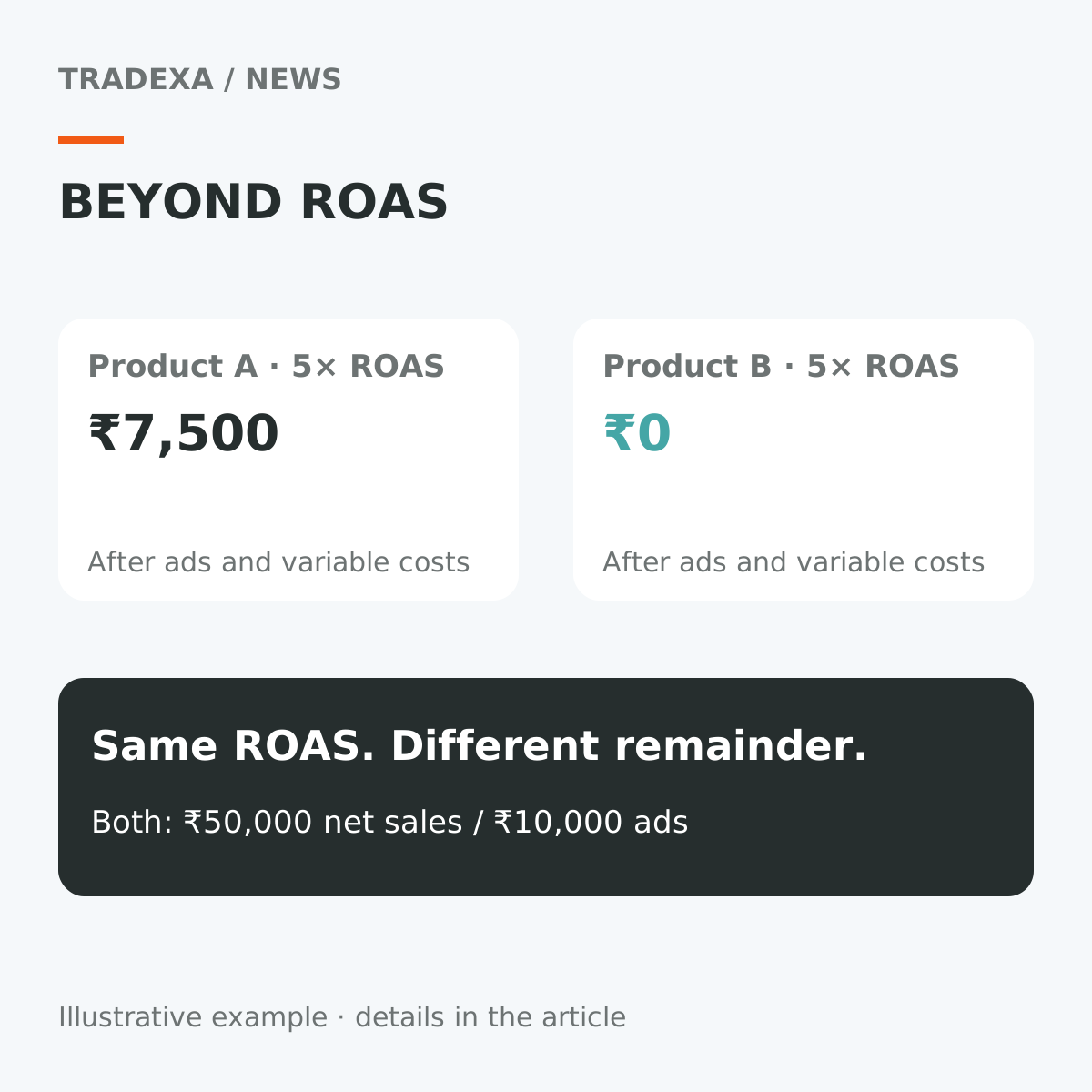
Consider two illustrative products, each with ₹50,000 net attributed revenue and ₹10,000 advertising spend.
Product A has ₹25,000 product cost and ₹7,500 selling and fulfilment costs. It leaves ₹17,500 before advertising and ₹7,500 after it.
Product B has ₹32,500 product cost and the same ₹7,500 other costs. It leaves ₹10,000 before advertising and nothing after it.
Both show 5× ROAS. Yet Product B has no remainder in this example for fixed overhead or profit. Increasing its budget because its ROAS looks good could increase activity without improving what the business keeps.
These are disclosed example inputs, not platform benchmarks or customer results.
What has to change before you scale?
Product B needs a better commercial equation: a higher realised selling price, lower valid costs, a stronger advertising result or some combination. Increasing spend alone does not fix the margin.
Product A may have more room, but its current performance may not hold at a larger budget. Stock availability, delivery capacity and the demand available at the next spend level all matter.
For perspective, if the example repeats monthly for a year, Product A's ₹7,500 monthly remainder is ₹90,000 before fixed costs and tax. That is the run-rate of the stated sales and costs—not a promise that increasing budget will produce it.
Do not multiply attributed revenue into a claim about incremental sales. Some buyers may have purchased without seeing the advertising; attribution and additional demand are different questions.
Give advertising decisions product context
Tradexa's HyperAds brings supported advertising activity across Amazon, Google, Meta and Flipkart into a product-level view with stock, purchase-cost and profitability context. It supports recommendations and configured automatic actions; the controls and information available still differ by channel.
That context helps the team choose where to investigate, reduce wasted spend or test a scale-up. It does not guarantee a margin or make every action appropriate for every product.
Choose one proposed budget increase and write down its sales basis, costs and remaining contribution first. When the team can explain those numbers, “more advertising” becomes a considered growth decision.
For the platform definition, see Google Ads' target ROAS guidance.