Suppose your brand already sells on Amazon and through dealers. Your own website is nearly ready, and someone asks a sensible question: “Who will enter these orders?”
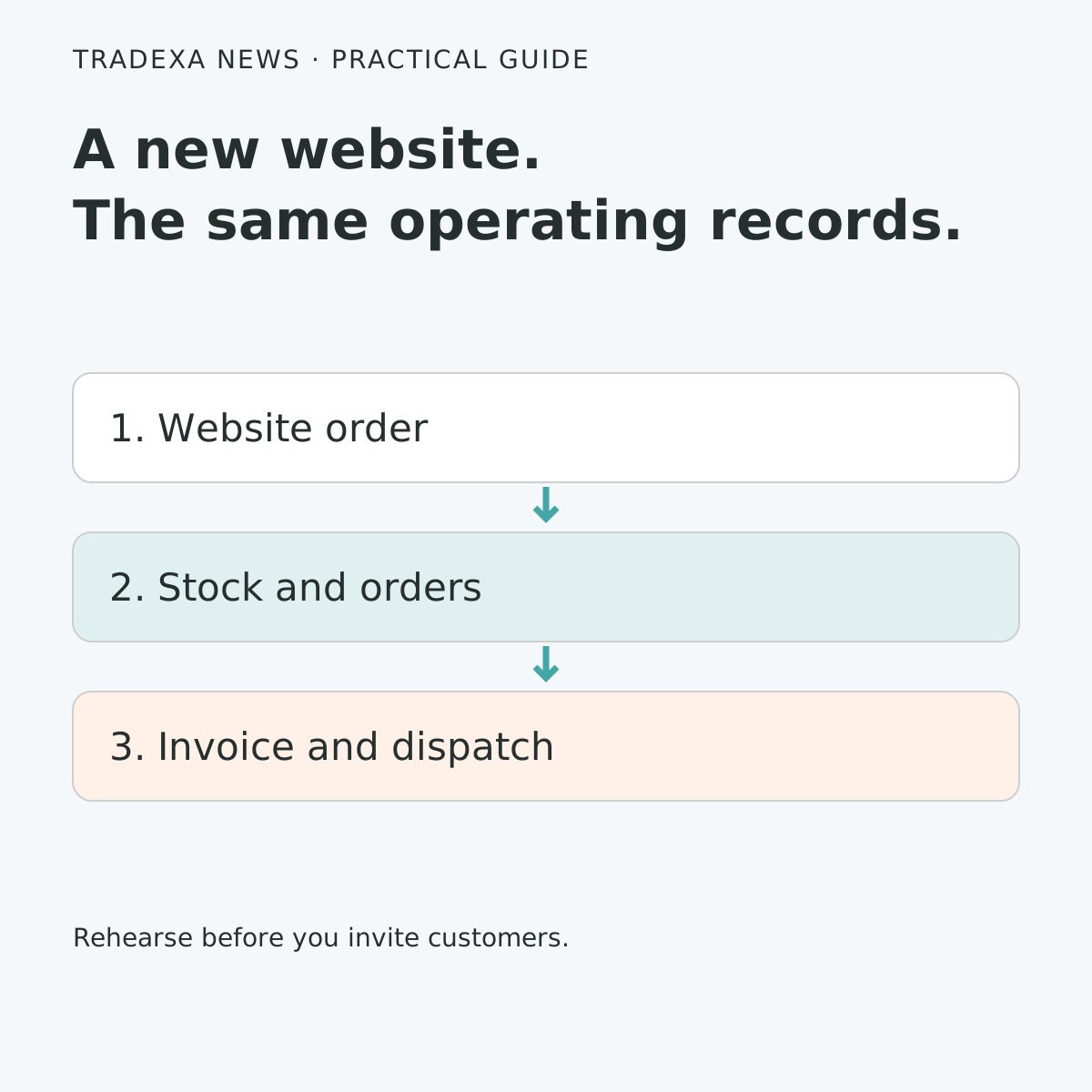
That question deserves an answer before the launch email goes out. Add the website to the way you already manage products, stock and orders, then rehearse the complete journey. The aim is to create a new place for customers to buy without creating a second set of records for your team to maintain.
Start with the product record, not the homepage
A polished homepage cannot tell the warehouse whether a customer ordered the black mixer or the silver one. Choose consistent product and variant identifiers, then agree which record owns descriptions, prices and stock. Channel-specific presentation can differ; the item your team picks must stay identifiable.
Tradexa’s HyperInventory connects a catalog, inventory, orders, invoices and shipments with supported selling channels. Its own-branded storefront can use your domain, and an existing Shopify store can also be connected. That gives the website a place in the operating workflow rather than leaving it as a separate order inbox.
For your launch range, check the actual products and integration behaviour you will use. A supported connection still needs configuration, clean records and a team responsible for exceptions.
Follow one order all the way through
Choose a product that already sells through another route. In a designated test setup, follow a website order from checkout to the operating order, payment record, invoice and shipment. Check the quantity against the stock available for that order and the commitments already held elsewhere.
Now follow an unsuccessful payment and a cancellation. The useful question is what staff must do next: investigate the payment, release a commitment where appropriate, correct a record or contact the buyer. Agree that answer for your configured workflow rather than assuming every exception resolves itself.
Record who accepts the order, who prepares it, who checks the payment and who answers a delivery question. A named owner is more useful than “the office will handle it.”
Count the work your launch design creates
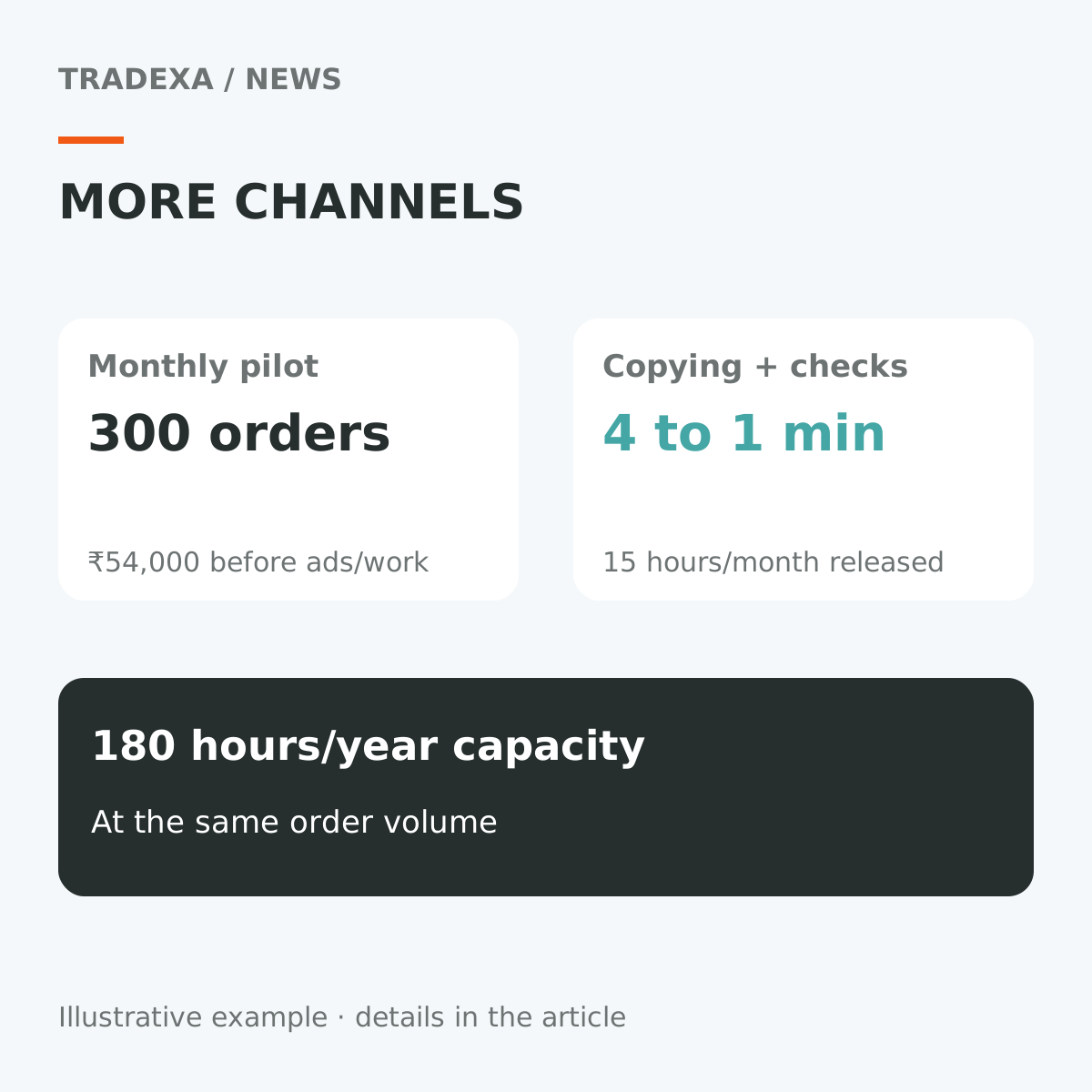
Suppose the website receives 300 orders a month. If someone types each order into another system for four minutes, that adds 20 hours a month, or 240 hours a year.
That is the workload to investigate, not an automatic saving to announce. If a connected order path removes the repeated typing, payment exceptions, packing and customer questions still remain. Time released from copying orders can go toward handling those exceptions or improving product information before the next launch range is added.
Keep new cash costs separate: the domain, payment service, delivery, content and any additional staffing still need a budget. A connected workflow does not make the channel free to operate.
Use this launch rehearsal record
Copy the following for each representative order. It produces a clear launch decision rather than a long list of things somebody intends to check.
- Product and variant: expected identifier, price and quantity.
- Stock basis: warehouse, existing commitments and expected available quantity.
- Order reference: website reference and corresponding operating record.
- Payment: expected state, observed state and the person resolving a mismatch.
- Invoice and dispatch: observed document references and the responsible team.
- Exception: failed payment or cancellation tested, expected next action and actual result.
- Decision: ready, correct and retest, or exclude this product from the initial range; name the owner and review date.
Start with a range your team can support confidently. If you are still deciding whether another channel is worthwhile, use the channel-expansion guide first. This rehearsal answers the next question: can you operate the website you have decided to launch?
Example note: The order count and time illustrate a scenario, not measured customer results. Replace them with your workload and observed task times before estimating capacity.