An Amazon seller account is running, your website is taking orders, and someone suggests adding Flipkart. Another place to sell sounds like another way to grow. But before you open it, ask a less exciting question: can the next channel bring worthwhile orders without making every order harder to handle?
You do not need to wait until everything is perfect. You do need to know what stock the channel will sell, who will fulfil its orders and what remains after the costs. That turns expansion from a hopeful launch into a decision you can test.
Will another channel bring new business or move existing sales?
Start with one product group and a specific reason to add the channel. Perhaps buyers search for those products there, or the channel reaches a region you do not currently serve well. Treat that as a hypothesis until actual orders support it.
Orders on the new channel are not automatically additional business. Some buyers may have purchased from your website anyway. Compare total sales across the business, not just the new account's sales chart.
That distinction matters when the new channel requires extra staff work or promotional spending. Moving a sale from one channel to another can still be worthwhile, but it is a different benefit from finding a new customer.
What is left after the extra orders?
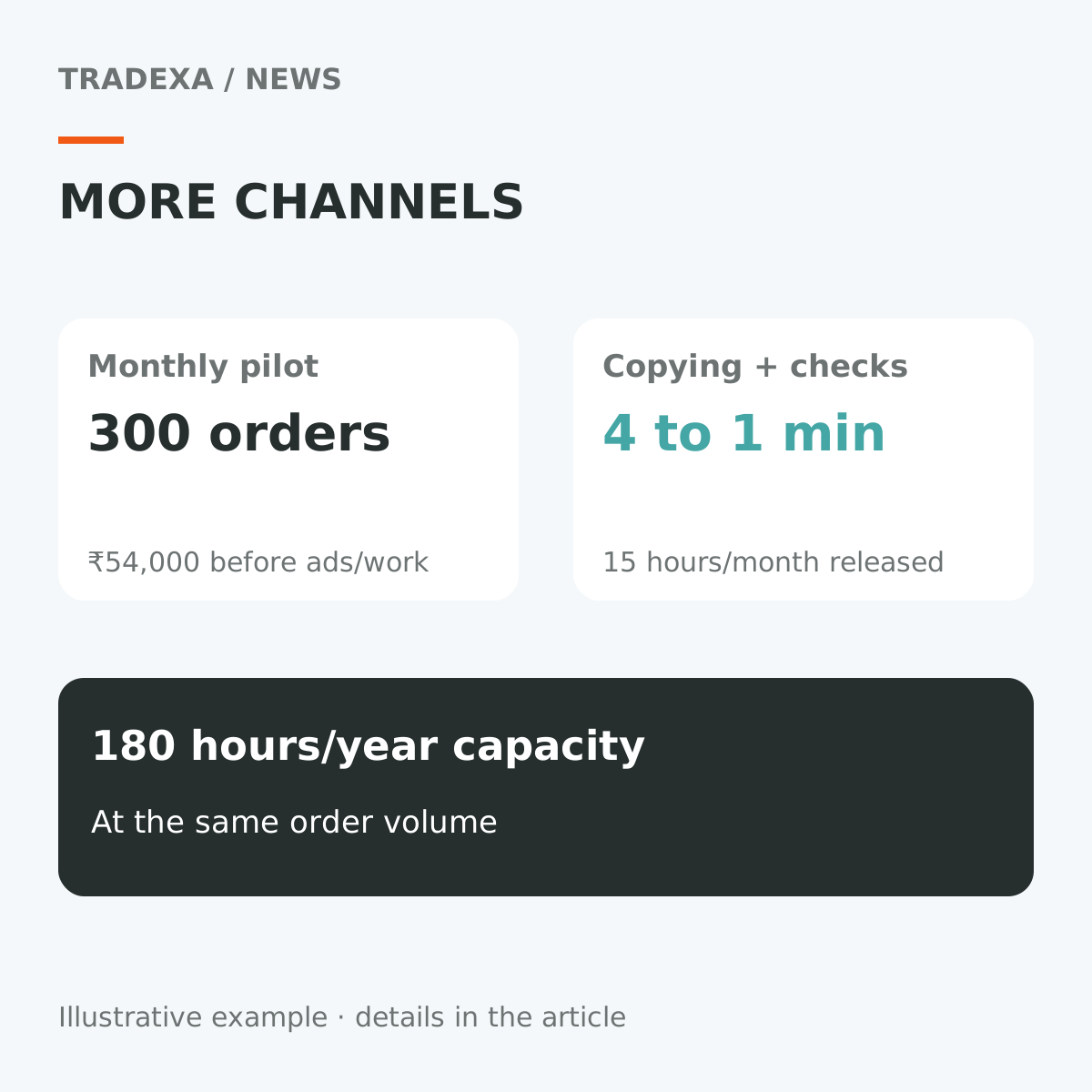
Consider an illustrative pilot of 300 orders a month. Each order produces ₹1,200 in net sales, with ₹780 product cost and ₹240 in channel, payment, delivery and packing costs. The remaining ₹180 gives ₹54,000 monthly contribution before additional advertising, channel-specific staff work and fixed business costs.
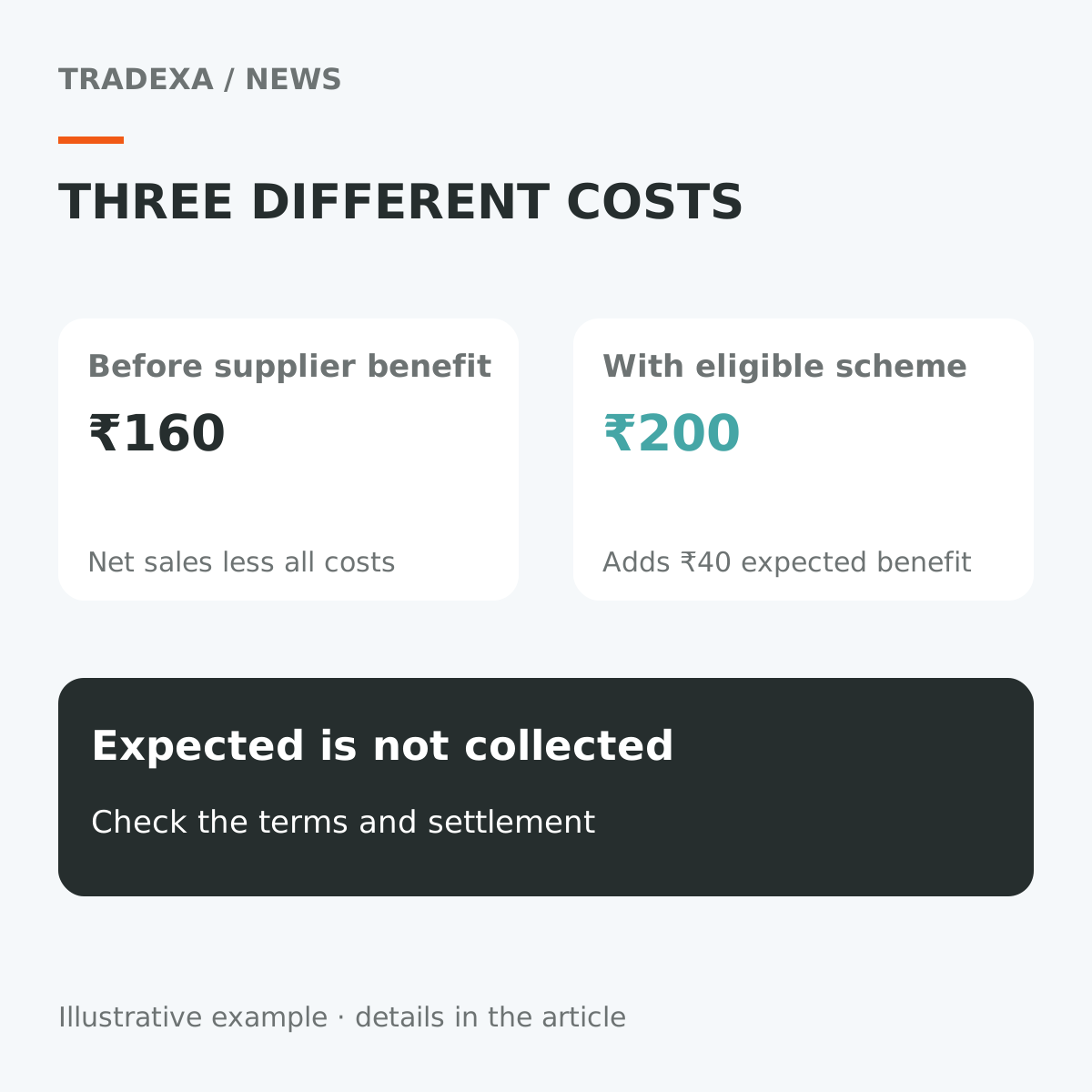
Now assume the pilot needs ₹20,000 advertising and 60 extra staff-hours. At an illustrative ₹300 an hour, that capacity has a value of ₹18,000. The ₹16,000 remainder is a planning comparison, not audited profit: existing salaries may not increase, and attributed orders may not all be new.
Keeping those costs visible lets you ask a better question than “Did the channel sell?” You can ask whether it earns enough to justify the resources it uses.
Can the team absorb the work?
Measure the actual tasks during the pilot. Product setup, order checks, picking, packing, dispatch, cancellations and returns do not disappear because orders arrive online.
Suppose connected order records reduce copying and checking from four minutes to one minute per order. At 300 orders, the difference is 15 staff-hours a month, or 180 a year at steady volume. Picking and packing are unchanged in this example. That is room to handle more work, not proof that an employee can be removed or that every integration will achieve that timing.
Before launch, test the last unit selling elsewhere, an order cancellation and a returned item that is not ready for resale. Decide who follows up when an update fails.
Expand what works, not everything at once
Begin with products the team can supply reliably. Review contribution, total business sales, workload and stock differences before widening the range.
Tradexa's HyperInventory connects supported sales channels with stock and order operations, helping the team work from connected records rather than repeatedly rebuilding them. Channel setup and update timing still need to be tested for your products and workflow.
If the pilot creates worthwhile additional business and the team can fulfil it without constant recovery work, expansion becomes easier to repeat. For the stock rules behind that decision, see how to keep stock connected across stores and your website.