The subscription quote looks affordable. Then the team discovers duplicate product names, unsettled opening balances and several ways of recording the same customer.
None of those disappear because the new software has an import button. Before approving a switch, budget for the work that makes the new records trustworthy and the team ready to use them.
What work sits outside the software price?
Separate supplier charges from internal effort. Data preparation, configuration, integration setup, training and testing may use different people and have different costs.
Ask what the quoted implementation scope includes. A data import may not include cleaning product records or resolving an old accounting difference. Support may not include redesigning every process.
This is not a reason to postpone a useful change. It is a way to stop a sensible project becoming a surprise burden on the same employees who must keep orders moving.
Build the budget from tasks, not a guessed percentage
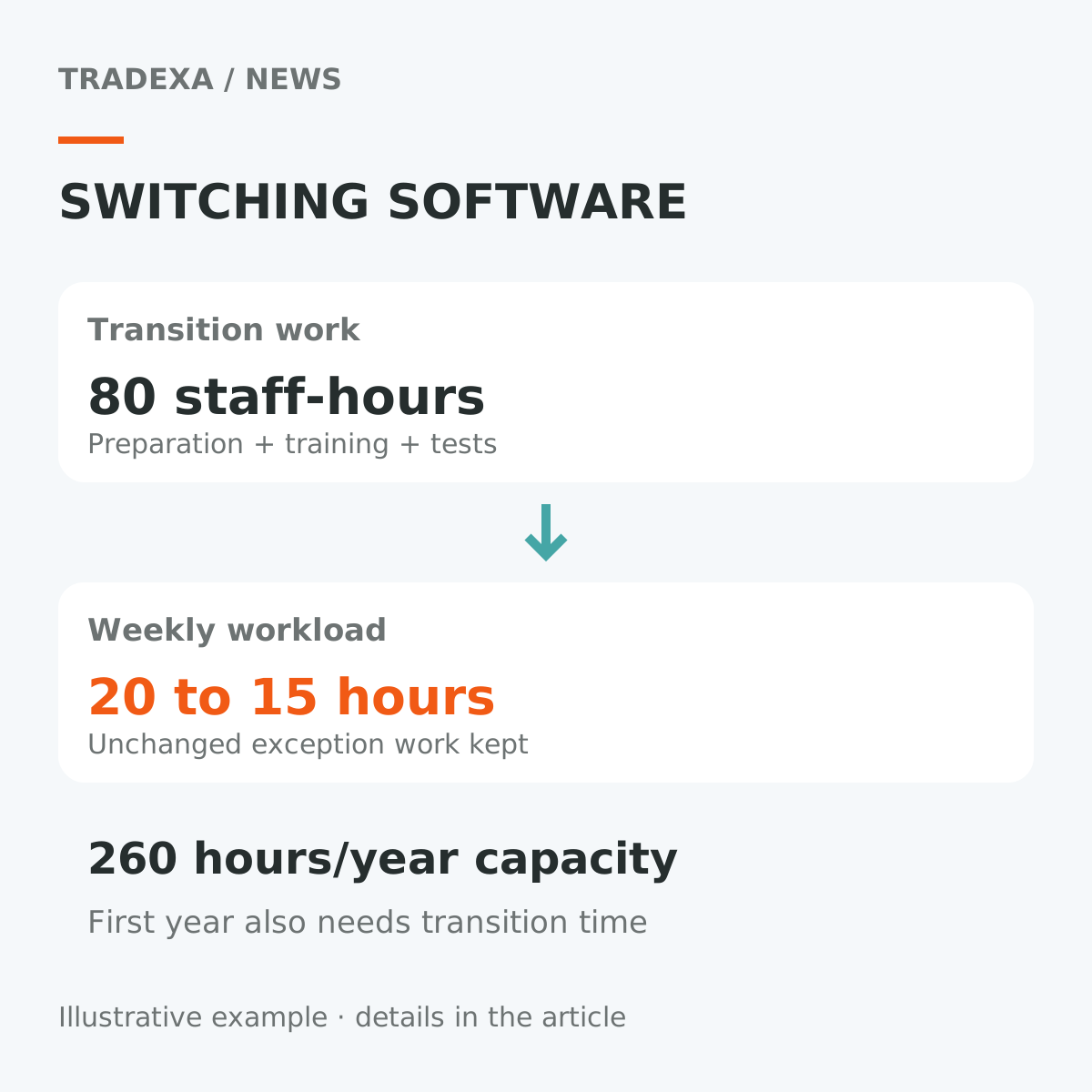
Consider an illustrative change involving 2,000 product records. Reviewing 200 problem records at six minutes each uses 20 staff-hours. Matching customer and supplier records takes another 16. Four people attending six hours of training use 24. Testing and correcting the selected workflows uses 20.
That is 80 combined staff-hours. At a chosen ₹300 hourly capacity value, it represents ₹24,000 of internal effort, separate from vendor charges and any temporary overtime.
The quantities and timings are assumptions to replace with your own estimate. The example does not establish a typical migration price. If the records are cleaner, preparation can be smaller; if more workflows change, training and testing can be larger.
What must be right before the cutover?
Choose a defined starting point and reconcile it. Product identifiers, usable stock, opening balances and unresolved orders need agreed treatment.
Test the actual work that matters to your business: a sale, purchase receipt, stock adjustment, payment and the supported accounting handoff. Include a cancellation or correction, not only the happy path.
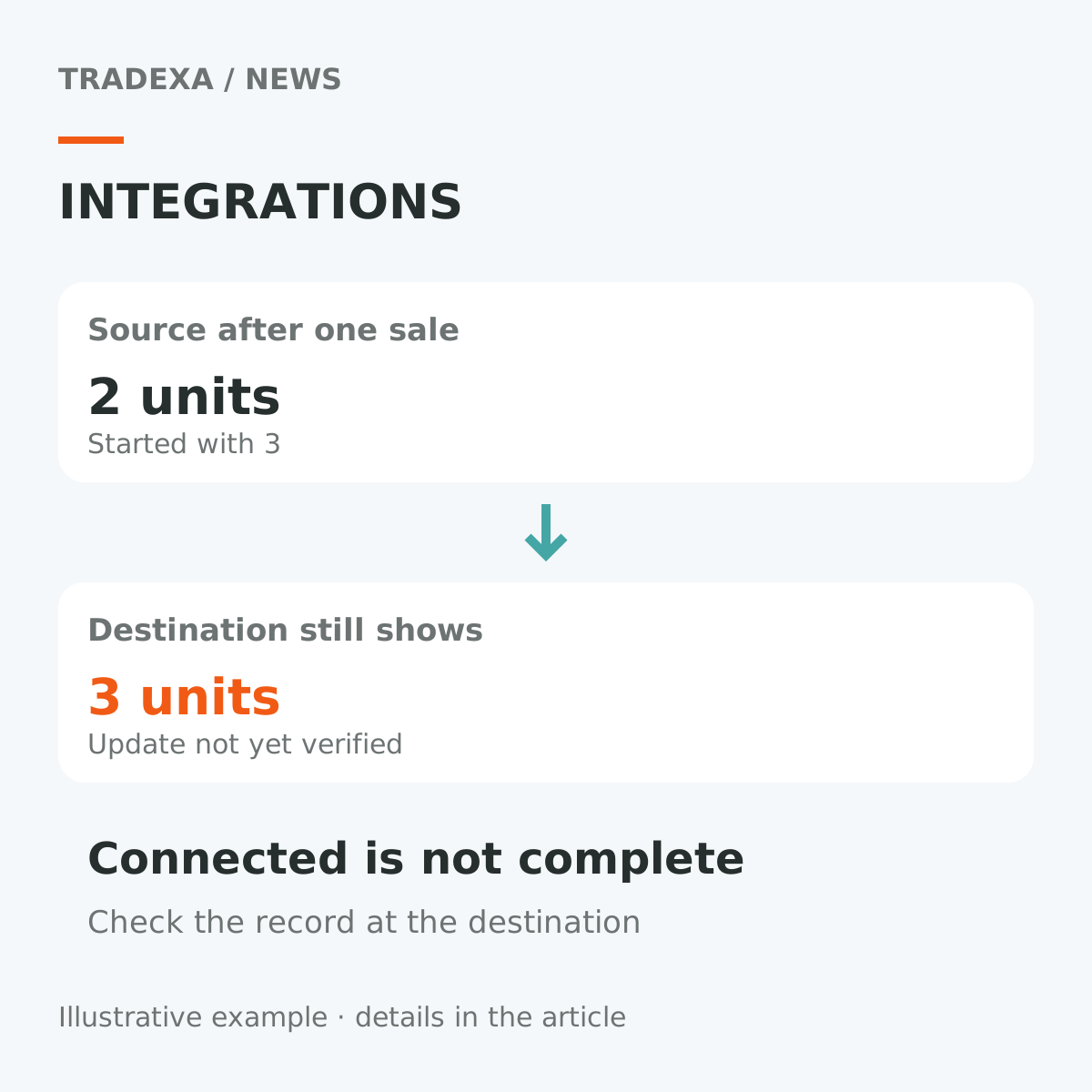
A temporary parallel check can help identify differences, but two systems should not independently control the same live record without a clear rule. Decide which is authoritative, who checks differences and when the old process ends.
When could the change repay that effort?
Suppose the new workflow reduces weekly record gathering from eight staff-hours to five and duplicate entry from six to four. Exception review stays at six. The total changes from 20 to 15 hours.
Five hours a week is 260 a year at steady use. At the same ₹300 capacity rate, that is ₹78,000 of time available for other work. It is not automatic salary reduction, and the first year also consumes the 80 transition hours.
Compare actual software and implementation charges separately. If useful work fills the released time, the gain may be more orders handled or faster issue resolution—not money removed from payroll.
Tradexa's supported imports, roles and connected operational workflows can form part of a planned transition. The scope should be agreed for your business before a start date is promised.
Ask for a task-based implementation plan beside the quote. It makes the change easier to approve, resource and judge after go-live.