“Buy this month and earn the incentive” sounds clear until one invoice is returned after the sales team has announced the expected amount. Was the reward based on invoiced sales, net sales, collections or something else?
Agree the earning rule before the promise goes out. The product range, enrolled dealers, period, measure, return treatment and settlement responsibility belong together. A percentage without those decisions is not a complete commercial scheme.
Decide the behaviour you want to reward
A distributor might want an enrolled dealer to buy a relevant range, grow an agreed sales base or pay within the chosen collection condition. Those are different objectives. Choose the one that matters to this scheme instead of combining unrelated targets into a headline that neither sales nor finance can explain.
Define the eligible product or brand scope and the dealers actually enrolled. Being in a buyer group is not the same as explicit enrolment in a sponsor-side incentive program. Keep the published terms with the period so a later discussion uses the same rule that the sales team communicated.
Representing several brands does not automatically make every sale eligible. State the applicable scope and how other discounts or schemes are treated under the actual approved arrangement. Do not assume that an incentive automatically changes the customer's product price.
Returns can change the earned amount
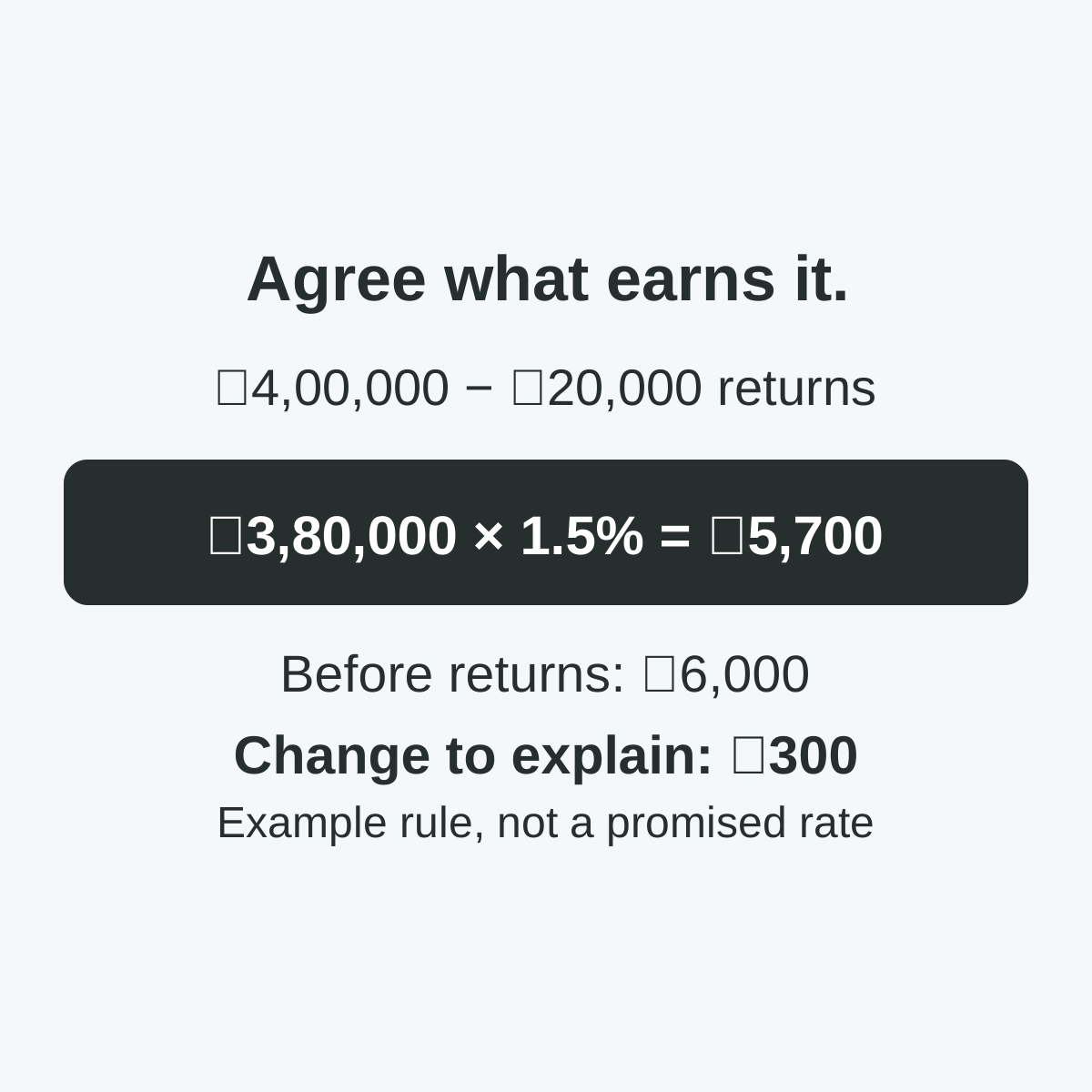
In an illustrative commercial rule, an enrolled dealer earns 1.5% of eligible net sales for the agreed period. Eligible invoices initially total ₹4,00,000, giving an expected incentive of ₹6,000. The example uses a defined commercial sales basis before any separate tax or accounting treatment.
If ₹20,000 of those eligible sales is returned and reduces the same scheme-period measure under the agreed terms, net eligible sales become ₹3,80,000. At 1.5%, the revised amount is ₹5,700. The difference is ₹300, not a new discount on the next order by default.
The important question is not whether the calculator can multiply by 1.5%. It is whether both teams know which sales and returns belong to the measure. Attach the relevant transaction references and the reason for a change rather than replacing an earlier expectation without explanation.
A collection-based condition needs its own precise basis, cut-off and supported configuration. Do not borrow the net-sales example and silently assume it also proves a collections incentive.
Make the sponsor's workflow do the matching work
HyperInventory's available sponsor-side incentive capability can compute earned benefits from its invoice and payment records within the supported scheme configuration. It supports explicit participant enrolment, defined scope and period rules, with returns netting back to the original invoice period in the documented workflow.
That connects the earning rule with the records the sponsor already uses, rather than making the team reconstruct every entitlement from memory. Staff still need to configure the intended rule, check the source records and confirm the resulting treatment before promising settlement.
The sponsor-side capability does not establish a dealer-facing progress screen, live leaderboard or automatic bank payout. Do not design the launch message around those unconfirmed experiences. The supported settlement can create a credit note or record an export-and-mark handover to payroll; a payroll handover is not a payment made by Tradexa, and it is not the settlement route to assume for every dealer scheme.
Write an incentive decision record before launch
Use the following record with the actual supported configuration and approved commercial terms. It is a decision aid, not a universal scheme-import file.
- Sponsor, scheme owner and period: ______
- Intended behaviour and why it matters: ______
- Enrolled participants and eligibility evidence: ______
- Brands/products and other supported scope: ______
- Measure, unit/value basis and exclusions: ______
- Rate or supported reward rule and calculation example: ______
- Return treatment, cut-off and restatement responsibility: ______
- Interaction with other approved offers or schemes: ______
- Supported settlement route and finance/payroll owner: ______
- Accepted test, approved message and unresolved questions: ______
For the worked rule, keep both the original ₹4,00,000 basis and the ₹20,000 returned amount visible. The revised calculation is ₹3,80,000 × 1.5% = ₹5,700. Explain the ₹300 change through those records rather than asking the dealer to accept a different number without a reason.
Test the terms before the launch message
Run representative cases in an authorised test environment: an enrolled dealer, a dealer outside the scheme, an eligible product, an excluded product and a return against an eligible invoice. Include a period-boundary case and inspect the actual supported calculation and settlement record.
Agree who answers the dealer's question and which evidence they can share through the approved process. Do not promise a participant portal merely because the sponsor has a computed result. If the calculation or communication cannot be explained, resolve that part before expanding the scheme.
Clear terms can leave sales and finance with more attention for dealer relationships, a relevant product-range discussion and genuine collection follow-up. That can support worthwhile repeat business when the scheme rewards the intended behaviour; a larger incentive or a cleaner calculation does not guarantee additional sales or profit.
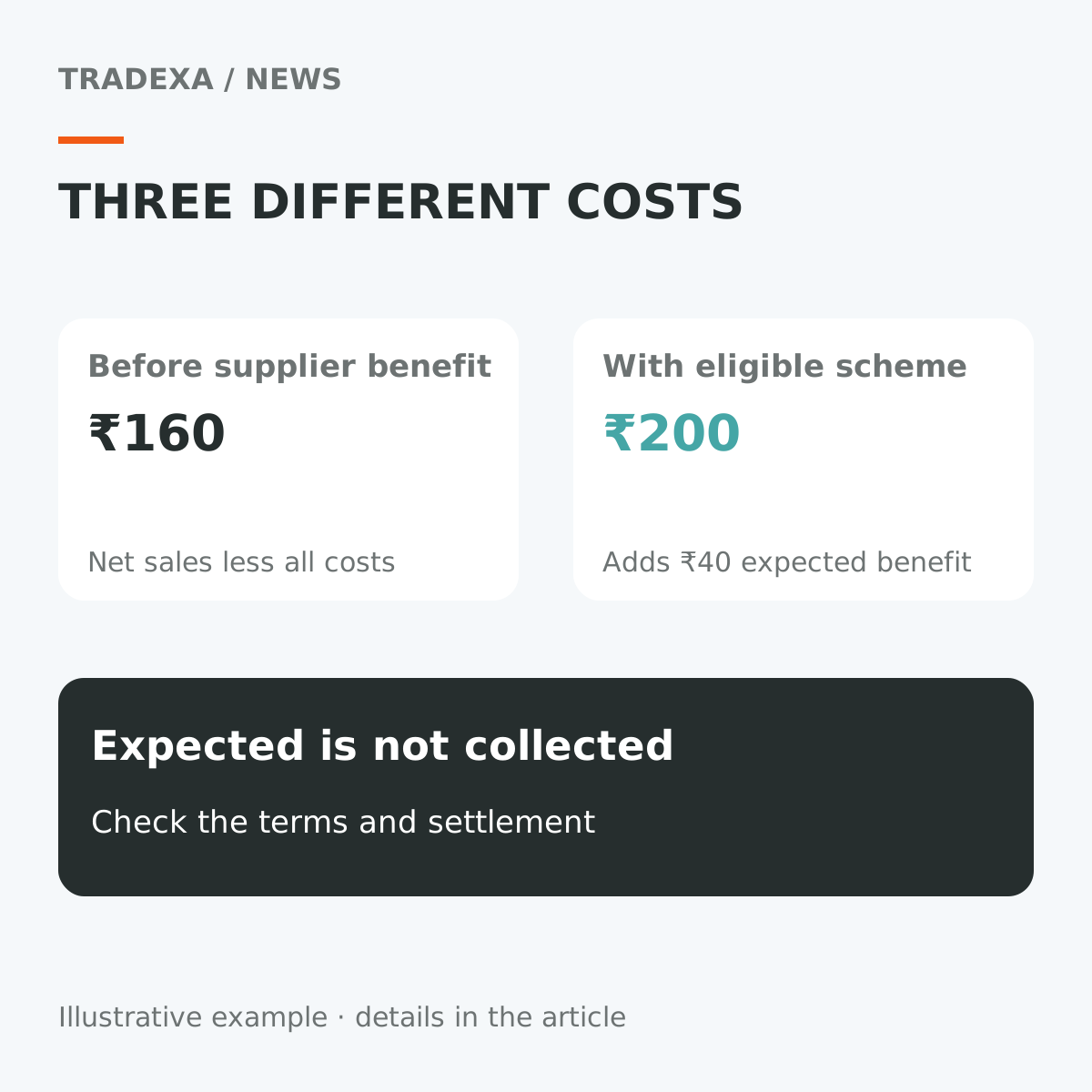
Keep supplier-funded benefits separate. The existing guide to discounts, supplier schemes and sales incentives explains those different economic roles. Here the decision is what the sponsor promises and how the earning rule remains explainable after returns.
Example note: The 1.5% rule, sales and return values illustrate a commercial decision. They are not customer results, prescribed scheme rates or tax/accounting advice.