Purchasing says the supplier scheme is worth ₹4,000. Finance has a ₹3,200 credit note. Which number belongs in the next buying conversation?
Start by reconciling the eligible sales and returns against the agreed scheme, then compare the expected benefit with the actual document received. A forecast benefit, a supplier-approved credit note and money available in the bank are different things. Treating them as one number hides the question your team needs to resolve.
The quantity changes before the amount does
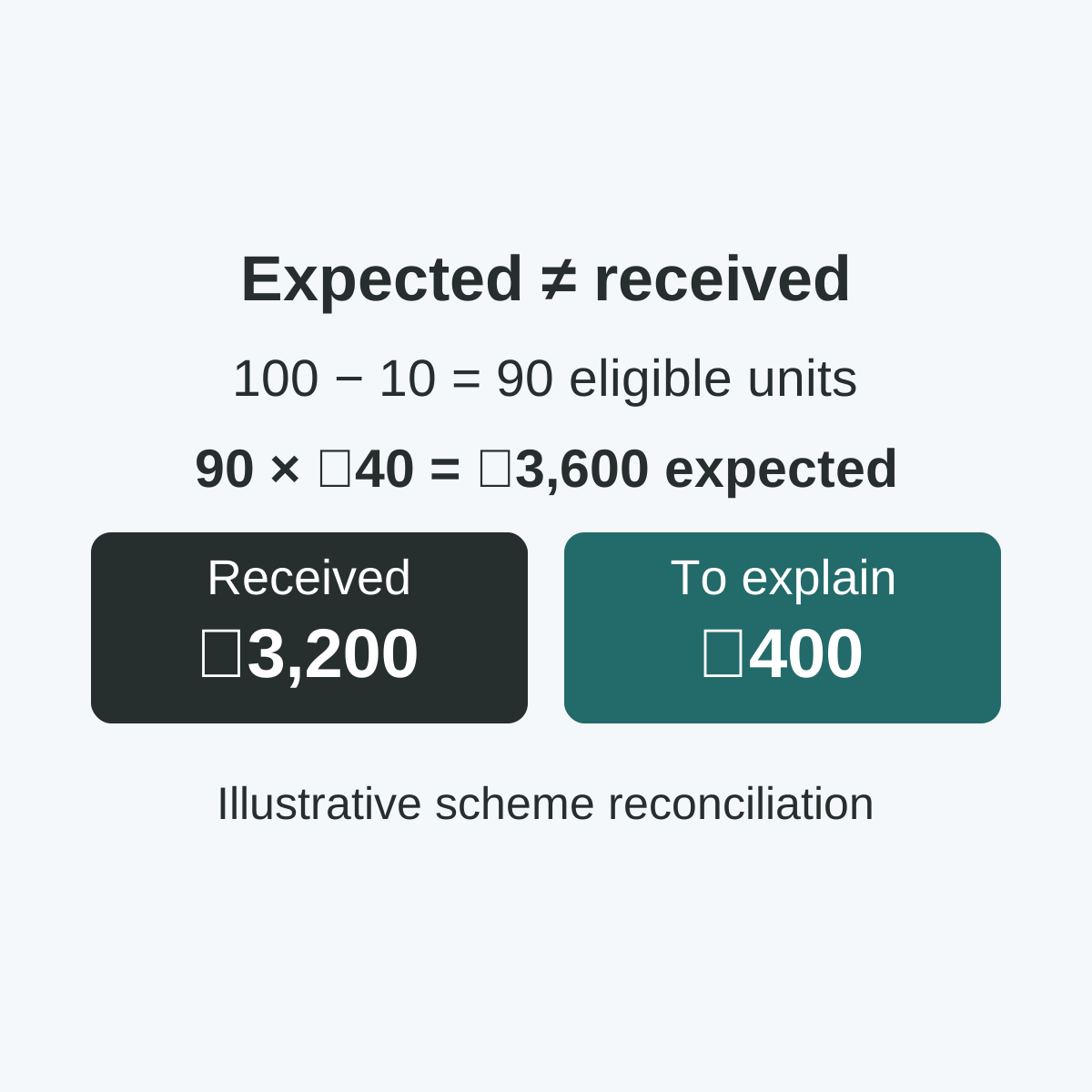
Consider an illustrative supplier trade scheme paying ₹40 per eligible unit sold within its agreed scope. One hundred units initially appear eligible. Ten of those units are subsequently returned and reduce eligibility under the example's agreed terms.
The net eligible quantity is ninety units. At ₹40 each, the expected supplier credit note is ₹3,600, not the original ₹4,000. Keep the original invoice references and the returns beside that calculation so the reduction can be explained.
This is a sell-through example, not a purchase-volume slab or a claim that every supplier contract handles returns in the same period. Check the agreed product, batch if relevant, buyer group, channel, dates and quantity cap before classifying a sale as eligible. A sale outside the scheme's scope should not enter the expectation merely because the supplier's brand matches.
A smaller received credit needs an explanation
Now compare the ₹3,600 expectation with the ₹3,200 document actually received. The unresolved difference is ₹400. Do not erase it by changing the original unit rate until the parties agree the reason.
Possible questions include a different cut-off, an omitted invoice, a disputed return or a quantity cap. They are investigation paths, not conclusions about your supplier. Record which lines explain the difference, which remain open and who follows up next.
For a multi-brand importer, reconcile each supplier and scheme on its own references before creating an overall view. One brand's confirmed adjustment should not silently offset another supplier's unresolved expectation. It would make the total tidier while hiding the work still required.
Where HyperInventory helps
Tradexa's HyperInventory supports supplier trade schemes with defined product and other supported scope, date windows and quantity caps. Its return-aware expected-credit-note report gives finance a basis for the expected benefit from the configured scheme.
That connects the commercial scheme with the transactions behind it, reducing the need to reconstruct the expectation solely from a separate invoice export. The finance team can use the report alongside the supplier's terms and actual received documents to explain the difference.
The expected report does not submit the supplier claim, issue the supplier's document, settle the benefit or automatically adjust accounting or purchase cost. Those are separate actions and responsibilities. Keeping that boundary clear is useful: your next follow-up is about the unresolved ₹400 and its evidence, rather than a mistaken belief that a report has collected it.
Build a supplier-scheme reconciliation record
Keep one record per supplier, scheme and review period. It can be a small working sheet beside the supported report, rather than a new accounting classification.
- Supplier, scheme reference and agreed terms: ______
- Product/batch, buyer group, channel and date scope: ______
- Rate, quantity cap and eligibility conditions: ______
- Initially eligible invoice quantity and references: ______
- Returns or other agreed eligibility changes and references: ______
- Net eligible quantity and expected credit amount: ______
- Actual supplier document, date and amount received: ______
- Explained differences: ______; unresolved difference: ______
- Follow-up owner, required evidence and next review: ______
- Finance-approved treatment and any remaining action: ______
In the example, the first reconciliation is 100 − 10 = 90 units; the next is 90 × ₹40 = ₹3,600; the final comparison leaves ₹3,600 − ₹3,200 = ₹400 unresolved. These are three related checks, not three amounts to add together.
Use the confirmed position in the next decision
A credit note may reduce an amount payable rather than create a new bank receipt. Ask finance how the actual adjustment affects the supplier balance and available buying cash under your agreed arrangement. This article does not prescribe a tax entry, accounting recognition rule or statutory credit-note treatment.
The operating benefit is a buying discussion built on an explainable position. Purchasing can separate confirmed supplier terms and adjustments from open expectations; finance can pursue the evidence instead of repeatedly rebuilding the same scheme calculation.
If that removes repeated reconciliation work, the released attention can go into closing other supplier differences or checking the products that genuinely need replenishment. It does not make uncertain benefits available to spend. Use the replenishment planning guide for the separate stock-and-arrival decision.
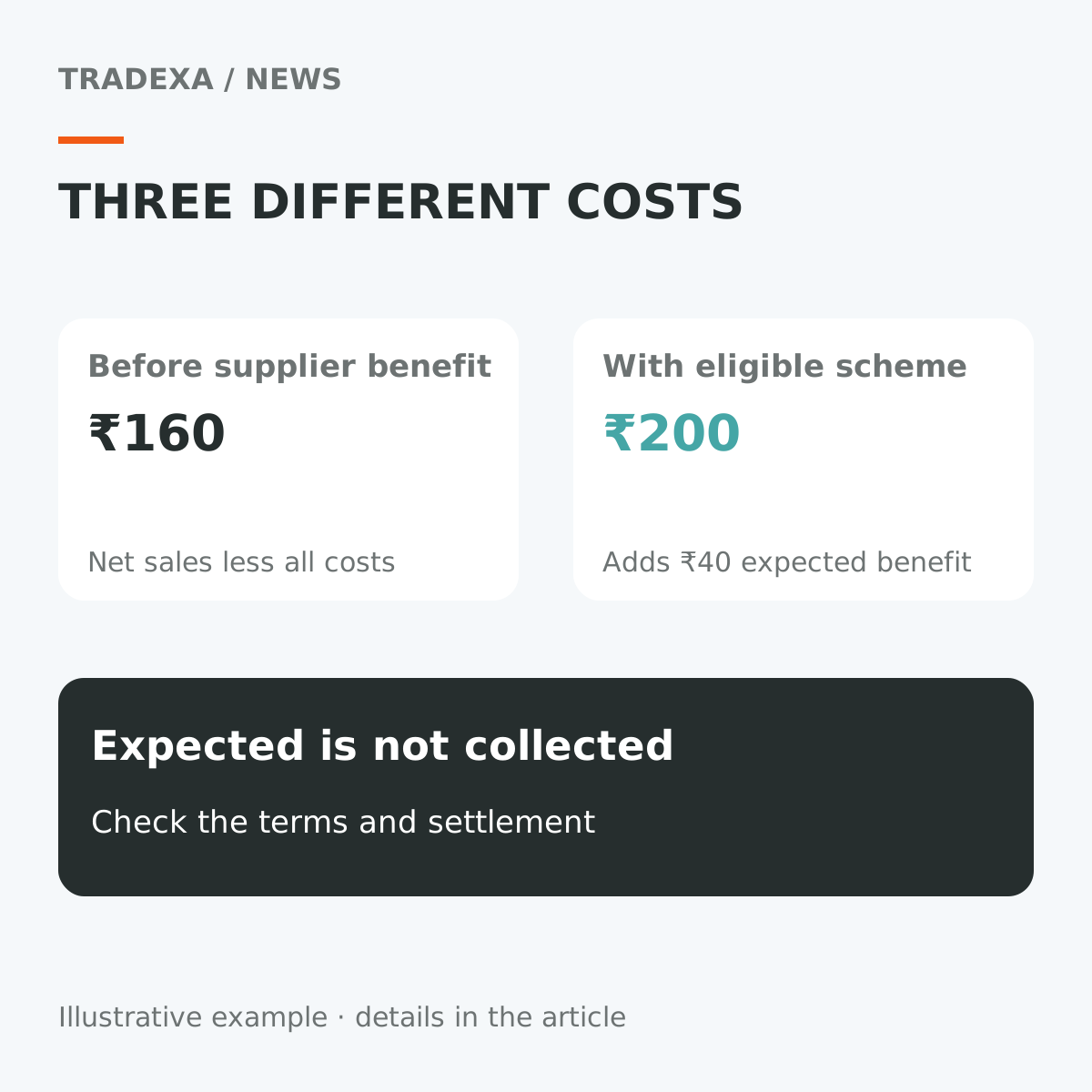
For the distinction between a buyer discount, supplier benefit and sponsored sales incentive, see three different commercial costs. This record owns the later expectation-versus-received reconciliation, not the whole pricing decision.
Example note: The quantities, ₹40 rate and credit amounts are illustrative commercial inputs. Use the actual scheme terms, transaction evidence and finance review.