You want distributors to sell more of your range without every location holding every product. One possible approach is to move stock through your own branches. Another is to let an independent distributor sell products fulfilled through your business.
They may look similar to the customer, but stock ownership, documents and responsibility are different. Decide which business relationship you need before choosing the software workflow.
Are the locations part of your company?
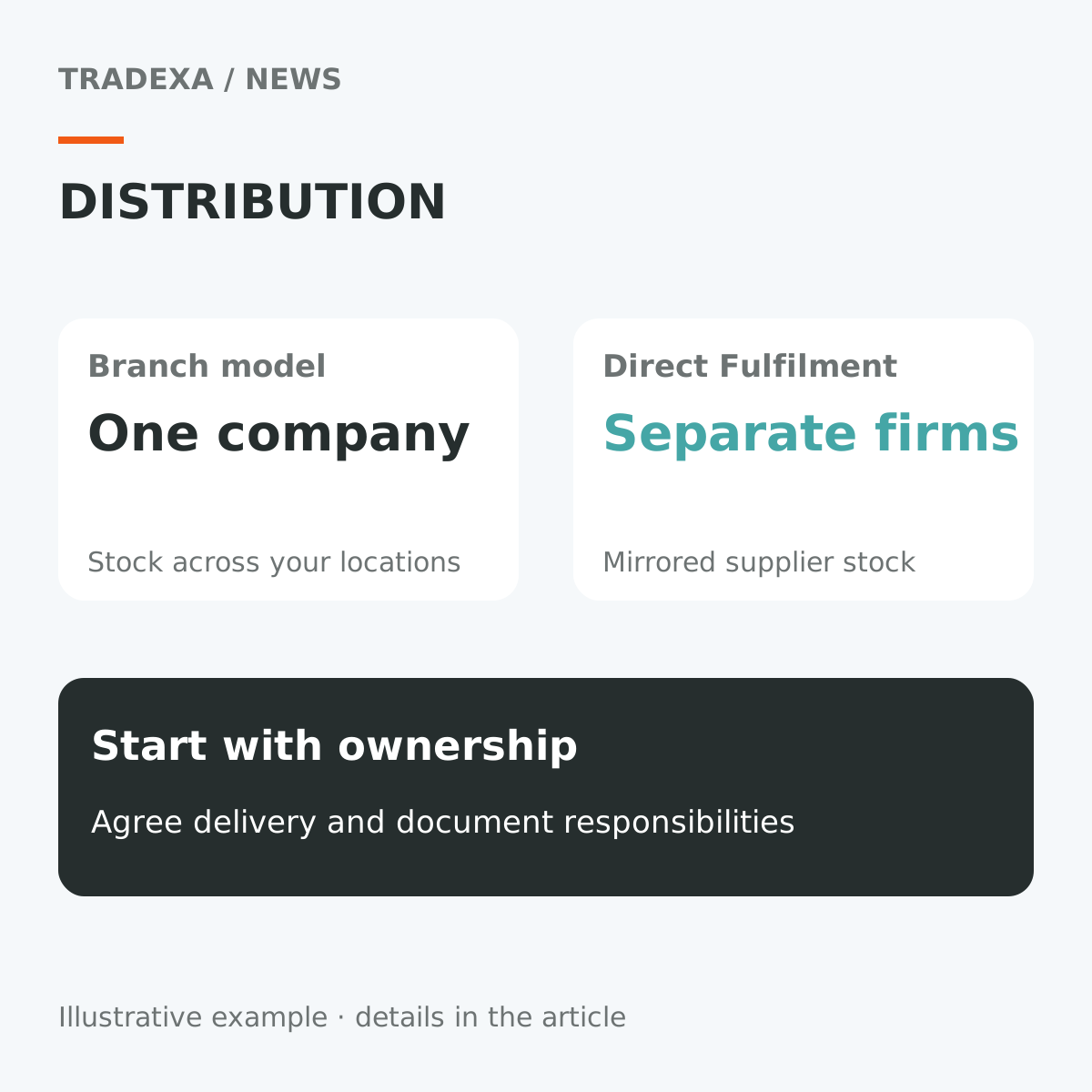
For company-owned branches, start with one company operating several locations. Branch stock and transactions remain within that company's structure, with head-office visibility and consolidated reporting in the supported scope.
That is not the same as bringing independent distributors into a single company. An independent distributor has its own purchases, sales and commercial responsibilities. A combined stock view must not erase those boundaries.
If your question is simply how to supply another company-owned store, a branch transfer may be appropriate. If another business sells your goods to its own customer, you need to agree the trading relationship too.
What changes with Direct Fulfilment?
Tradexa's supported Direct Fulfilment model allows independent companies to work with mirrored supplier stock. Mirrored availability is not stock the distributor has already purchased or physically holds.
In the configured workflow, the sale generates the linked order and invoice or purchase-bill records across the participating companies. This reduces repeated transaction entry, but it does not turn the companies into one legal entity.
Customer-address handling and courier handoff still need operational attention. Do not assume the model reserves a separate stock pool for each distributor, guarantees against overselling or provides consolidated reporting across every independent company.
Those distinctions belong in the operating agreement, not in a footnote after launch.
Where could the business benefit?
Consider a clearly illustrative network of four independent distributors. Each currently holds ten units of 15 less-frequent products at ₹2,000 a unit. That is ₹3 lakh per distributor, or ₹12 lakh across the four.
If a suitable fulfilment model lets each hold four units rather than ten, distributor-held stock falls by ₹7.2 lakh across the network. The supplier may need more stock and incur more delivery work, so ₹7.2 lakh is not automatically a net network saving.
The possibility worth testing is a wider sellable range with less stock held locally. That can give a distributor more buying room for products customers want immediately. It only works if supplier availability and delivery times support the customer promise.
Who owns the next step when something goes wrong?
Walk through an unavailable item, cancellation, damaged delivery and return. Agree which company answers the customer, approves the remedy and updates each document.
Also compare direct delivery with the existing route. A product can cost less to hold locally but more to fulfil individually. Include freight, staff work and return handling before declaring the model better.
HyperInventory supports company branches and the distinct Direct Fulfilment workflow. Neither is a substitute for deciding ownership, responsibilities and credit terms.
Choose a limited product range and one trading relationship first. A model that makes responsibilities clearer can support network growth; one that merely makes the stock number look larger can create a new set of promises the team cannot keep.