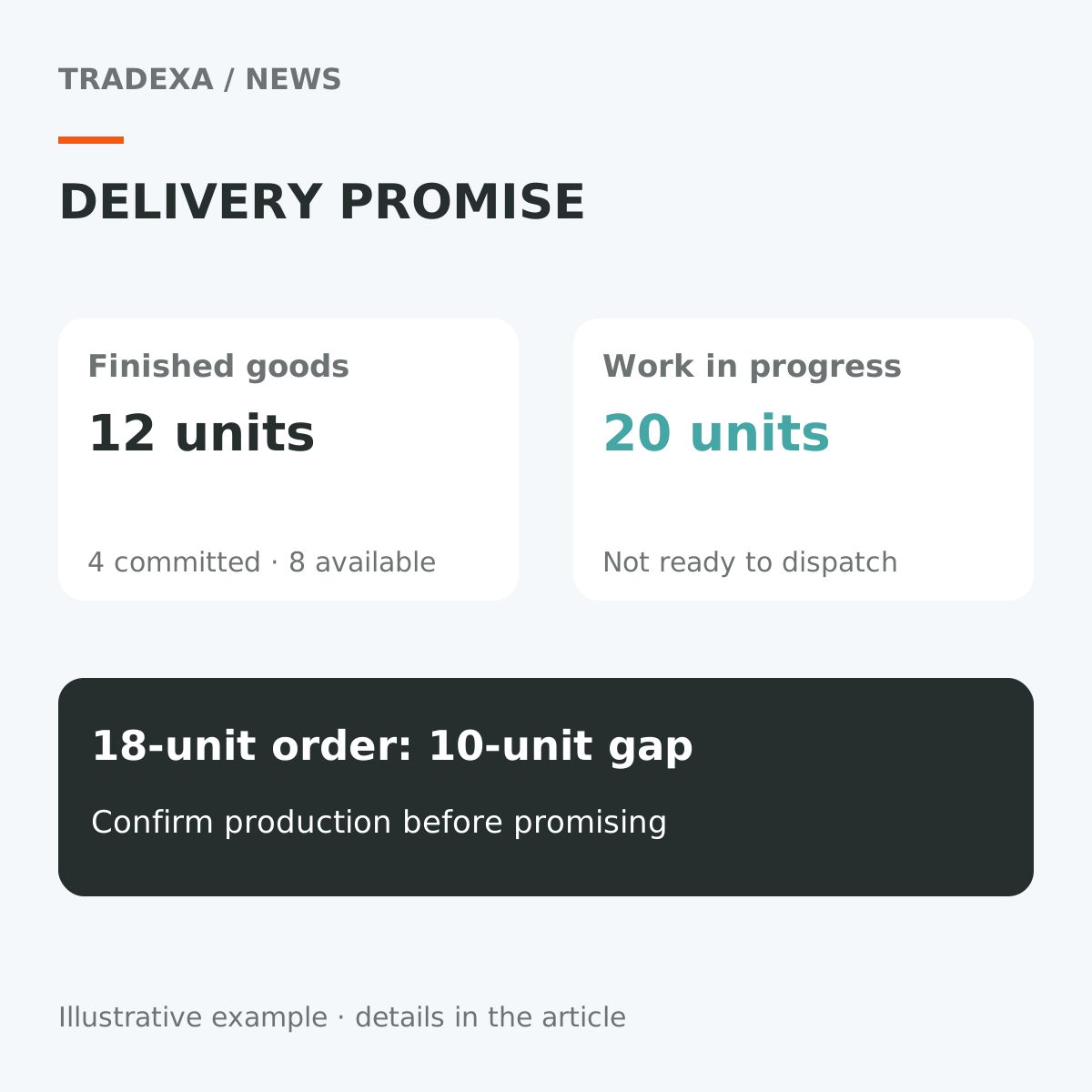
Sales asks whether you can deliver 18 units this week. There are 12 finished units in stock and 20 in production. “We have 32” is an easy answer—and potentially the wrong promise.
Work in progress is not finished stock. Before confirming delivery, separate what can be dispatched from what still needs production work and a verified completion decision.
What can you promise from finished stock?
Start with saleable finished goods and deduct units already committed. In this illustrative example, four of the 12 finished units belong to other orders. Eight remain available for the new order.
That leaves ten units to cover before the full 18-unit order can ship. The 20 units in progress may cover the gap, but only when the team has a supported completion plan and the output becomes available.
This distinction lets sales answer the customer clearly: what is ready now, what depends on production and when the promise can be confirmed.
What has to happen before work in progress becomes available?
Check the production order and required materials. Then ask the team about the remaining work, realistic completion and any necessary release checks.
A material issue is not completed output. Nor does a planned production quantity prove that every unit will be ready on the expected date.
In Tradexa's supported manufacturing workflow, bills of materials, raw-material issue, production orders, work in progress and completed output are distinct parts of the process. Finished output enters the relevant stock workflow when production is completed. That gives the team clearer records; it does not automatically create a reliable delivery forecast.
Does a split delivery help the customer?
If eight units are ready, ask whether the customer benefits from receiving them first. The answer depends on their need, delivery cost and commercial agreement—not just your stock position.
Suppose one complete shipment costs ₹900, while two smaller shipments cost ₹650 each. Splitting adds ₹400 delivery cost. That may be worthwhile if the first delivery is useful, but the customer should not receive an unexpected partial order.
This example compares customer shipments, not partial completion of a production order. Do not assume the software supports a production action merely because the delivery plan is split.
What business impact comes from a clearer promise?
The immediate benefit is fewer avoidable commitments: sales knows what it can offer, production knows the actual gap, and dispatch is not left explaining an impossible date.
For an illustrative monthly workload, 15 unclear promises each trigger 20 minutes of checking and callbacks—five staff-hours. If separating finished and committed stock prevents six such cases, two hours a month become available. That is 24 hours a year, while nine cases and normal planning remain.
The larger opportunity is taking the orders the business can genuinely fulfil. A reliable promise can support repeat business, but no repeat-sales percentage is assumed here.
Before the next delivery commitment, make the finished, reserved and in-progress quantities explicit. If the ten-unit production gap remains uncertain, tell the customer what can be confirmed rather than presenting all 32 units as ready.