Your best-selling product looks like the obvious one to advertise. Until the warehouse tells you most of the stock is already committed.
Before choosing the next advertising shortlist, bring three questions together: can you fulfil the extra demand, does the product leave room for advertising, and is there evidence that buyers want it? A product can pass one question and fail another. More attention is useful when the business can turn it into worthwhile fulfilled sales.
Check what is available for new demand
Start with usable stock before subtracting existing commitments, then allow for the sales you expect without the new campaign. Include replenishment only when its arrival and availability can support the promise you intend to make.
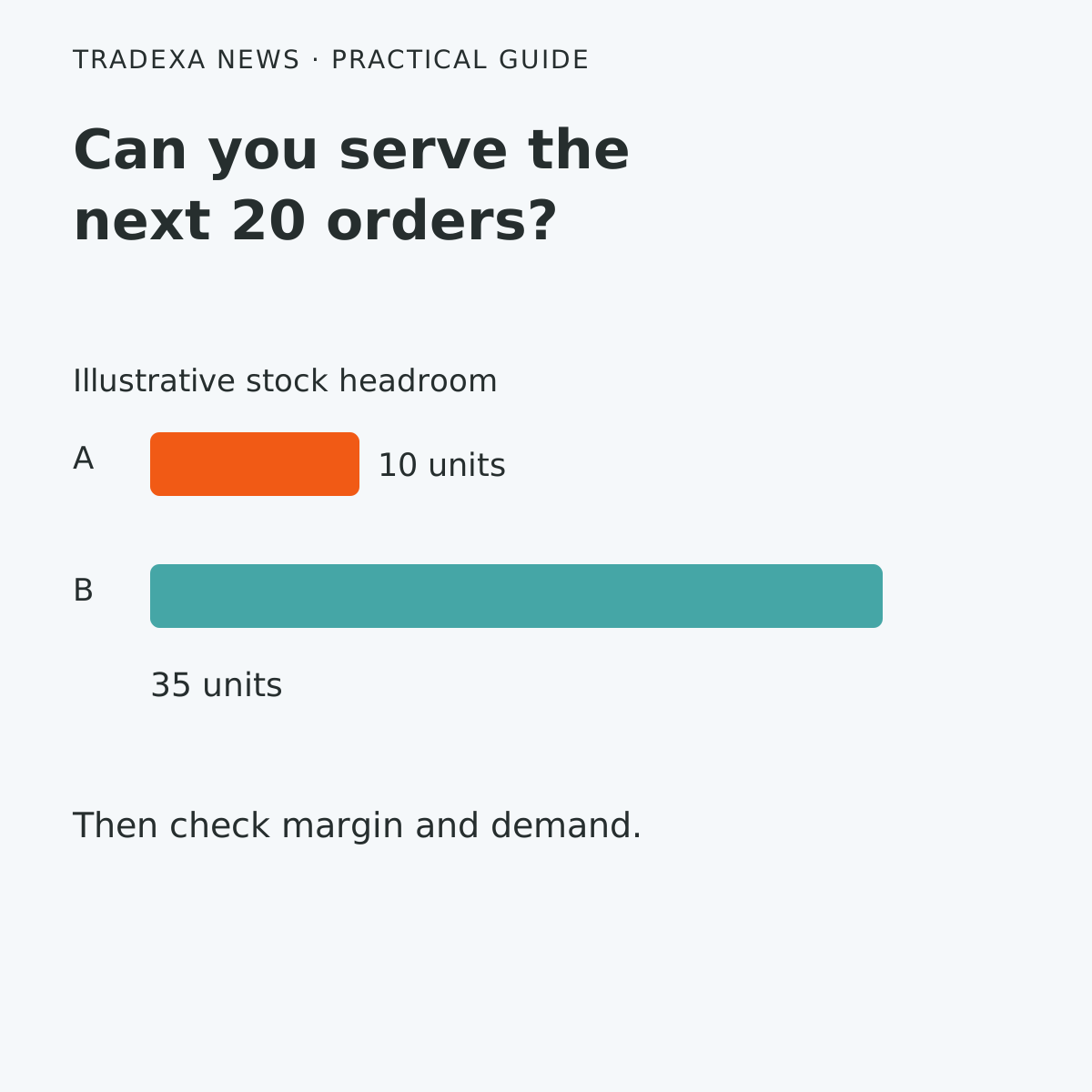
Suppose Product A has 80 usable units before commitments, of which 50 are already committed. You expect 20 ordinary sales before the next reliable replenishment. That leaves ten units of planning headroom for extra demand: 80 − 50 − 20.
Product B has 70 usable units before commitments, ten committed and 25 expected ordinary sales in the same period. It has 35 units of headroom. B is easier to support if the advertising test aims for 20 additional orders of one unit each; A needs a smaller test or a credible replenishment plan.
These are planning estimates. Advertising may not generate the desired orders, and ordinary demand may change. Watch the stock position during the test rather than treating the initial calculation as a reservation for advertising.
Check the money left from the sale
Stock alone does not make B the winner. Compare realised selling price after relevant discounts and refunds with product cost, selling fees, fulfilment and expected return costs. Work out what remains for advertising and the business’s other costs.
Use a consistent period and sales basis. A supplier price, a gross selling price and revenue reported by an ad platform are not automatically comparable inputs.
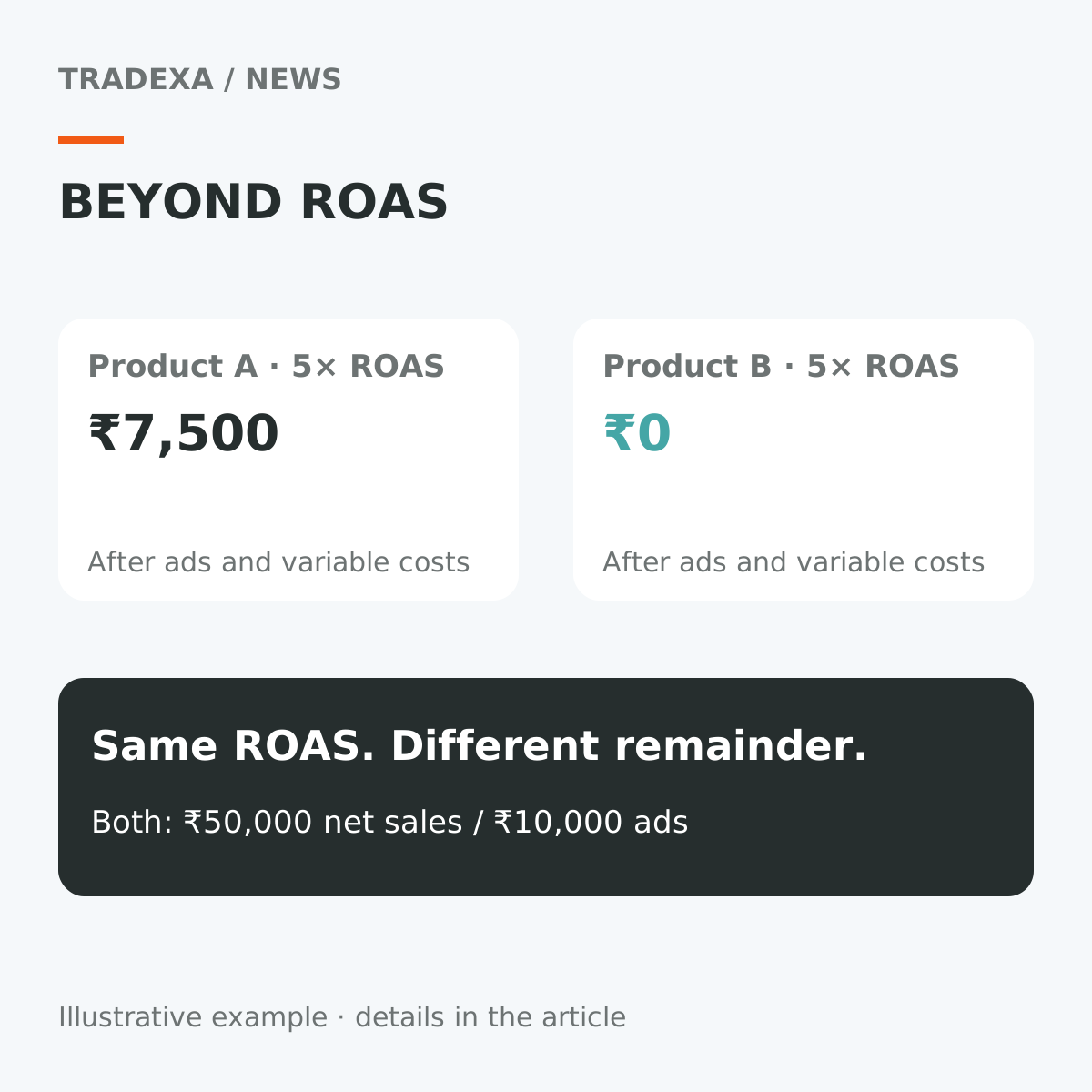
The product-margin and ROAS guide explains break-even and target thresholds. Here, use that threshold to filter the shortlist; do not choose a product purely because it has plentiful stock or a high revenue-based ROAS.
Separate demand evidence from a clearance wish
Recent sales, relevant customer enquiries and supported advertising results can help you choose what to test. Old stock may deserve a promotion, but its age does not establish that more advertising will make it sell. Price, product suitability, seasonality and the listing itself may need attention first.
Tradexa’s HyperAds connects supported advertising across Amazon, Google, Meta and Flipkart with product-level stock, purchase-cost, margin, profitability and sales context. It provides product, budget, keyword, bid and campaign-priority recommendations where applicable, plus configured automatic actions and rule-based optimisation.
That means the advertising discussion can use the same product’s commercial and stock context. The available controls still differ by channel; automatic optimisation does not remove the need for accurate inputs and agreed objectives.
For Google Shopping, product availability must also remain consistent with the product page and checkout. Google Merchant Center’s availability guidance explains the requirement. A warehouse planning sheet does not replace an accurate feed and a truthful customer-facing promise.
Copy this product advertising decision card
- Product and channel: identify the exact variant and selling route.
- Fulfilment window: use the period before dependable replenishment.
- Headroom: usable units before commitments, less commitments and expected ordinary demand; record replenishment separately.
- Economics: net sales basis, included variable costs and the advertising threshold.
- Demand evidence: observed sales, enquiries or campaign results; note what remains a hypothesis.
- Test: budget, intended stock exposure, review date and who monitors availability.
- Decision: test now, repair the economics or listing, wait for stock, or exclude; record the reason and stop/change condition.
A shorter shortlist with clear reasons gives the team a more useful starting point than promoting everything in the catalog. Use the available stock and margin to choose the next test, then review the fulfilled sales and contribution it actually produces. Budget released from an unsuitable product can be considered for a stronger candidate; moving it does not guarantee an improvement.
Example note: The stock quantities and demand assumptions are illustrative, not measured customer results. Replace them with your commitments, sales expectations and replenishment evidence.