Suppose you're approving the next supplier order for three appliance stores. One manager needs more of a popular mixer. Your supplier has an attractive offer on a different model. Both could go on the order—but somewhere in your warehouse, there may already be enough of the second model to cover the next few weeks.
Before committing more money, bring stock age, stock value and sales into the same review. Then check usable stock against customer commitments and demand until the next replenishment. That is how you find which products need attention before another carton arrives.
The benefit is a clearer choice for the same budget. You can replenish what customers are buying instead of adding to what is still waiting to sell. Your team can spend less of the review finding quantities and more of it deciding what to do with them.
Find where your money is waiting
Imagine you hold 40 units of the slower-selling mixer, bought at ₹3,000 each. You've paid the supplier, so ₹1,20,000 is in that stock. For this example, the purchase figures exclude tax and other acquisition costs.
Twenty-four mixers sit in the ageing report's 90–180 day group: ₹72,000 in the older portion. The proposed order adds another 12 at the same cost, committing ₹36,000 more.
That changes the question. It's no longer just “Is this a good price?” It's “Why put more money behind this model before the existing stock has sold?”
Start with products where older stock holds meaningful value. A large quantity of inexpensive accessories can look more urgent than a few appliances, even when the appliances hold more money. Read quantity and value together, using a consistent cost basis and checking the report date and ageing method.
Tradexa's HyperInventory stock-ageing report shows quantity and value in 0–30, 30–60, 60–90, 90–180 and 180+ day groups, with a CSV export. It gives you a shortlist for the buying discussion instead of relying on somebody remembering which cartons have been there longest.
Older stock isn't automatically a loss. The shortlist tells you where to look; the next check tells you why it is there.
Work out whether the problem is demand or availability
Twelve of these mixers sold over the last four weeks—three a week—while 40 remain. Before calling the model a slow seller, check what customers actually had a chance to buy.
Was it available in the stores that wanted it? Was the exact variant listed on the website? Did a promotion lift last month's sales, or did a stockout suppress them? A seasonal line waiting for its selling period needs a different response from a model customers have stopped choosing.
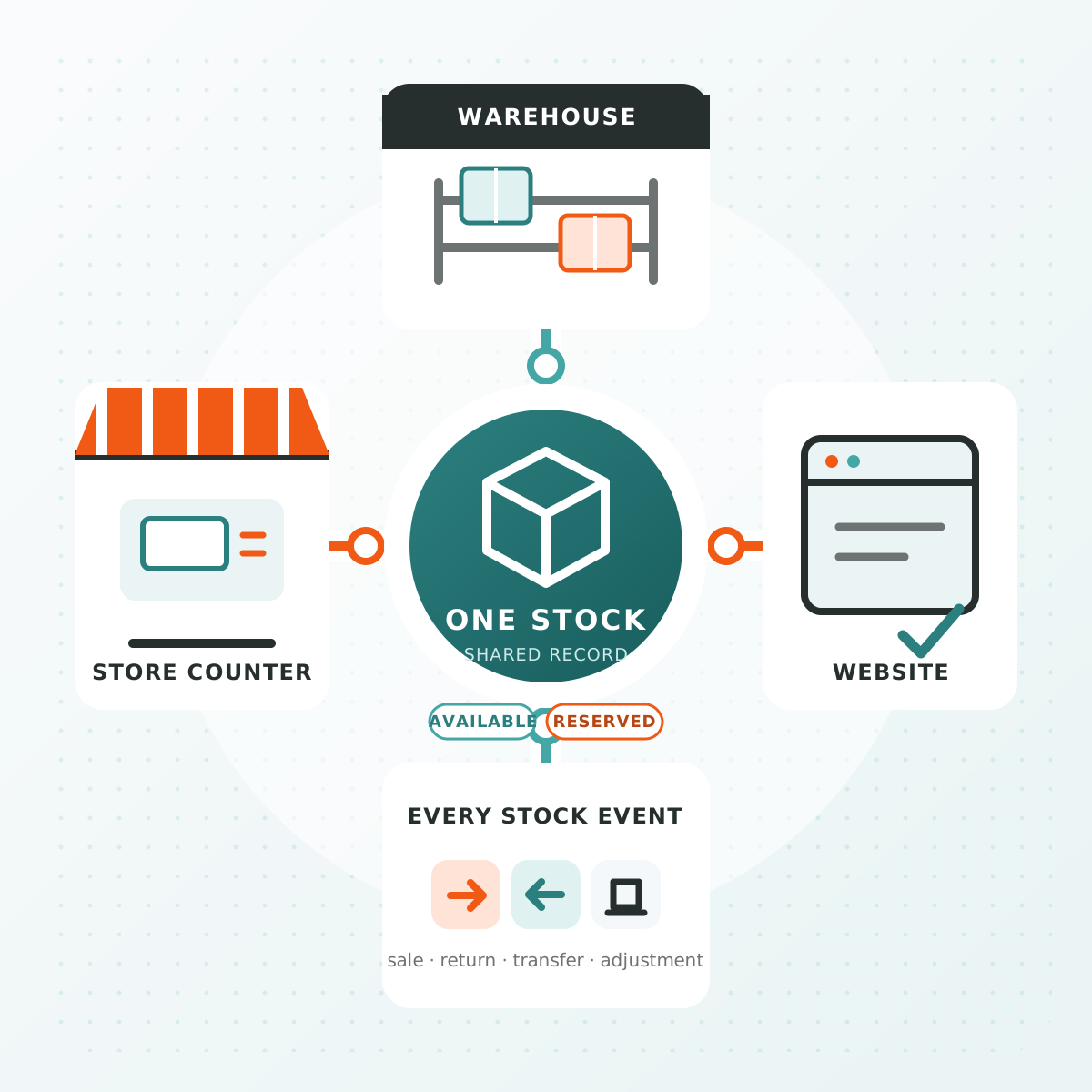
Look across the locations and channels the purchase will supply. Tradexa's branch and warehouse stock visibility, alongside sales and purchase reporting, helps bring those records into one buying discussion. You can distinguish a company-wide shortage from a store request that existing stock elsewhere could fulfil.
Your team still needs to explain what happened on the floor. But the conversation starts with the product and its records, not a round of calls to establish whether the stock exists.
For the mixers, there's no upcoming seasonal peak or large new order changing demand. Now you can test whether another purchase is needed at all.
Buy for the gap, not the habit
Four of the 40 mixers are reserved for accepted customer orders. That leaves 36 available. They're sellable, the locations holding them can supply expected orders, and no additional delivery is on its way.
Your next review is in a week, and a supplier order placed then takes two more weeks to arrive. At the recent rate of three sales a week, plan for nine additional sales over that three-week window and keep six units as a cushion. Those are new sales beyond the four orders already reserved. Adjust the cushion for sales variation, delivery reliability and the cost of a shortage.
- Available to sell: 40 held − 4 reserved = 36 mixers.
- Three-week requirement: 9 expected sales + 6 as a cushion = 15 mixers.
- Above that requirement: 36 − 15 = 21 mixers already available.
You already have more than twice the planned requirement. Don't order another 12 yet; review again next week. A new bulk order or changed delivery time brings the check forward.
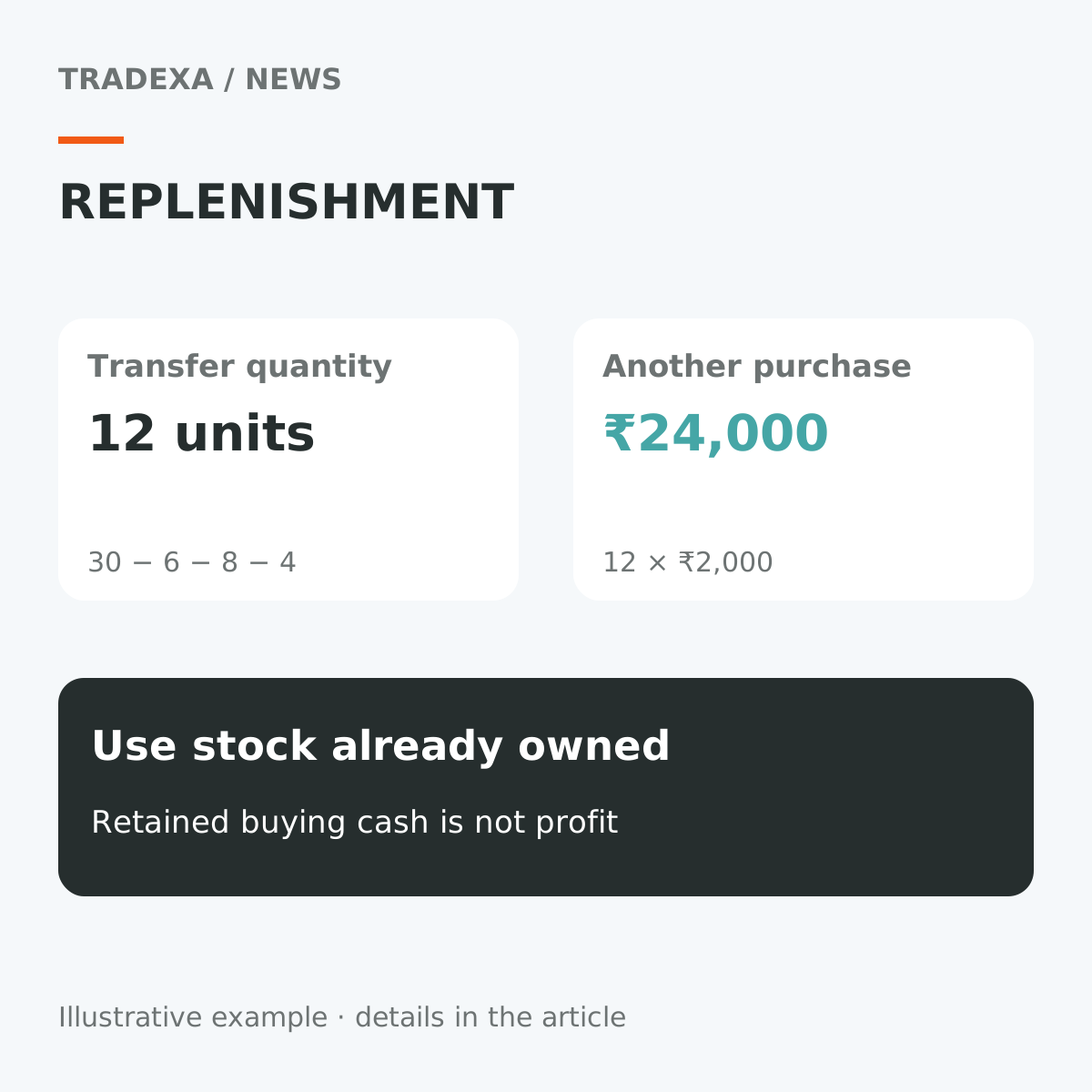
That keeps ₹36,000 available for your next buying decision—perhaps replenishing the model customers are asking for, after checking its stock and terms. The supplier's offer can wait. The customer asking for the other model might not.
Tradexa also supports demand forecasts and signals for overstocked and understocked products. Use them alongside stock and sales to inform this decision; customer commitments, supplier terms and the purchase itself still need your judgment.
If the available quantity is unclear, see how to keep stock connected across stores and your website. Reservations and fulfilment locations affect what you can sell, not just where you can find it.
Give the existing mixers a job to do
Pausing the new order stops adding to the pile. The mixers already paid for still need a route to the customer.
Imagine the store manager finds this mixer isn't on display. Restoring the display and correcting the product information is a specific action to try before paying for a promotion. Next week's sales give you something to review.
If demand has moved to another model, a display change may not be enough. Assess a targeted offer, a transfer to a store with demand or a supplier return where the agreement permits it. Choose the response from the reason the stock has stayed, rather than turning every older item into a clearance offer.
Before a markdown, check what remains after purchase cost, delivery, selling fees and promotion costs. Moving stock faster helps only if the commercial result makes sense too.
Assign the next action: purchasing holds the additional order, the store manager handles the display, and both return to the same review date. A short record of what you decided and why prevents next week's discussion from starting at zero.
The annual impact across 1,000 products
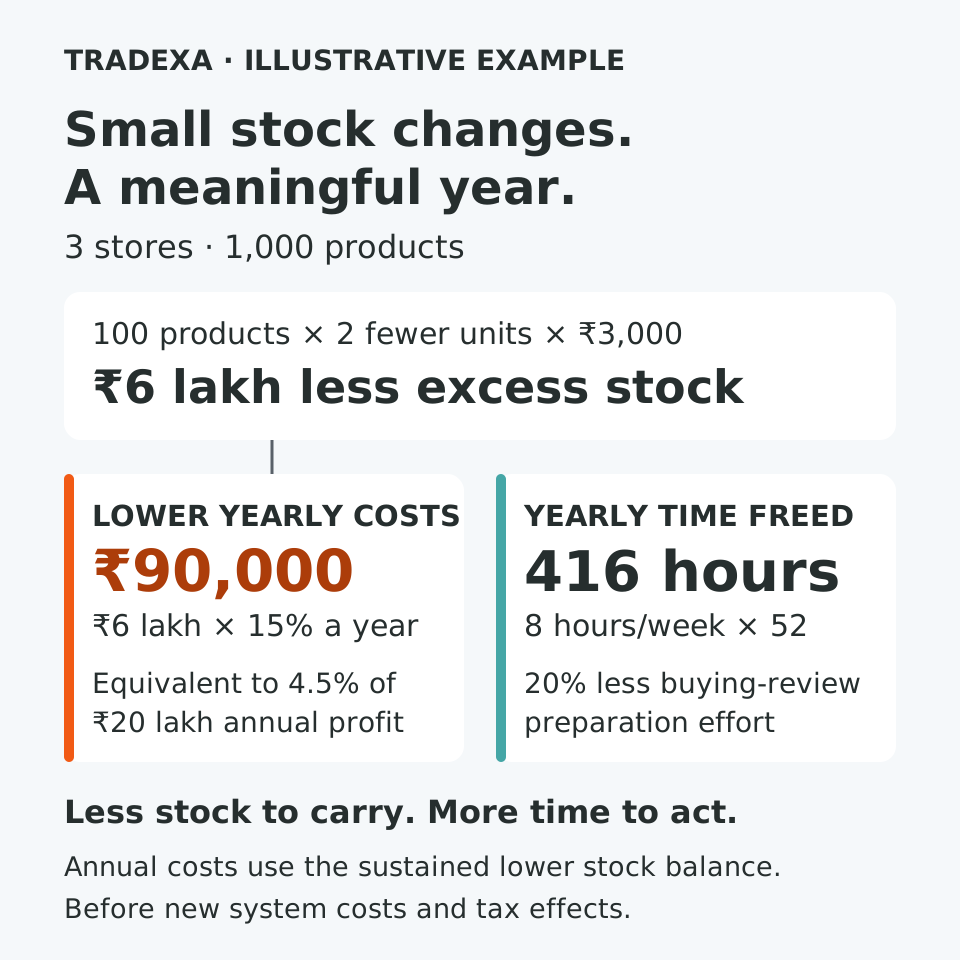
Carry that buying habit across the catalogue. Suppose the same three-store business holds 1,000 products, averaging five units each at ₹3,000 purchase cost. That's ₹1.5 crore in average inventory at cost, against annual net profit of ₹20 lakh. Its buying reviews identify ₹15 lakh of average excess stock—10% of the inventory value.
You don't need every product to improve. Across 100 affected products, selling existing goods and placing smaller repeat orders reduces average excess by two units per product, while retaining the stock needed to serve demand.
- Average stock reduction: 100 products × 2 units × ₹3,000 = ₹6 lakh less excess stock to carry.
- Average excess remaining: ₹15 lakh − ₹6 lakh = ₹9 lakh.
Use an annual carrying rate of 15%: 12% for financing and 3% for inventory-related storage, handling and insurance costs that fall with the stock held. Fixed warehouse rent, markdowns and obsolescence are outside this calculation. Once that lower average balance is sustained through a year:
- Financing cost reduction: ₹6 lakh × 12% = ₹72,000 a year.
- Other carrying-cost reduction: ₹6 lakh × 3% = ₹18,000 a year.
- Total: ₹90,000 lower annual costs—equivalent to 4.5% of the ₹20 lakh annual profit baseline, before new subscription, implementation costs and tax effects.
The ₹6 lakh is less money held in excess inventory. The ₹90,000 is the annual cost of carrying that money and stock. They answer different questions: how much capital is tied up, and what keeping it there costs.
Now look at the preparation for buying reviews. Across the three stores and 1,000 products, compare the same weekly tasks using combined staff-hours:
- Collecting branch stock, sales and purchase figures: 12 → 8 hours. Connected reporting reduces the time spent collecting separate figures.
- Aligning products and periods for the buying review: 16 → 12 hours. The team works from the connected records, with fewer separate sheets to bring together.
- Following up on differences and checking exceptions: 12 → 12 hours. Stock condition, unusual demand and supplier questions still need attention.
That brings preparation from 40 to 32 hours a week. Buying judgment sits outside this preparation total. Over 52 working weeks:
- Review preparation: 40 → 32 hours a week = 20% less preparation effort.
- Annual capacity freed: 8 × 52 = 416 staff-hours.
- At ₹300 per loaded staff-hour: ₹1,24,800 of staff capacity for follow-ups, stock exceptions and other work.
Eight hours a week is a full staff-day you can redirect to stock exceptions, supplier follow-ups or getting the right products into stores. The value is recovered capacity; it is separate from the carrying-cost reduction.
Tradexa's ageing, branch-stock, sales and purchase views support the checks behind these decisions. They help you see which products deserve attention and bring the evidence into the review. The improvement comes from acting on that information: holding unnecessary orders, resolving availability problems and reviewing the result.
The annual picture is now concrete: ₹90,000 lower carrying costs and 416 staff-hours freed, with ₹6 lakh less money held in excess inventory. The cost reduction is equivalent to 4.5% of the annual profit baseline; the time change is 20% of buying-review preparation. You don't need to change the entire catalogue to make the habit worthwhile.
One mixer order makes the choice easy to see. Repeating the checks across the affected products—and acting on them—turns that individual decision into a meaningful yearly difference.
Leave room for the next range or store
Next week's buying conversation can start with a decision already understood: what you held, why the extra order waited, who changed the display and what sold since.
As you add products or another store, check what the business already owns before funding an opening order for every line. That gives the budget a clearer purpose and your team a shared basis for the next purchase. Keep sales and stockouts in the review too—the aim is to fund demand, not simply to carry less.
Start with one product on your next supplier order. Find the money already in it, check whether more stock is needed now, and give the existing units a specific next action.
To follow that decision using your branch setup, ask Tradexa for a stock-ageing and inventory-planning walkthrough.