Start with the product records you already use to receive goods, take orders and bill customers. Before moving them to new software, agree which record represents each sellable item, what unit it uses and how the old references will connect to the new ones.
Cleaning names is part of that work, but the important question is identity. Two similar descriptions may refer to different pack sizes. Two different descriptions may refer to the same item. If the migration gets that distinction wrong, the confusion can travel into stock, prices and orders.
Set the matching rule before editing the file
Keep an untouched export from the old system and work on a dated copy. Record where each file came from and who can resolve questions about it. This preserves the old references when a proposed change needs checking.
Choose the fields that establish identity for your catalogue: an existing product code, manufacturer reference, variant, pack size and selling unit may all matter. If a product uses a genuine GS1 GTIN, retain it accurately. GS1 explains that one GTIN identifies one product and that a bottle's size is part of its identity. An internal product code and a GTIN are different references; do not invent a GTIN to fill a blank cell.
A name is useful for people, but a name alone is a weak matching rule. Agree how you will identify an item even when an old file has abbreviations, inconsistent spelling or a marketplace-specific title.
Similar names are a queue for review, not permission to merge
Consider an illustrative catalogue with “Cleaner 500 ml”, “Cleaner 500ML” and “Cleaner carton 12 x 500 ml”. The first two might be duplicate descriptions of one item. The carton may be a distinct orderable pack or a unit conversion against the bottle, depending on the business's records and the destination system.
Check the product code, actual packaging, unit and ordering practice before deciding. A carton of twelve bottles is not the same quantity as one bottle. Write down the conversion if your workflow uses one, and confirm how the new system represents it. Do not assume that typing “carton” into a description creates a working conversion.
Record a decision for each suspicious pair: keep separate, link as a confirmed duplicate, or hold for clarification. Resolve it with the person responsible for the catalogue or the goods. A supplier code can be a supporting clue, but matching codes from different suppliers does not by itself prove that the products are identical.
This is also a good moment to separate active items from discontinued ones. An old item may still be needed to understand a return or historical transaction. Agree how history will remain accessible before deciding what belongs in the first active import; avoid deleting old records merely to make the file shorter.
Use one mapping record for every item that needs a decision
Copy this record into your preparation sheet. It gives the catalogue owner and implementation team a common way to explain what should happen to an old row.
- Source system/file and export date: ______
- Old product code and old description: ______
- Proposed destination code and clear description: ______
- Variant, size and pack quantity: ______
- Selling unit and any agreed conversion: ______
- Manufacturer reference or GTIN, if applicable: ______
- Decision: keep separate / confirmed duplicate / hold
- Reason and supporting reference: ______
- Person approving the identity decision: ______; date: ______
- Test result and unresolved action: ______; owner: ______
Use the destination's actual import template to prepare the upload. This mapping record is an explanation of identity decisions, not a universal import file. Add required fields from that template, and ask the implementation team to clarify required formats before changing your source values.
The useful output is a trace from an old code to its intended new record. Someone checking an order or a stock difference should be able to follow that trace without guessing which renamed item it became.
Test the awkward records before the full catalogue
A small test should include the cases most likely to expose a wrong assumption: a suspected duplicate, a similar-looking variant, an item sold in more than one unit, a discontinued item with an agreed treatment and a product whose name differs across channels.
Agree the test environment and scope with the implementation team. Compare the imported code, description, variant and unit with the mapping record. If opening stock is part of the test, confirm the quantity and unit as well. Then use the agreed sample workflow to check that the intended item is selected when an order is prepared.
A successful upload tells you that a file was accepted. It does not establish that the right products were matched. Close the unresolved identity decisions, record corrections and repeat the affected checks before approving a larger batch.
HyperInventory supports bringing products, buyers and stock across in bulk, including products from Amazon listings. That provides an import path; catalogue cleanup and acceptance still need an agreed scope and responsible people. Ask to see your sample records move through the relevant workflow rather than relying on a generic demonstration.
Leave a catalogue the next person can maintain
Keep the accepted mapping with the migration records. Assign an owner for new product codes, units and variant descriptions, so the next marketplace listing or supplier file does not reintroduce the ambiguity you just removed.
Clear identities can reduce repeated clarification when staff prepare listings, replenish stock and process orders. The practical opportunity is to give that attention back to keeping products ready to sell across Amazon, the website, stores or dealers. The benefit depends on consistent use of the agreed records; cleanup alone does not create new sales or reconcile every historical transaction.
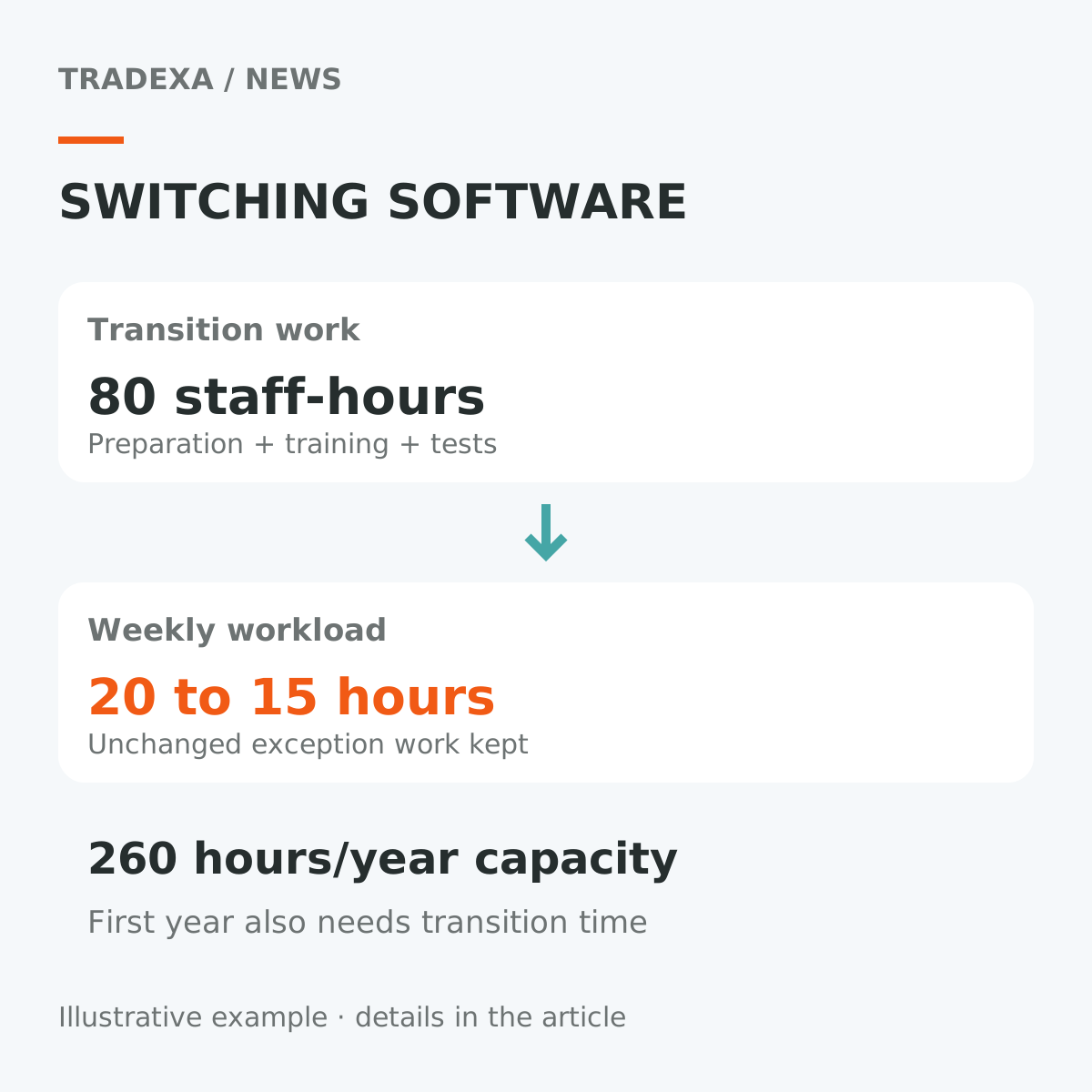
For the wider budget, use the separate guide to software switching costs beyond the subscription. This article owns the product-identity decisions; that guide covers implementation effort, training and overlap costs.
Your next step is small: choose the difficult product records, complete their mapping and agree the sample acceptance checks. A clear decision on those rows is more useful than polishing thousands of names while the pack-size question remains unanswered.
The cleaner example is illustrative. Confirm pack and unit treatment against your own goods and the destination system's supported workflow.