Suppose a picker asks where a carton is. One colleague says “the back rack”; another remembers moving it yesterday. The stock quantity may be correct, yet the order still waits while someone finds the goods.
Give each storage position an address people can read, and record movements against that address. A useful location system connects three things: the label on the rack, the location in the stock record and the way staff describe it to one another. More detailed labels help only when those three agree.
Start with an address someone else can follow
Walk the warehouse with the people who receive and pick goods. Note how they already describe the space, where descriptions become ambiguous and which storage positions need to be distinguished. Keep the useful parts of that language.
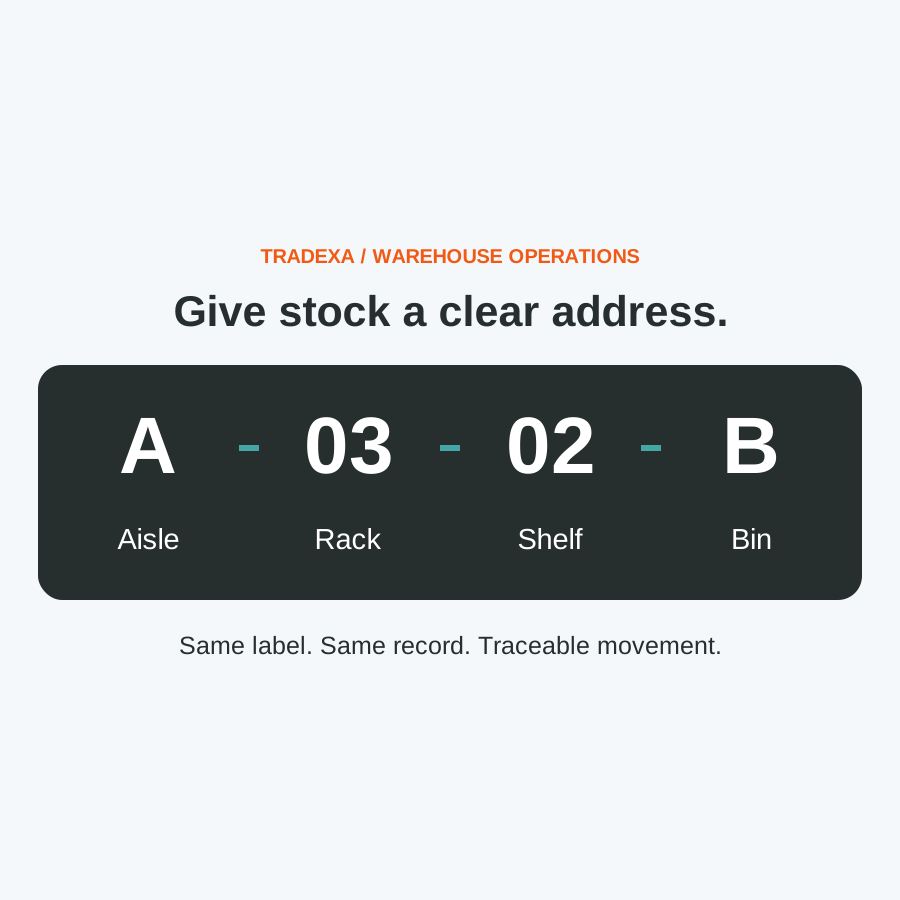
For example, A-03-02-B could mean aisle A, rack 03, shelf 02, bin B. The cover shows this illustrative address. Decide the reading direction before printing labels: which end starts the rack sequence, how shelves are numbered and where the bin letters begin. Use the same rule throughout that warehouse.
A small room may only need rack and shelf. A larger warehouse may also need a zone. Do not create five levels because the software allows five; create enough detail for the person doing the work to reach the right place without a second explanation. When multiple warehouses use the same local codes, always include the warehouse in the record and instructions.
Keep the location name about the place. “Rack 03” can still mean the same place when its contents change; “charger rack” becomes confusing if the chargers move. Product names and quantities belong in the stock record beside the location.
Give receiving stock a destination, including exceptions
Receiving, returns awaiting checks and goods ready for dispatch may need separate identified areas. Agree which are storage locations and which are temporary holding areas, with an owner responsible for moving goods onward. A carton in a holding area should have a visible next action rather than silently disappearing from the location record.
Before assigning a bin, check that the goods suit the available space and handling requirements. A location code does not establish a rack's load capacity or make an unsafe lifting task acceptable. Keep approved safety and access arrangements in place when reorganising storage. The UK's HSE warehousing guidance is a useful general reference on handling and traffic risks; local requirements and your site's assessment still apply.
In HyperInventory, bin and rack management can organise locations through zone, aisle, rack, shelf and bin levels. Putaway suggestions and product-and-batch quantities by bin help connect receipt to physical placement. Capacity and stock-category restrictions can be configured where relevant. These records support the process you agree on; they do not decide your floor layout for you.
Copy this location and movement record
Use this compact record for a pilot area before extending the naming system. Fill it with one actual storage position and one actual movement.
- Warehouse and location code: ______
- Reading rule: zone/aisle ______; rack numbering starts at ______; shelves run from ______
- Physical label checked by: ______; date: ______
- Product code and description: ______; batch or serial reference where relevant: ______
- Quantity and unit: ______; stock status or restriction: ______
- Movement: from ______ to ______; quantity and unit ______; reason ______
- Movement recorded by: ______; date/time ______
- Difference or unfinished action: ______; owner ______; next check ______
The output is an address people can follow and a movement someone can trace. If the physical label and record disagree, resolve that difference before treating the location as ready. If the product occupies more than one bin, record each quantity separately instead of forcing the stock into one convenient address.
This sheet is a process aid, not a required HyperInventory import format. Use the fields your implementation supports when turning the agreed process into system records.
Keep the address true when stock moves
A neat label can become stale on the first busy afternoon. Decide who records putaway, bin-to-bin transfers, picking and exceptions, and at what point in the physical movement they do it. When a pick cannot be completed, record the difference and the actual replacement location rather than asking staff to remember it for later.
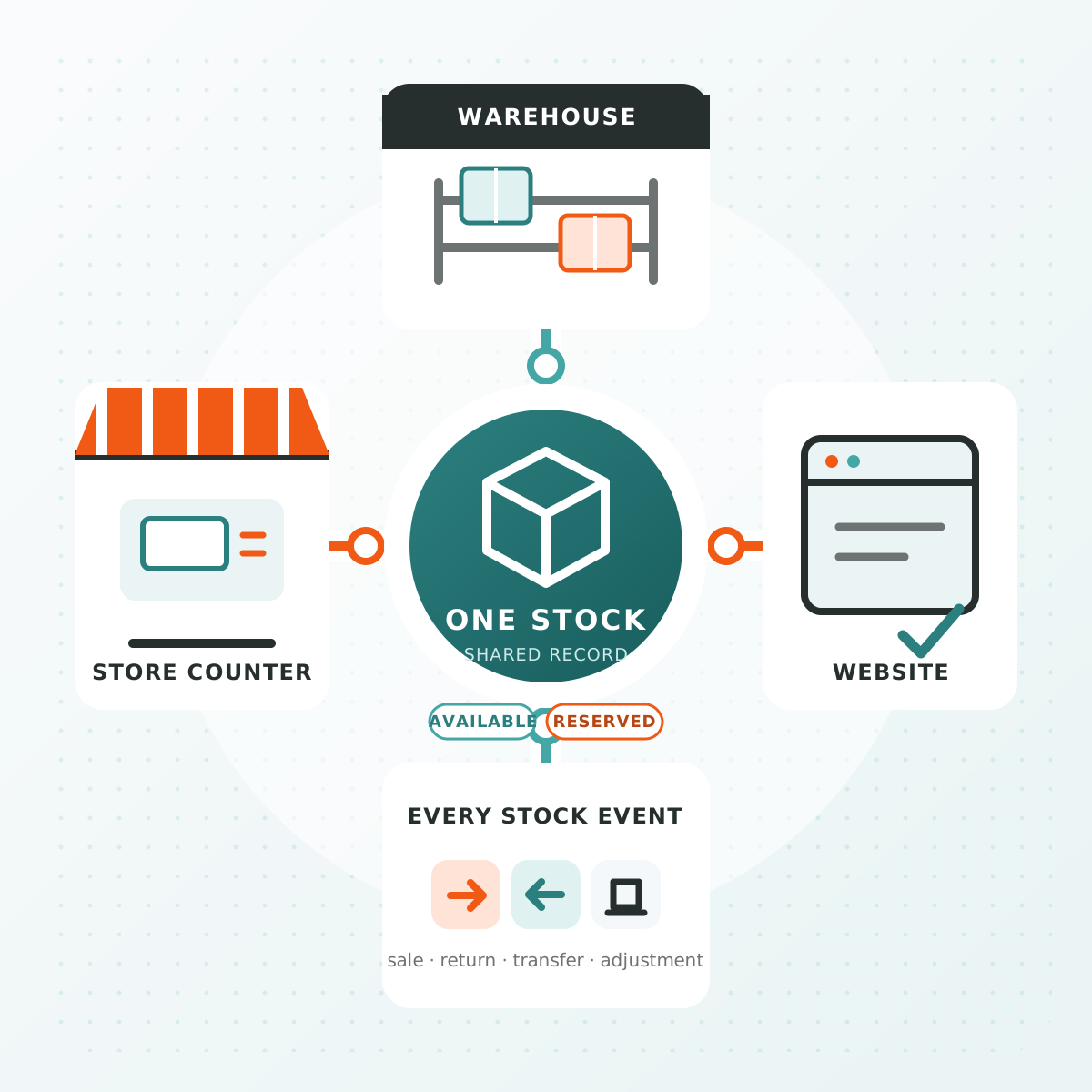
HyperInventory supports bin-to-bin transfers, guided picking, reservations and bin-level stock audits. A product can have stock in several bins; the process need not assume one permanent home for each product. Bin barcodes can help staff identify locations, but location scanning and product identification serve different jobs.
Agree what must be checked before dispatch in your own operating procedure. Picking suggestions are not a promise that the software blocks every shipment until bin confirmation. If confirmation matters to your handover, include it in training and supervision.
Once stock is easier to locate, the opportunity is to use less of the team's attention on repeated searches and more on preparing orders, resolving short picks and bringing receiving stock into saleable locations. That can support additional order work when picking is the constraint. It does not replace adequate staffing, safe handling or reliable stock counts.
For stock that needs moving between branches, use the separate transfer-or-buy comparison. Location naming helps find the goods; that comparison helps decide whether moving them makes commercial sense.
Test the handover before naming the whole warehouse
Choose a small area and ask a colleague who did not design the labels to locate a product using only the agreed warehouse, location and product references. Then trace a receipt into a bin, a move to another bin and a pick out of it.
Where the colleague needs an explanation, improve the address or the record. Where the physical quantity differs, investigate the movement. Extend the system when the handover works, rather than when every label has been printed.
The example address is illustrative. Use a naming rule suited to your space and test it with the people who will use it.