The bank deposit is smaller than the sales total. Before treating the gap as missing money, check whether you are comparing the same settlement period and whether fees, refunds and adjustments explain it.
An Amazon order, an invoice and a bank transfer describe different stages. Reconciliation connects them through the settlement detail; it does not make the three headline totals interchangeable.
Choose the settlement before choosing the sales total
Start with one settlement identifier, its period, currency and deposit reference. Keep the statement or report that explains that settlement beside the bank entry you intend to match.
Amazon's current Flat File V2 settlement-report documentation lists settlement dates, deposit date, currency, order references and transaction amounts. It separates the kind of amount from its description. Those references help explain the transfer rather than guessing from a monthly sales dashboard.
A refund posted now may relate to an earlier order. A transfer may arrive at the bank after the transactions it settles. Record those dates instead of forcing every row into the invoice month or treating a timing difference as an unexplained shortage.
Match the row to the invoice behind it
Use the Amazon order reference and item detail to identify the relevant invoice or transaction. Where an order has several items or shipments, keep enough detail to avoid applying one amount to the wrong line.
Separate sale charges, refunds, fees, promotions and other adjustments according to the actual report. Do not add a subtotal and its component rows twice. For a refund or correction, retain the link to the original order and the supporting return or accounting document where relevant.
If a row has no matching invoice, make it an exception with an owner. An unmatched amount is not permission to invent an invoice, create an expense category or overwrite a payment. Finance should decide the appropriate treatment from the underlying evidence.
Walk from the report to the bank amount
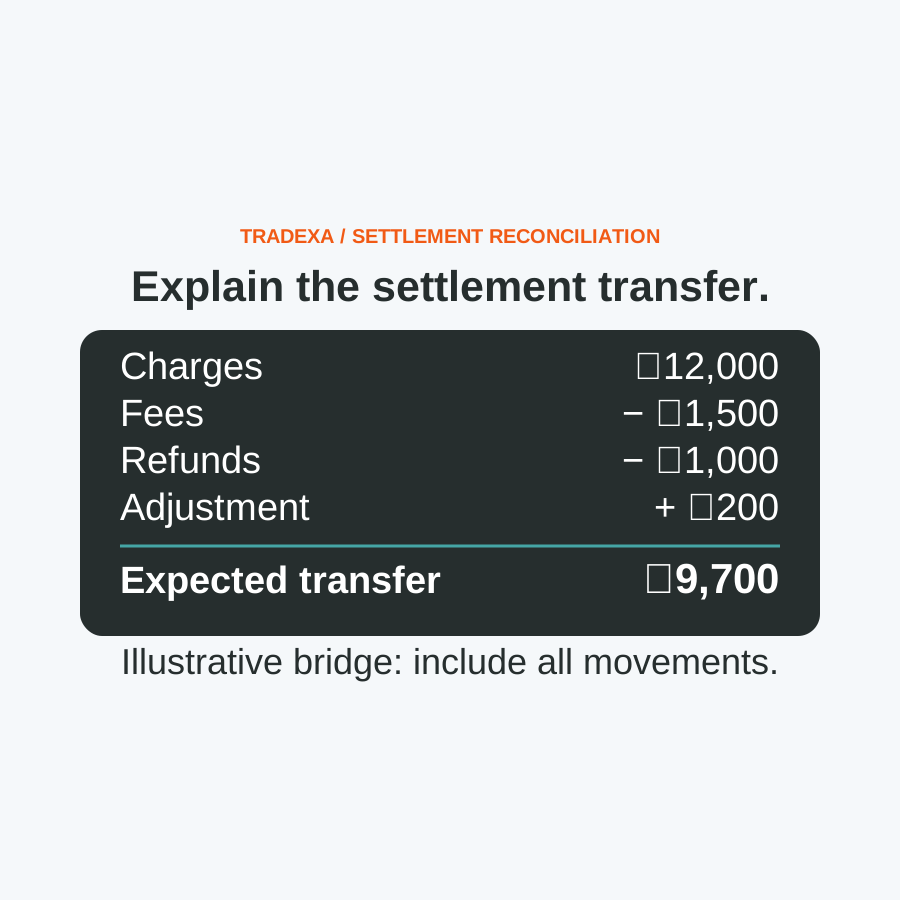
Consider an illustrative settlement containing ₹12,000 of charges, ₹1,500 of fees, ₹1,000 of refunds and a documented positive ₹200 adjustment. There are no other balance movements in this simplified example.
The expected transfer is ₹12,000 minus ₹1,500 minus ₹1,000 plus ₹200, or ₹9,700. A ₹9,700 bank credit matches that transfer amount; it is not evidence that ₹9,700 was the product revenue or profit for the period.
The ₹200 adjustment needs its own description and reference. If your actual report includes reserved balances, tax withholding, an earlier balance or other rows, include their documented movement in the bridge. Do not assume the four example lines cover every Amazon settlement.
HyperInventory supports reconciling Amazon settlements against invoices, including fees, TDS, TCS, promotions and the net amount received. That brings payment detail back to the invoice workflow. It does not make every reduction an operating expense or replace the finance team's classification and accounting review.
Build a settlement exception record
Copy this record for one settlement. Use additional entries for rows that need investigation.
- Settlement identifier, period and currency: ______
- Report source and export date: ______
- Order/item reference and matching invoice or document: ______
- Charges, refunds, fees and adjustments included: ______
- Other documented balance or withholding movements: ______
- Expected transfer from the report: ______
- Bank reference, date and amount: ______
- Remaining difference: ______
- Unmatched row or document needed: ______
- Cause or question, owner and next action: ______
- Reviewed treatment and completion date: ______
In the worked case, the expected and received transfer are both ₹9,700, so the bank-amount difference is zero. Individual rows still need their correct invoice and category. Matching the total alone can conceal an incorrectly assigned payment.
Follow the difference to the next action
A missing invoice reference needs a document check. A refund needs the original transaction and relevant return evidence. A fee question needs its statement description. A bank timing difference needs the transfer reference and expected arrival, rather than another sales export.
Keep those questions in separate action buckets. This makes the next finance review about a specific unresolved row instead of repeating the entire settlement exercise.
Clearer reconciliation can reduce repeated searches for payment evidence and give the team a more useful view of money actually received. That attention can go into unresolved customer payments or the next supplier decision. A cleaner record does not itself collect new cash or prove that a marketplace is profitable.
For the cost of fulfilling an order, use the separate order-cost worksheet. This settlement record explains payment movements; that worksheet evaluates what the sale consumes.
Example note: The amounts illustrate a simplified settlement bridge, not Amazon fee rates or measured customer results. Use every relevant row, the actual period and currency, and the accounting treatment approved for your business.