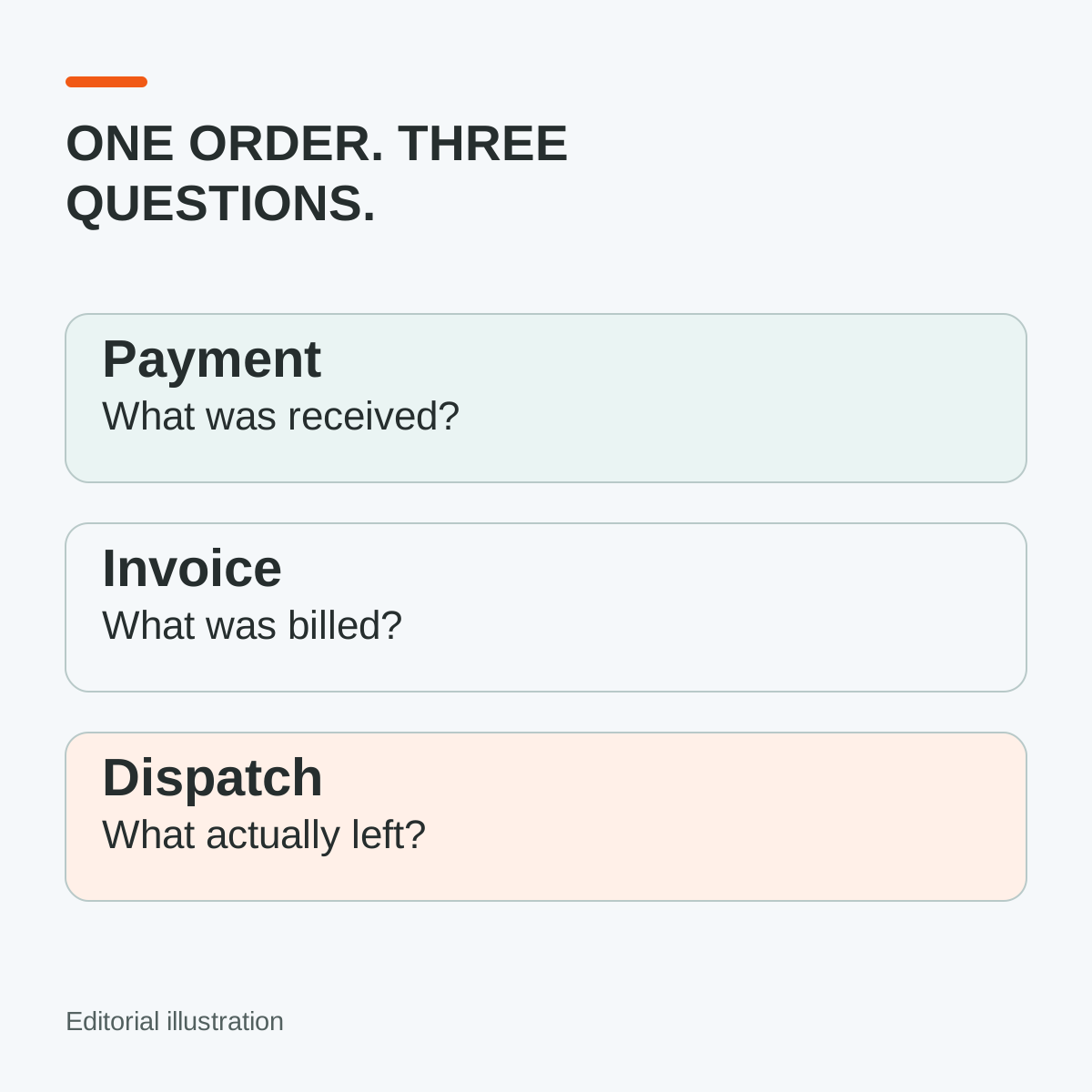
If a dealer asks, “Has my order gone?”, an invoice number is a tempting answer. It is also an answer to a different question. The useful reply identifies what has happened to the goods, what evidence supports it and who owns the next step.
Keep payment, invoicing and physical dispatch visible as separate facts. HyperInventory connects orders, payments, invoices and shipments, so the team can follow the relevant records without rebuilding the story from separate panels. The customer still needs an explanation of the actual handover—not a translation of whichever status was easiest to find.
Three facts can be true at the same time
Suppose you accept an order for twelve lighting kits. The dealer pays the agreed deposit, finance raises the invoice, and the warehouse has packed ten kits while two await an availability decision. “Payment received” and “invoice raised” may both be correct. Neither establishes that twelve kits have left the warehouse.
Payment answers what was received and what remains due under the agreed terms. An invoice records the billed sale. A physical dispatch needs its own evidence: the quantity handed over, shipment reference and carrier or collection acknowledgement appropriate to the route. Avoid treating these as a universal sequence; a credit sale and a prepaid website order have different commercial terms.
HyperInventory supports partial payments and dealer payment terms. That helps preserve the commercial context while the operations team handles the goods. It does not make a deposit permission to ignore a stock shortage or the business's dispatch controls.
Find the next unfinished handover
For the twelve-kit order, first resolve what is happening to the two missing kits. The answer might be an authorised partial shipment, a hold on the order or another supported fulfilment arrangement. Record that decision with its owner before packing turns uncertainty into a customer promise.
If ten are approved for dispatch, check the documents and quantities for that actual movement under your process. Do not announce twelve dispatched because twelve appear on an earlier document. Equally, a courier booking is not evidence of collection. Confirm the handover event your team uses, and distinguish collection from final delivery.
The short-pick handover guide covers the warehouse decision in detail. This status review begins with that decision and asks what the customer can now be told.
Give support an answer it can stand behind
A useful reply could say: “Ten kits have been handed to the carrier under shipment reference X. Two are on hold while our stock team confirms the alternative. We will update you by the agreed time.” Use only facts you can substantiate; the example is not a message template sent by the product.
Where configured and supported, HyperInventory's Shiprocket shipment tracking provides courier context on shipments. Other collection or delivery routes need their own evidence. Do not turn a generated shipment record, an estimated delivery date or a manually changed status into proof that someone physically received the goods.
This is where connected records matter commercially. Support spends less time asking finance whether an invoice means “sent”; warehouse staff receive the unresolved quantity and decision rather than the same broad chase. That capacity can be used to clear dispatch exceptions and serve a larger order workload when demand and fulfilment capacity allow.
Copy an order-status answer record
Use one record for the order and update the quantity-specific handovers as they happen.
- Order and buyer reference: ______
- Ordered, approved-for-dispatch and held quantities: ______
- Payment received, amount due and agreed terms: ______
- Invoice reference and billed quantity: ______
- Packed quantity and unresolved reason: ______
- Physical carrier/customer handover evidence and quantity: ______
- Delivery evidence, if available: ______
- Next action, owner and promised update time: ______
- Customer answer approved from those facts: ______
If the handover evidence is absent, the record's output is an action to obtain it, not a guessed delivery claim. Agree who updates each part so the record remains useful after today's shift changes.
Close the right job
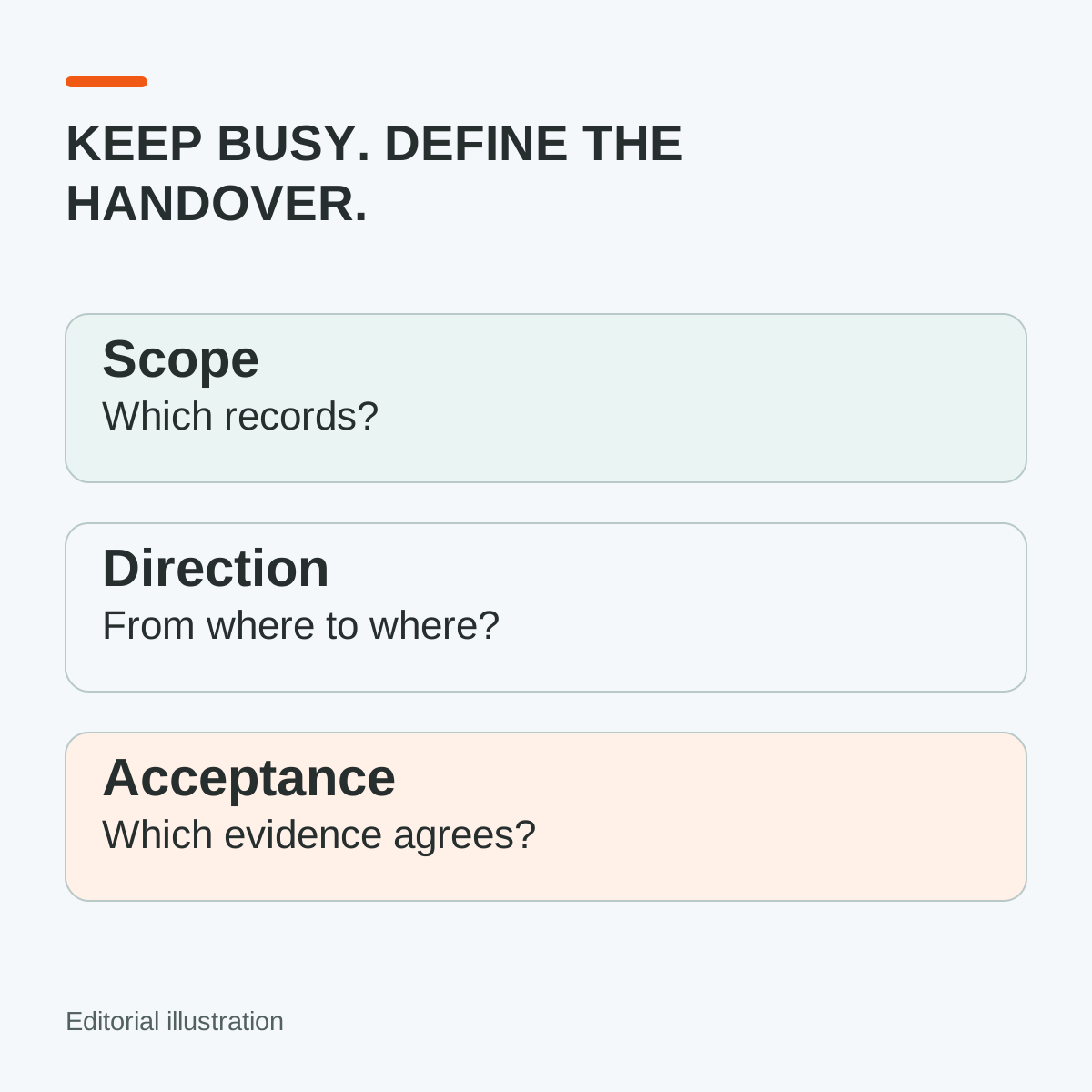
Follow the order through the outstanding work instead of trying to make every status say “complete”. Payment collection, dispatch and customer settlement may close at different times. Returns create another set of stock and money decisions; the return handover guide explains why those also need separate evidence.
For a Tradexa demonstration, bring one prepaid order and one dealer credit order. Ask the team to follow their records through payment, invoice and shipment, including one exception. The useful result is a customer answer and an accountable next step—not simply a row of green statuses.