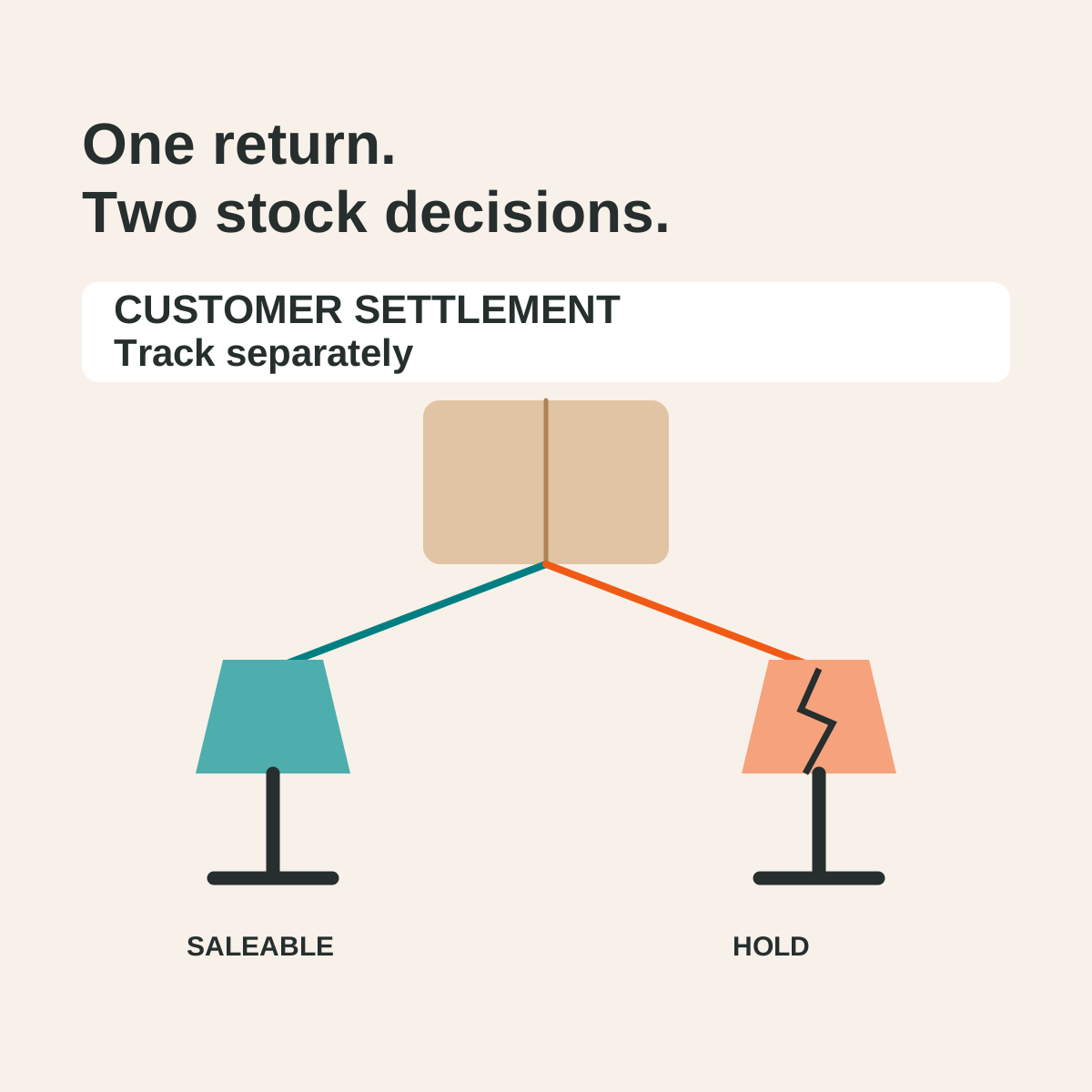
A customer brings back two boxed lamps. One is unopened. The other has a cracked fitting. The refund request is the same size, but the stock decision is not.
Track three things separately: what arrived, what may go back on sale, and what the customer is owed. Connect them through the original sale and a return reference. Marking a parcel received does not establish that its contents are saleable or that the refund has been paid.
Start with the sale and the reason
Find the original bill or order, the exact product and quantity, and any serial or batch information needed to identify it. Record the customer's stated reason and what they expect: refund, exchange or credit, subject to your policy and obligations.
If the sale cannot be identified, give the case an owner rather than inventing an invoice match. Keep the goods identifiable while the team resolves the evidence.
For a multi-store chain, also record where the return was accepted and where it will be inspected. A return handed to one counter should not disappear because the original order came from the website or another branch.
Inspect before making stock available
In this example, two lamps were received, but only one passes the retailer's inspection for resale. The cracked lamp stays physically separate and out of saleable availability while its next action is decided.
This is a process recommendation, not a claim that every sales-return posting in your software creates a quarantine state. Agree the location, stock treatment and release step with the team implementing your workflow. Check that an administrative stock increase does not expose a damaged unit to the website.
Record the actual condition and any missing accessories. “Returned” describes how an item came back; it does not describe whether another customer should receive it.
Settle the customer decision separately
Suppose each lamp was sold for ₹1,000 and cost ₹600, with tax omitted from this teaching example. If the agreed customer refund is ₹2,000, that cash movement is ₹2,000 even though only one lamp returns to saleable stock. The recoverable stock has ₹600 purchase cost; the other ₹600 remains a cost exposure pending repair, supplier recovery or write-off.
Do not add the refund and both purchase costs together as a new ₹3,200 loss. The original sale and cost entries also have to be reversed or adjusted appropriately. Finance should reconcile the whole transaction and avoid counting the same cost twice.
A credit note is not proof that cash reached the customer. A successful refund reference is not proof that the returned unit was inspected. Finance decides the required documents and tax treatment for the actual transaction.
Keep one return handover record
Copy these fields into your agreed return record or working sheet:
- Return reference; original bill or order; customer; receiving branch; received date.
- Product, quantity expected and quantity actually received; serial or batch where relevant.
- Inspection result by quantity: saleable, held for decision, or other agreed disposition; inspecting person.
- Customer resolution: refund, exchange or credit; agreed amount; approval owner.
- Financial document and payment references; stock movement reference; unresolved action, responsible person and due date.
- Closure check: physical quantities reconcile, the customer resolution is complete, and finance has checked the entries.
These are recommended working fields, not a representation of a particular product screen. On a partial return, identify the returned lines and quantities instead of treating the entire order as reversed.
Connect the teams without promising one-click closure
HyperInventory supports sales returns within the operating platform. Sales returns use a separate admin module; they are not processed inside its POS billing screen. POS credit-note redemption is a separate supported capability.
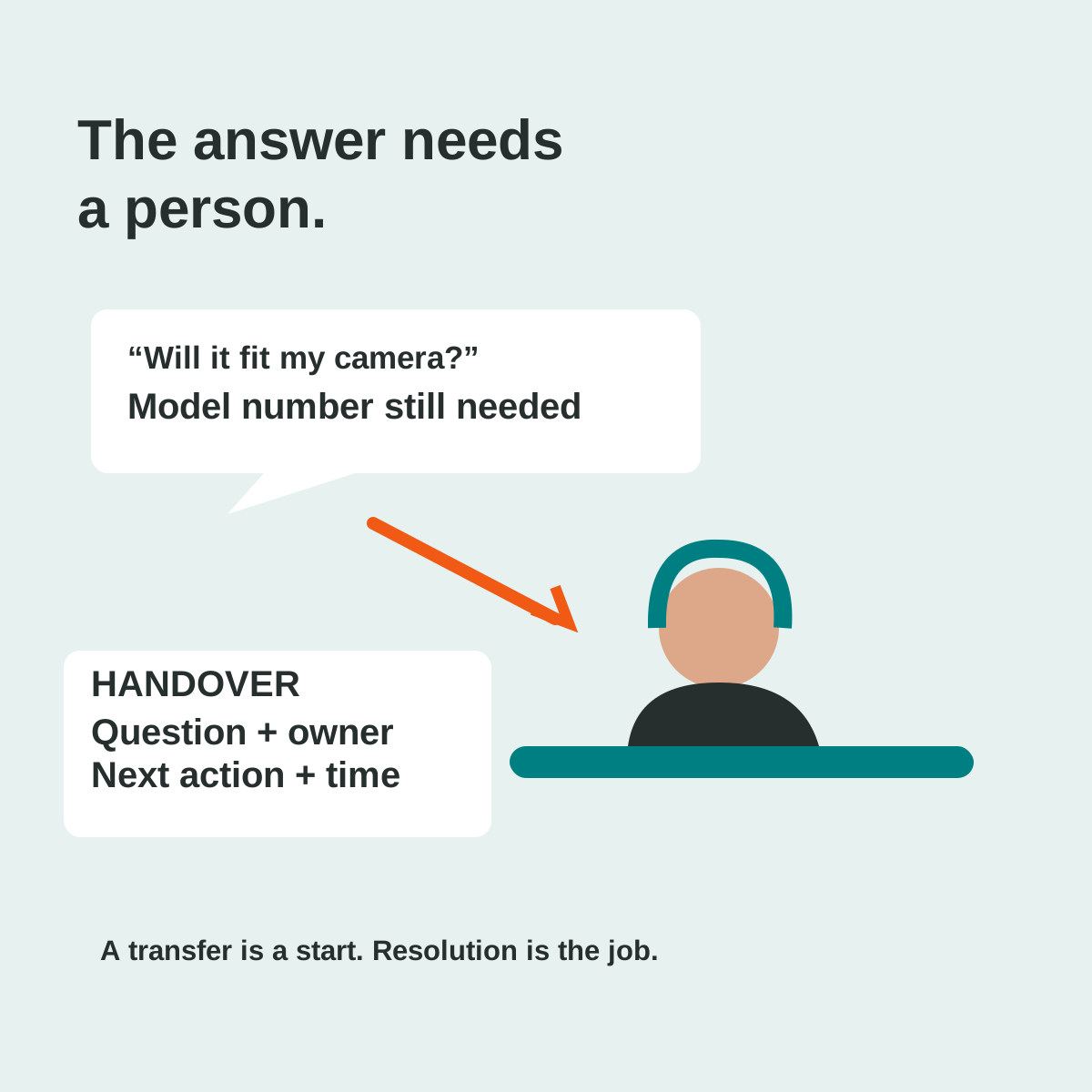
That separation helps you design a clear handover: the counter receives the customer's request, the responsible admin team processes the return, and finance confirms the settlement. Demonstrate the exact stock and document treatment with your own example before rollout. Do not assume the software automatically performs inspection, cross-channel refunds or every marketplace's return process.
The goal is that a second employee can answer “where is the item, can we sell it, and what remains for the customer?” without restarting the investigation. Faster resolution can return good stock to use and keep the service team free for the next order; damaged stock still needs a commercial decision.
With yearly Tradexa onboarding and free team training, include this counter-to-admin-to-finance handover in the agreed setup. Ongoing order-processing services, where needed, require a separate monthly services scope.
For the outgoing side of the same business, see what an order costs after the sale.
Example note: the lamps and figures are illustrative. They separate refund cash from stock value; actual tax, return eligibility and accounting treatment belong to your transaction and finance review.