Your finance lead asks for reliable accounts. The branch team asks who can enter transactions at the same time. The owner asks whether another warehouse means another module, another licence or a larger implementation.
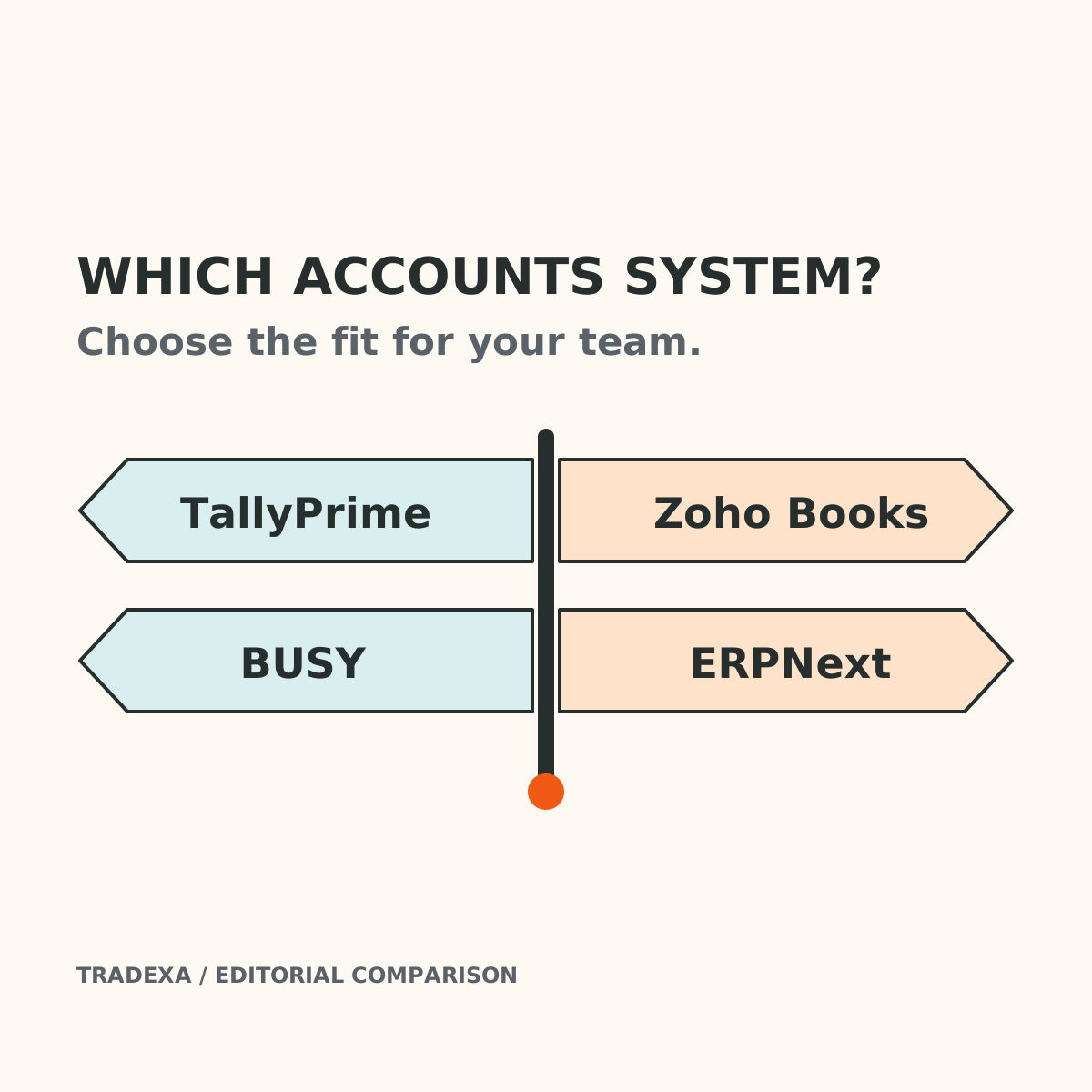
Those are useful differences between TallyPrime, Zoho Books, BUSY and ERPNext. Choose the accounting setup around its access model, required stock depth, branch controls and correction workflow. If finance already has a suitable system, HyperInventory can connect dealer and online selling operations alongside it. You do not have to make an accounting replacement the price of adding a sales route.
This comparison is for importers, distributors and retail chains. It covers TallyPrime Silver/Gold licensing, Zoho Books India plans including Professional and Elite, BUSY 21 Standard/Enterprise, and ERPNext's documented accounting and stock modules. It is a decision guide, not a certification that every edition meets every requirement.
Yearly Tradexa subscriptions also include professional onboarding and free team training, with relevant setup described below. Optional ongoing managed services are available separately.
The useful differences at a glance
- TallyPrime: Silver is a single-user licence; Gold supports multi-user access on the same LAN. Choose the access arrangement deliberately when several staff need to work concurrently.
- Zoho Books India: cloud accounting with plan-specific users and inventory scope. Professional includes five users; Elite includes fifteen and bundles advanced inventory functions. A cloud accounting choice can also be a wider stock-software choice.
- BUSY 21: Standard is a trading/accounting option; Enterprise's published scope includes multi-branch management, offline/online branch working, branch-wise reporting and voucher/master approval. Include that edition when these branch controls drive the purchase.
- ERPNext: a broader ERP with accounting and stock alongside buying, selling and manufacturing. Its documented immutable-ledger correction model is relevant to finance governance, not merely another billing screen.
No universal winner follows from these differences. They tell you which requirement to resolve first.
Compare access, stock and financial control
Who needs to work together, and from where?
TallyPrime Silver versus Gold changes the concurrent-use decision. Gold's multi-user LAN model is different from simply adding named users to a cloud subscription. If staff must work from several offices, specify the supported remote or multi-location arrangement and its licensing separately.
Zoho Books is cloud-based and accessible through supported browsers and apps. Its India plans include specified user counts; user add-ons are available. Professional's five included users and Elite's fifteen therefore affect the team quote, alongside the functionality you need.
BUSY Enterprise documents online/offline branch working and branch data management. Ask for the installation and licence arrangement supporting your offices, not just an edition label.
ERPNext needs a clearly owned deployment and administration proposal. Establish who supports the instance, permissions, upgrades and recovery in the offered setup. Broad ERP scope does not make implementation ownership disappear.
The consequence is practical: a six-person finance and stock team should compare the actual simultaneous access and location arrangement, rather than six product logins that may not provide the same work.
Which stock depth is already included?
TallyPrime documents godowns, batches and price levels. Its price-list workflow can apply different prices and discounts to buyer categories and use a party's assigned price level during voucher entry. Count that functionality when evaluating a trading business.
BUSY documents multiple godowns, batch and expiry tracking. Enterprise adds the documented branch-management scope; do not confuse multiple stock locations with the complete branch-accounting setup.
Zoho Books Elite's India plan explicitly bundles advanced inventory functions, including warehouses, serial and batch tracking, bin locations and supported online-sales connections. It is inaccurate to say that serious inventory always requires a separate Zoho Inventory subscription. Check the included plan and connector scope before assembling the quote.
ERPNext documents stock within its ERP, with accounting connected to stock transactions. If the business also needs manufacturing, evaluate those modules and their implementation in the same requirements exercise rather than dismissing ERPNext as an accounting-only product.
For a trading business, the distinction is whether you need stock inside the finance system, an integrated ERP project, or a separate connected selling-and-warehouse layer. Each can be a sensible architecture.
What happens when a posted transaction is wrong?
ERPNext's immutable-ledger documentation describes retaining original accounting and stock entries and recording corresponding reversals on cancellation. Corrections use traceable follow-up documents; backdated stock changes can require controlled reposting and depend on configuration and validations.
That is a concrete governance consequence. Finance must understand the proposed version's cancellation, amendment and period-correction process before migration.
BUSY Enterprise's published voucher/master approval-and-rejection feature is another control to examine when branch entries need review. TallyPrime and Zoho Books should also demonstrate the permissions, change history and correction workflow required by your finance team. This guide does not infer that they lack controls because a different vendor documents one prominently.
The right test is an incorrect posted purchase or sale, its supported correction and the resulting stock and ledger trail. A fresh invoice demonstration cannot establish that behaviour.
A requirements case that changes the shortlist
Suppose a trading business has six staff needing finance/stock access, three branches and products requiring serial tracking. The finance lead also wants a controlled correction process after posting.
For TallyPrime, start with the appropriate Gold and location-access proposal; demonstrate the required stock and corrections. For Zoho Books, compare the required advanced-inventory plan rather than assuming Professional covers the whole brief. For BUSY, include Enterprise's branch and approval scope in the proposal. For ERPNext, include accounting and stock configuration, the documented correction model and an implementation owner.
The same six people and three branches can lead to different editions, included components and support responsibilities. That is why comparing entry prices alone can produce the wrong shortlist.
Use your own brief in place of these illustrative counts. Ask for the licence or subscription term, applicable support renewals, extra users/locations, hosting, setup, migration, training and recurring support. No lower-total-cost conclusion is justified until these proposed setups are comparable.
Where HyperInventory fits in this decision
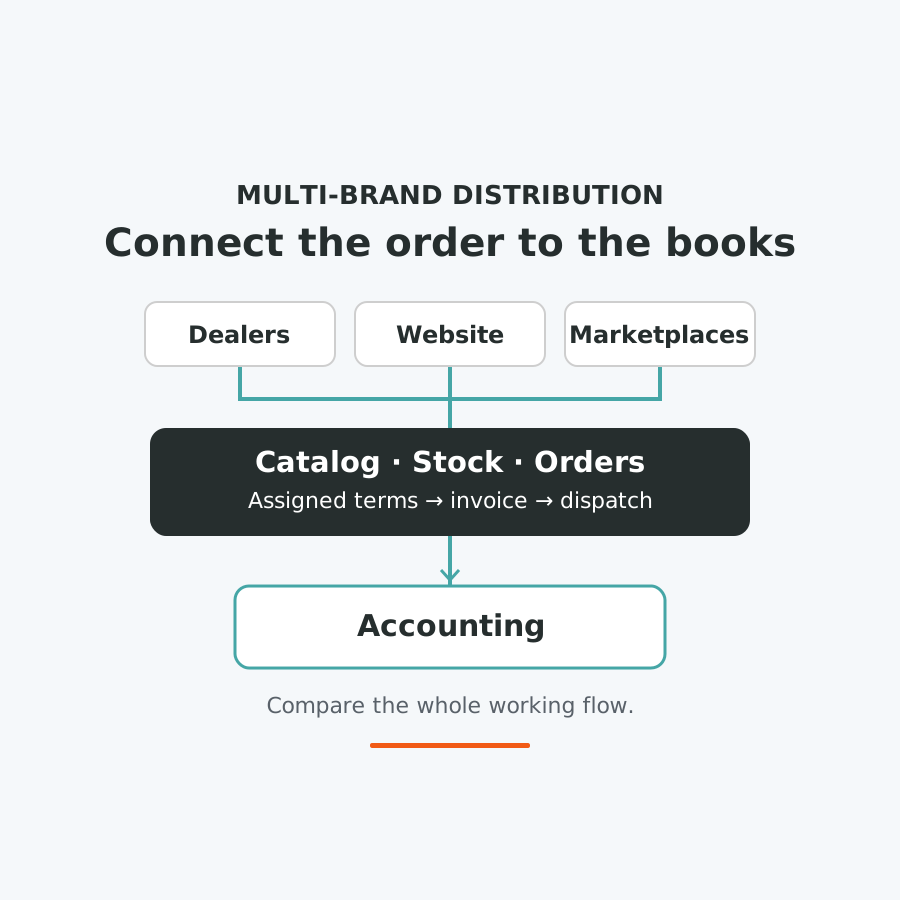
Once accounting meets the finance requirements, assess the selling workflow separately. A multi-brand importer may need dealer-specific catalogs and prices, supported marketplace and own-website orders, warehouse picking, invoices and shipments connected together.
HyperInventory supports that operating layer. Its Tally Windows connector supports bidirectional vouchers and masters; BUSY integration has its own supported record scope. This lets an appropriate accounting system remain in place while dealer and channel operations become more connected.
That is HyperInventory's strong role here: connect the buyer and fulfilment journey without starting with an unnecessary finance replacement. It does not replace every payroll, accounting or import-compliance requirement. Customs, foreign currency, landed cost and obligations to represented brands still need separate verification.
Read the separate DMS-versus-accounting guide for the dealer-to-dispatch comparison. Here, finish the accounting-system decision first.
Who helps you connect the chosen accounts system?
Keeping Tally, Zoho or BUSY is easier to act on when someone owns the setup. With a yearly Tradexa subscription, a professional team handles onboarding, helps with migration and sets up the agreed supported accounting integration. Training for you and your team is included free. Post-sales support follows your plan and pre-sales agreement.
For the importer, that means the finance lead can evaluate the actual connected records with the team doing the setup, rather than assembling separate implementation contacts for the covered Tradexa work. It lowers the burden of adoption while the existing team continues running the business.
If ongoing catalog, webstore or order-processing work also needs help, Tradexa offers a separate monthly managed-services subscription. Compare the same responsibilities in every proposal: migration help, integration setup, staff training, acceptance checks and support after launch. A software licence alone does not answer who performs those jobs.
Take this requirements record into the demo
Use an accounting acceptance record, approved by your finance lead:
- Access: named roles, simultaneous users, office locations, remote-access arrangement and the exact edition/plan.
- Stock: warehouse/branch structure, serial or batch requirement, price levels and the included module covering each.
- Posted correction: an incorrect sale or purchase, required permissions, cancellation/amendment, stock result and ledger trail.
- Branch control: who enters, who approves and which reports finance needs by branch. Demonstrate the actual offered setup.
- Continuity: required historical records, opening balances, outstanding bills and acceptance checks after migration.
- Operating connection: which masters/vouchers must connect with HyperInventory or another operating system, direction, prerequisites and rejected-record handling.
- Full cost and owner: subscription/licence term, included users, modules, renewals, hosting and support responsibility. Mark unresolved requirements before selecting.
- Setup and ongoing ownership: name the team handling migration, agreed integrations, training and acceptance. Record annual inclusions, support scope and any separately subscribed monthly services.
Choose the finance system that demonstrates these requirements. Then put HyperInventory near the front of the operating shortlist when dealers and online channels need to share stock and order context alongside it.
Sources
Tradexa yearly onboarding, setup, free team training, plan-based post-sales support and optional monthly managed services: owner-confirmed on 14 October 2026.
Official information checked on 14 October 2026: TallyPrime Silver/Gold licensing, inventory and price-list documentation; Zoho Books India plans; BUSY 21 plans and inventory documentation; ERPNext introduction and immutable-ledger documentation. Confirm the offered edition, version and implementation configuration.
Example note: The six-user, three-branch brief is illustrative. No customer result, migration saving or universal price advantage is claimed.