The easiest customer list to build is “everyone who bought from us”. It is rarely a complete campaign brief. Someone who ordered yesterday, someone whose product is a poor fit and someone who does not want promotional messages should not all receive the same reminder.
Start with the next useful purchase, then decide who is eligible to hear about it. HyperMarketing connects customer campaigns with the business's buyer contacts and supports templates, scheduling, recurring sends and reporting. That gives your team a way to run the plan; relevance, permission and stock readiness still have to be established.
Choose the buying reason before the discount
Suppose you distribute replacement filters alongside appliances from several brands. A previous appliance purchase may suggest a relevant filter, but it does not establish compatibility, replacement timing or a reason to send a promotion today.
Choose one product family and a verifiable buying reason. Confirm the compatible model or supported use case, the landing page and what the customer should do next. Where the purchase is a dealer replenishment, use that dealer's buying context instead of copying a consumer replacement message.
A useful first message might explain how to check the filter model and link to the correct range. A discount cannot repair the wrong item. Keep the product relationship understandable before choosing an incentive.
Build an eligible group, not just a large group
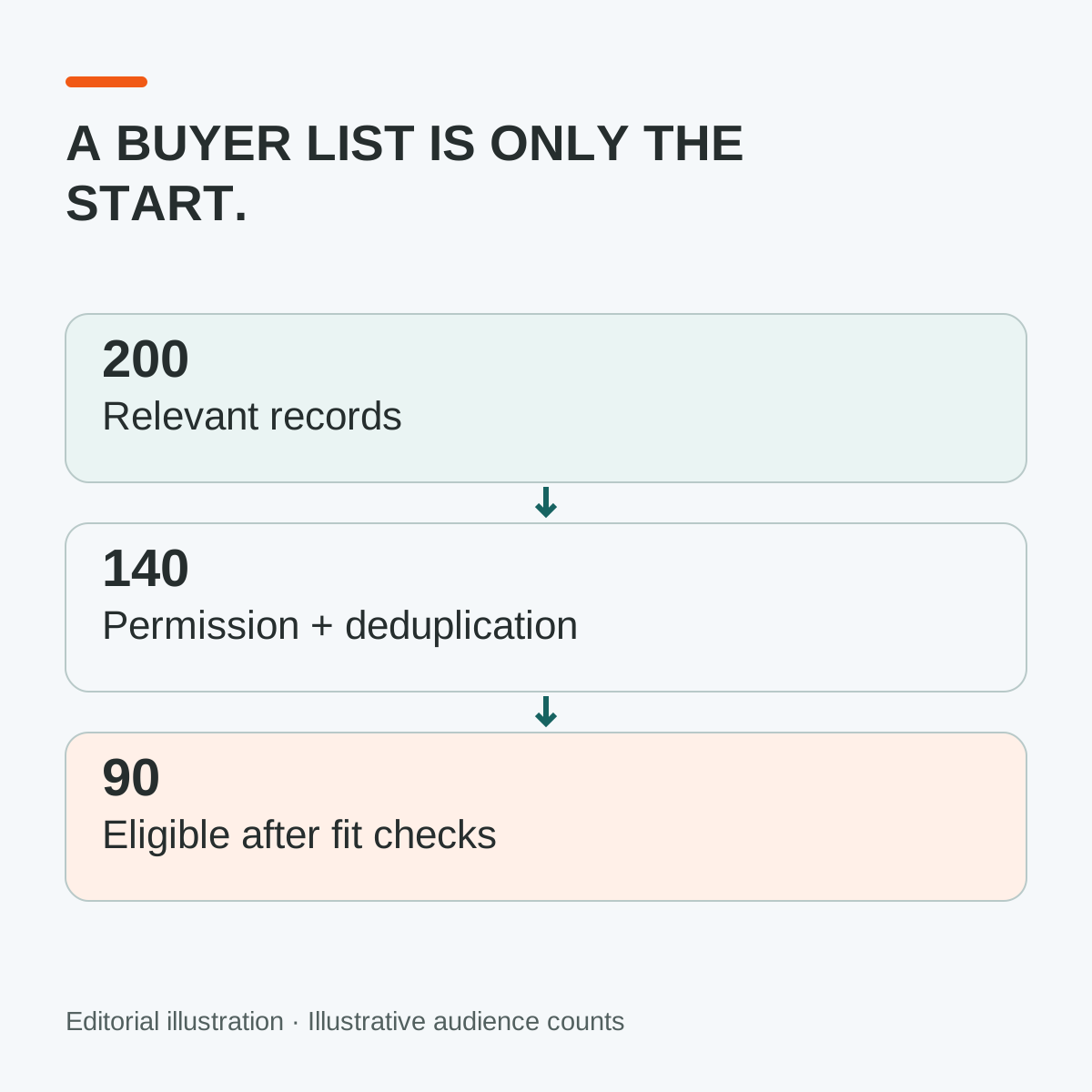
For an illustrative planning exercise, start with 200 relevant purchase records. After deduplicating people and checking the chosen channel's permission, suppose 140 customers remain. Product-fit checks and excluding customers who already repurchased leave 90 eligible recipients. These are audience-planning inputs, not an automatic segmentation result from HyperMarketing.
Use the supported audience controls and, where needed, a reviewed selection process to implement that group. HyperMarketing's automatically maintained buyer contacts reduce repeated contact imports; a contact record is not proof that every message purpose is permitted.
For WhatsApp, follow the current Business Messaging Policy: obtain the required permission, respect requests to stop and use the applicable approved templates for business-initiated messages. Template approval does not replace customer permission. Check the current policy and account setup before sending; email and SMS need their own appropriate consent and channel checks.
Make the promise match the stock
Check the intended range's sellable stock, existing commitments and delivery coverage with operations. If only eight compatible filters are available, do not write an unrestricted availability promise to ninety people. Adjust the audience, timing or offer scope to what the business can fulfil; keep the page consistent with the message.
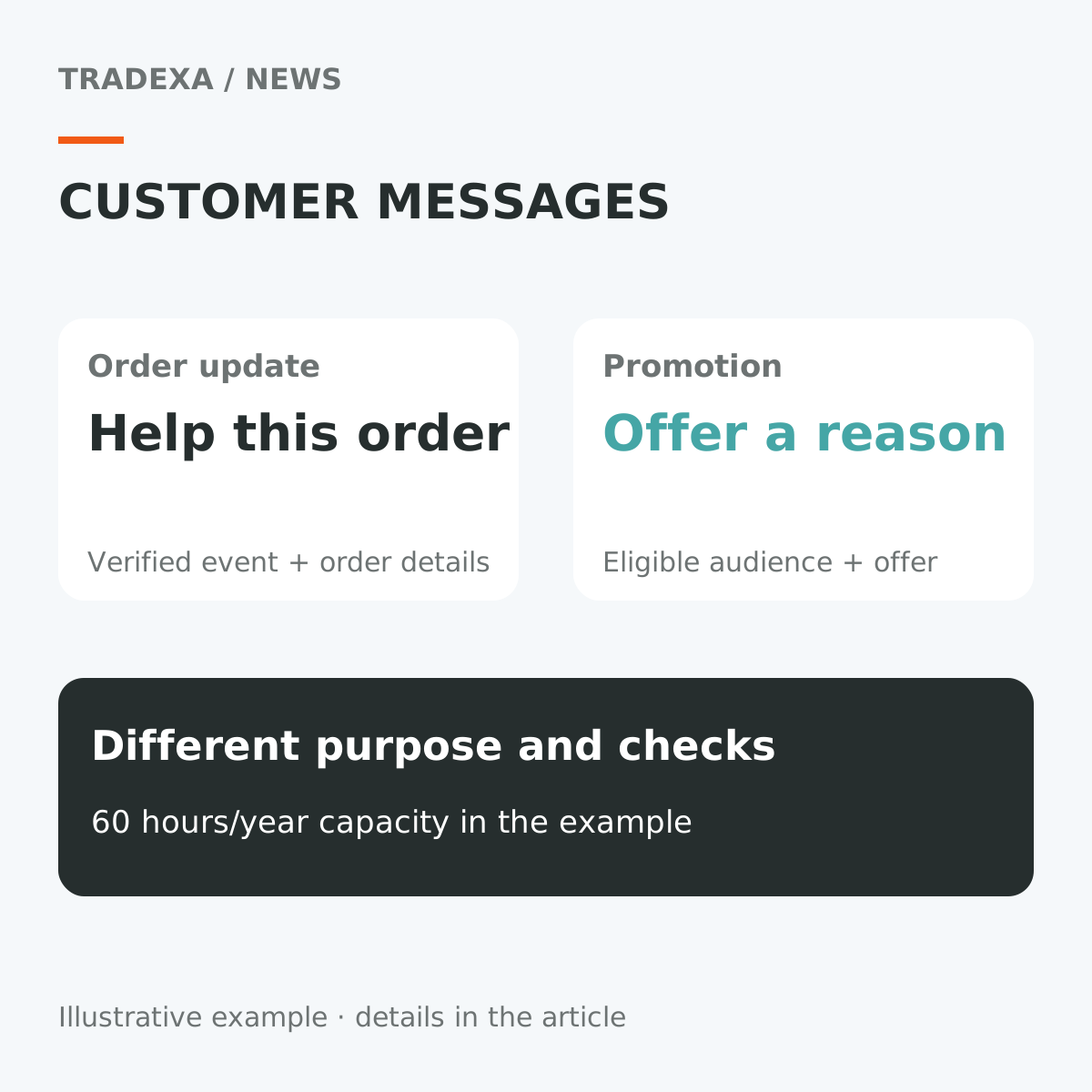
HyperInventory holds the relevant catalogue, stock and order context, while HyperMarketing runs the customer campaign. This is different from advertising to acquire customers through Amazon, Google, Meta or Flipkart. The message-purpose guide also separates promotions from service updates.
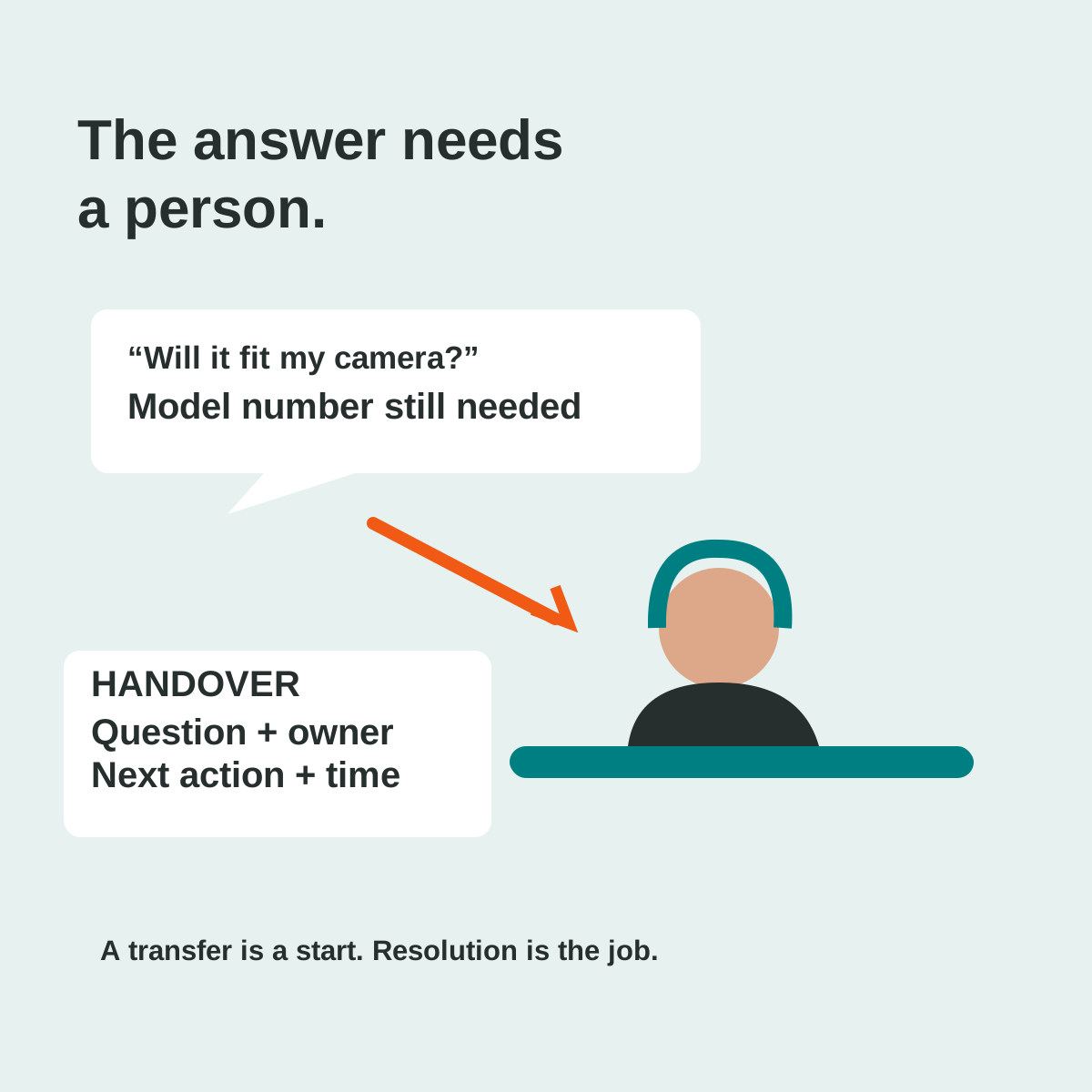
Assign someone to answer compatibility questions and availability exceptions. A campaign creates work at the point of purchase as well as at the point of sending.
Copy a repeat-purchase campaign brief
Use this before scheduling the first send, then retain it with the outcome.
- Product family, buying reason and compatibility evidence: ______
- Primary customer group and relevant purchase period: ______
- Deduplication, permission and recent-purchase exclusions: ______
- Final eligible recipients and supported selection method: ______
- Sellable stock/commitments, delivery coverage and offer limit: ______
- Channel, approved template where required, landing page and send time: ______
- Reply owner, stop-request handling and campaign pause contact: ______
- Completed-order, return and contribution review date: ______
The output is an approved audience-and-offer decision. Schedule only after the message, eligibility and fulfilment checks agree. Recurring campaigns need recurring review of those inputs; a schedule does not make yesterday's stock or permission current.
Measure what came back, not just what was sent
Use campaign reporting for the signals it provides, then reconcile relevant completed orders and returns for the business decision. Do not treat opens, replies or all subsequent sales as proof that the campaign caused incremental demand.
For a small first test, compare the work and contribution with the campaign's actual message, offer and fulfilment costs. Keep a holdout group only if you can implement and interpret it properly. The immediate gain from a clearer brief is fewer irrelevant sends and fewer promises operations has to unravel; the opportunity is a repeat-purchase process your team can run again when customers have a real reason to buy.
Example note: The audience counts illustrate a planning exercise, not measured customer results. Use your own records, permission evidence and operating conditions before deciding.