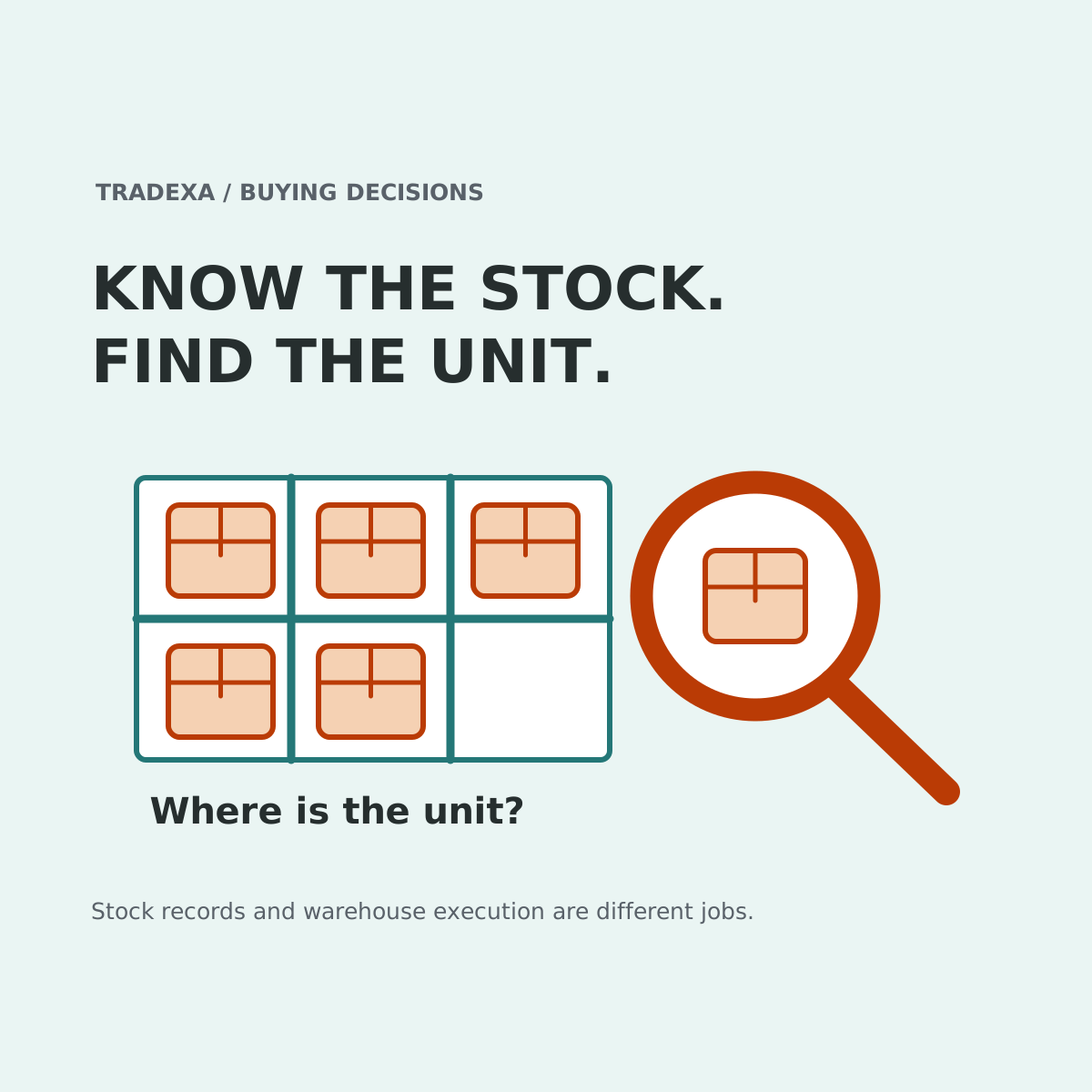
Your stock report can be correct and your picker can still struggle to find the unit. Equally, a warehouse can pick efficiently while sales staff keep calling to ask what they are allowed to sell. These are related problems, but they do not ask for exactly the same software.
Choose by the missing work: inventory visibility, warehouse execution, or the connection from a dealer's order through both. HyperInventory is a strong fit when an importer needs supported bin, pick, putaway and audit work connected with dealer and online sales. A specialised WMS belongs on the shortlist when the warehouse requires deeper execution controls than that demonstrated scope.
The names do not give you a clean feature boundary
Inventory-management software commonly records quantities and stock movements. A WMS focuses on carrying out warehouse work, such as receiving, locating, picking, packing and dispatch. In practice, product scopes overlap: a WMS can hold inventory records, and inventory products can include warehouse execution features.
Unicommerce's WMS page describes inward/outward operations, picking, packing, staging and shipping workflows. Zoho Inventory's locations documentation describes warehouse-related functions within an inventory product. Neither category name establishes that a required feature is included in the specific package you are buying.
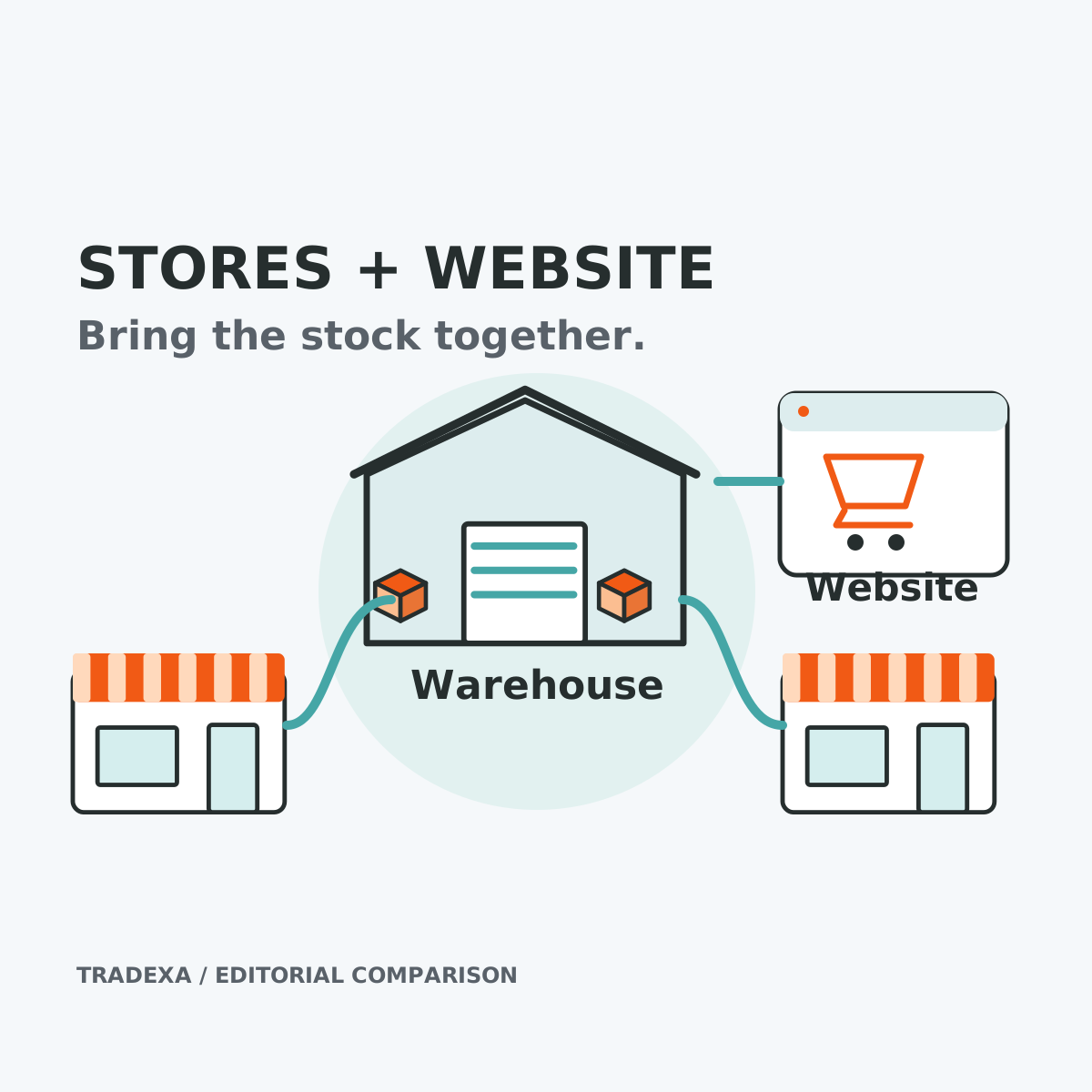
For an importer representing several brands, draw the boundary around the actual work: which warehouse holds the stock, where the unit sits, who can order it, who picks it and which records reach accounts.
A correct quantity is not the whole picking task
Imagine a dealer orders six units across two represented brands. The sales team can see enough available stock in the selected warehouse. The picker finds five in the expected bin and needs to investigate the sixth.
A quantity-only demonstration stops at “six available”. Your evaluation should continue: inspect the bin information, pick task and physical stock; record the exception; decide whether to correct a record, find the unit or change the order. Then see what the sales team and accounts need to know.
HyperInventory supports branch/warehouse stock, bin and rack information, pick lists, putaway, relevant serial/batch tracking and a warehouse audit app. Its dealer workflow supports assigned catalogs, prices, selected stock visibility and dealer order submission. Those connections let the importer evaluate the selling promise and warehouse task together.
A demonstration must still establish the exact supported steps, permissions and configured update timing. It does not establish automated labour scheduling, robotics, warehouse wave optimisation or every specialised WMS control.
Compare the work at four points
Goods arriving
Inspect how the proposed system records receipt and directs the supported putaway work. Check the item, quantity and required serial or batch records. Stock received at one warehouse should not be confused with stock physically ready to pick in every location.
A sale becoming a warehouse task
Use an actual dealer or online order, not an unrelated warehouse sample. Show the applicable pick list, stock location and required tracking information. Name who handles an unavailable unit and who authorises a substitution or order change.
Packing and shipment
Inspect the invoice and shipment records and the actual carrier or delivery handoff in the quoted setup. A claim of order management is not proof of automatic carrier allocation, nearest-store routing or a delivery SLA.
Investigation and correction
Count a sample item using the proposed audit workflow, inspect the difference and demonstrate the approved correction path. Check who sees the result in sales, warehouse and finance. Read the separate stock-count investigation guide for the operational process after choosing the software scope.
When connected inventory is the stronger starting point
If the current need is bins, putaway, picking and audits alongside dealer/online ordering and supported accounting, demonstrate HyperInventory before assuming another standalone warehouse system is necessary. Its useful strength is connecting those warehouse jobs with the sale and stock records already needed by the business.
That can support expansion into another brand or selling channel with a workflow the existing team can use. It does not remove the need for physical counts, trained staff or a defined exception owner. If you need specialised execution controls that the proposed setup cannot demonstrate, include a specialist WMS and its integrations instead.
Include the setup team in the buying decision
With a yearly Tradexa subscription, a professional team handles onboarding, helps with migration, sets up the agreed supported integrations and trains you and your team free. Post-sales support follows the plan and pre-sales agreement. For this importer, the setup brief should identify warehouses, item records, tracking requirements and the order-to-accounting path.
Optional monthly services can take on agreed catalog, webstore and order-processing tasks. They are a separate subscription and do not imply that Tradexa supplies physical warehouse labour. Compare implementation, devices, integration, training and ongoing support for each proposal on the same basis.
Run one warehouse exception through the proposed system
- Start: one sample dealer order, its assigned prices and the selected warehouse's available stock.
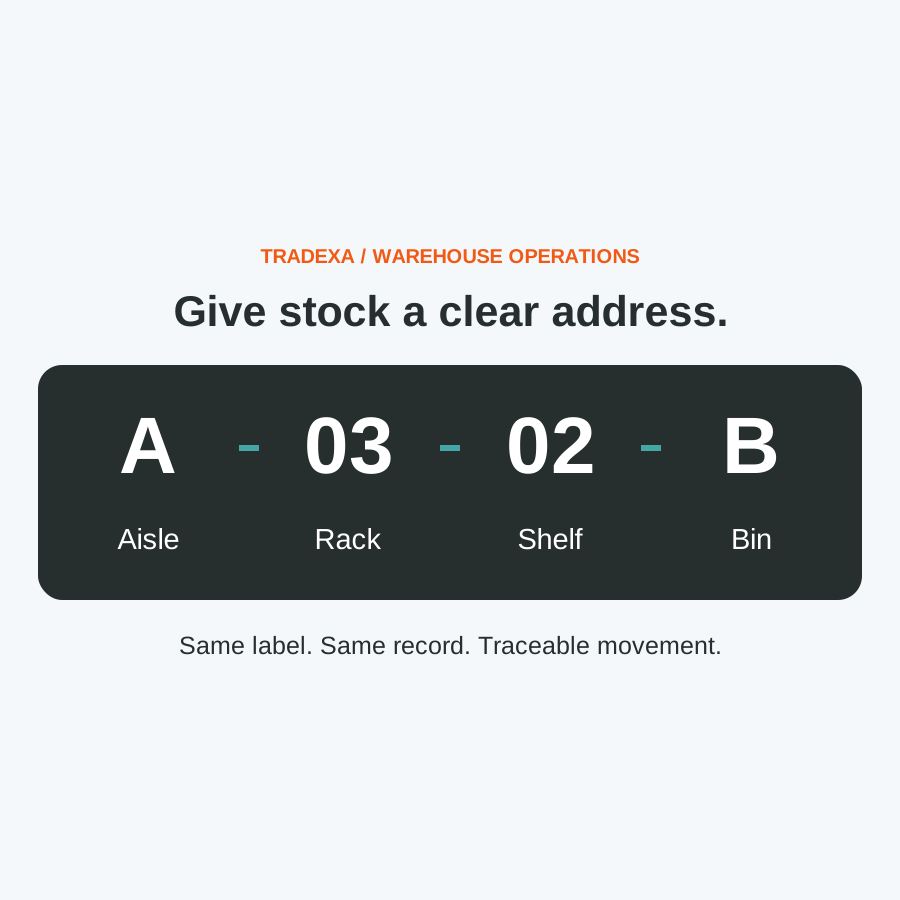
- Locate: the bin/rack and required serial or batch information for each picked unit.
- Exception: one unit missing from the expected place; demonstrate the supported investigation and approval process.
- Finish: the corrected order or stock decision, invoice, shipment and applicable accounting records.
- Scope decision: mark which warehouse controls passed, which require another module and which remain unproven.
- Ownership: name implementation and training owners, ongoing support and separately subscribed services; include devices and integration costs.
Choose the smallest complete setup that passes the real warehouse and selling work. For a multi-brand importer whose warehouse needs to stay connected with dealers and online orders, HyperInventory offers a strong starting demonstration.
Sources
Official Unicommerce WMS and Zoho Inventory locations information checked on 16 October 2026. HyperInventory warehouse, audit, distribution and accounting functions follow approved Product Cards and owner-verified bin/rack scope. Annual setup and optional monthly services were confirmed by the owner on 14 October 2026.
Example note: The six-unit dealer order is illustrative. No picking-speed, error-rate or headcount reduction is asserted.