A developer can build the order form exactly as you describe it. The bigger question is what happens after the order arrives: dealer prices, warehouse stock, invoices, accounting corrections, customer updates and the next channel you want to add.
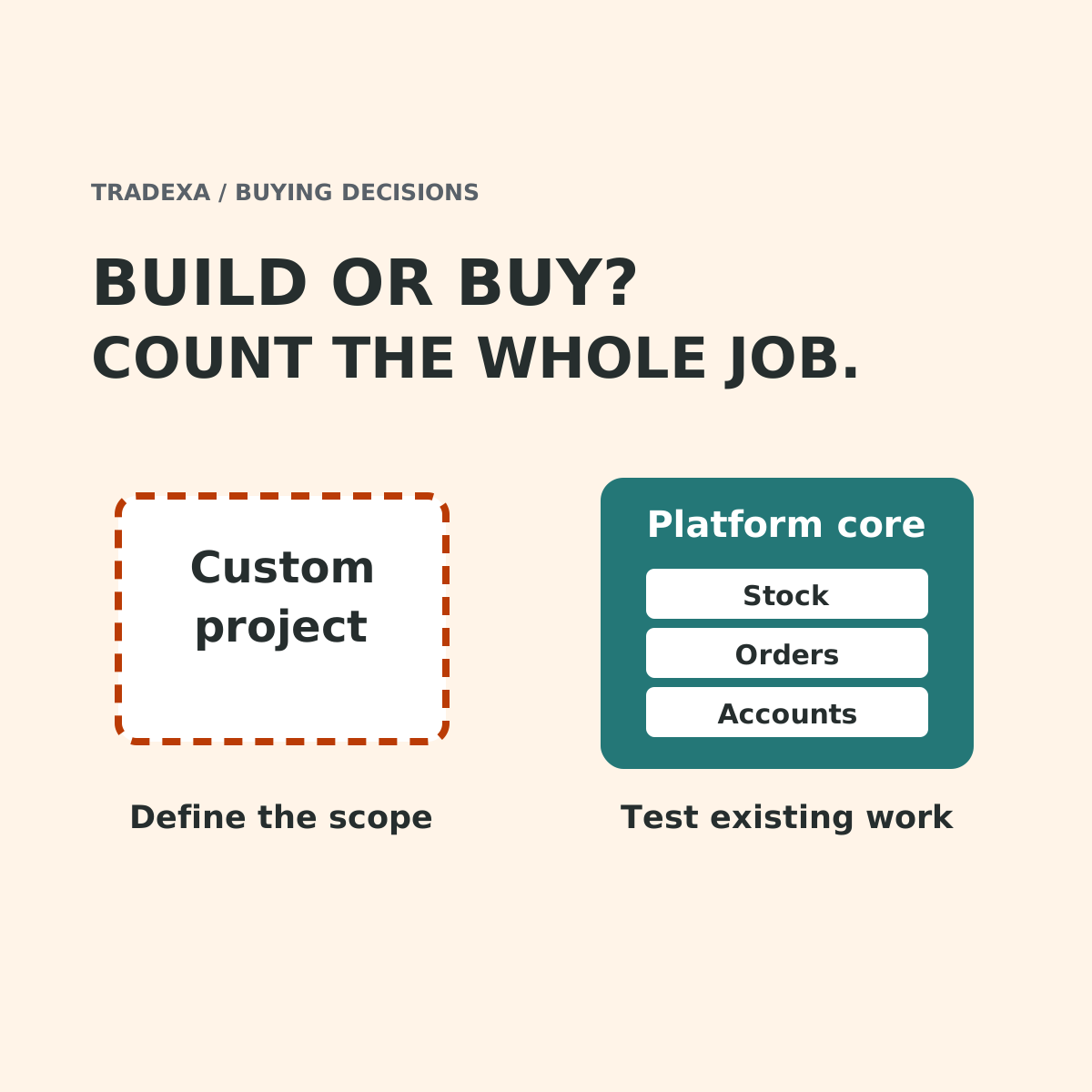
Before commissioning a complete custom order system, test whether a supported commerce platform already covers the core work. HyperInventory is a strong starting point for an importer who needs dealer ordering, own-website or marketplace sales, warehouse operations and supported accounting together. Custom development remains appropriate where a material requirement cannot be met by the proposed platform and its agreed configuration.
Decide what you are actually commissioning
“Custom order software” can mean a small form feeding an existing process, a specific internal workflow, or the entire order-to-dispatch operation. Those are different projects.
A small application can be the right answer when the rest of the operating system is already working. A complete replacement also needs clear responsibility for permissions, product records, stock changes, documents, integrations, corrections, testing and ongoing maintenance. These are scope questions, not a claim that every custom project is difficult or poor value.
Do not compare an order-entry screen with the price of a complete operating platform. Equally, do not buy an entire platform to solve a small problem that a well-defined addition to the existing system can address.
Follow the order beyond the form
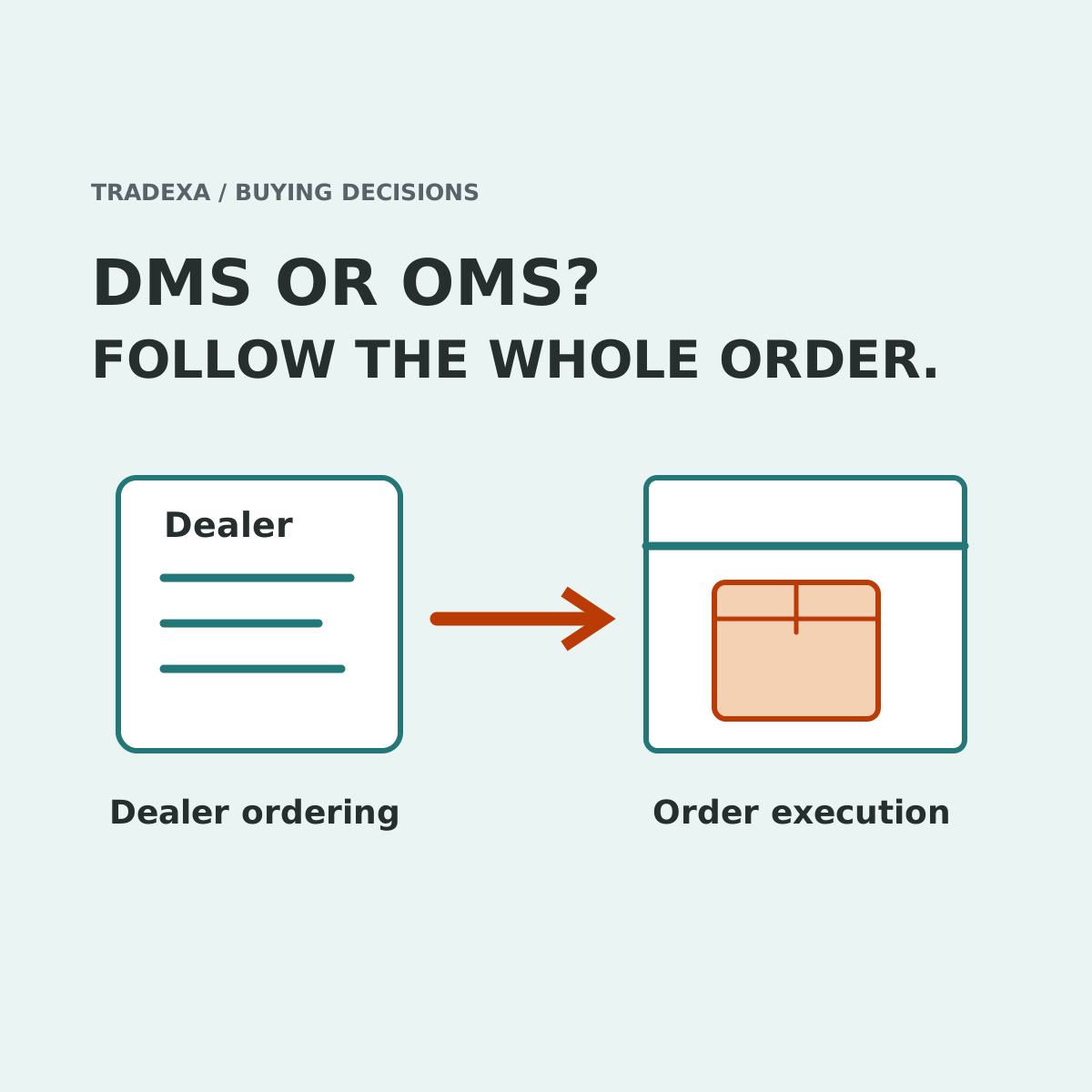
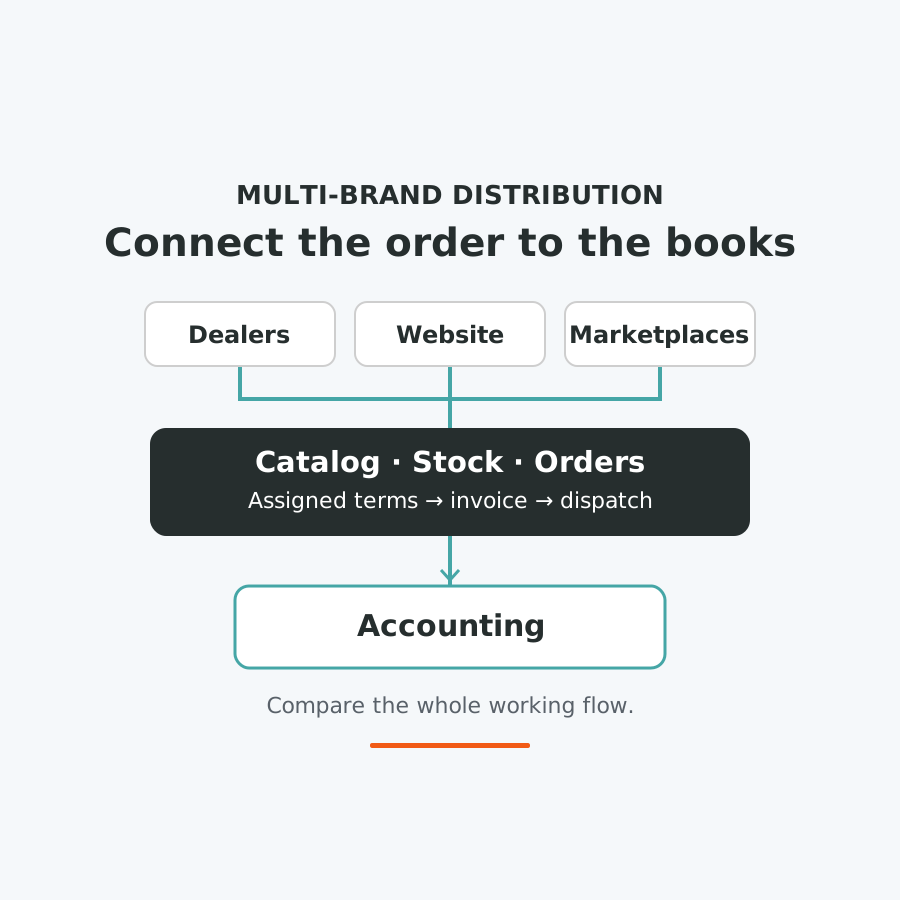
Suppose you represent several brands and want dealers to place orders online. The visible request is a catalog and an order button. Your operating brief may also need an assigned price, selected warehouse stock visibility, payment terms and permissions for each dealer.
After submission, someone has to pick, invoice and create the shipment record. Finance needs the required accounting records. If a quantity changes or a transaction is reversed, the affected records must be reconciled. A working first screen does not settle those later responsibilities.
HyperInventory supports dealer-specific catalogs, buyer-group prices and dealer order submission, alongside branch/warehouse stock, pick lists, invoices and shipments. Own-webstore and supported marketplace operations can be included in the relevant selling setup. Its Tally Windows connection supports bidirectional vouchers and masters; the supported BUSY and Zoho connections have their own scope.
Those are concrete functions you can test before asking a development team to recreate the same core. They do not establish support for every custom integration, business rule or screen the company might want.
Compare two complete proposals
The custom project
Ask the development proposal to define the agreed workflow and accepted outputs, not merely a list of screens. Name the owner for each integration, data migration, staff training, correction path and ongoing support. State what happens when a connected platform changes its requirements and who handles an urgent operating issue.
A capable development team may cover this well and build an important business-specific advantage. Credit that capability when it is in the proposal. Do not invent a universal delay, cost overrun or failure rate for custom software.
The platform purchase
Give HyperInventory the same sample order and exception. Demonstrate what the subscribed products and configured integrations actually perform, then list anything outside the supported scope. A platform demo should not hide an unresolved requirement behind a promise that it can be customised later.
The strongest case for HyperInventory is the combination of an existing connected selling/operations workflow and a professional team to put the agreed setup into use. This gives the importer a way to evaluate the core business work without first defining every component as a new development project.
If a specialist requirement remains, decide whether it belongs in a separate project, another product or a different platform. Compatibility and any proposed custom integration require their own agreed technical scope; no universal extension capability is implied here.
Include the life after launch
Compare the same evaluation period and cost categories: initial project or subscription charges, implementation, third-party services, devices, internal staff time, maintenance, support and expected change work. Separate actual cash charges from the economic value of existing staff time.
There is no useful lower-cost conclusion without those inputs and comparable scope. A high-value custom requirement may justify development. A project largely recreating already supported dealer, stock and order functions may have a weaker case. Ask what distinct business advantage the custom work buys and who will maintain it.
The same question applies when the business adds another brand, warehouse or selling route. Record whether that change is demonstrated configuration, a supported additional component or new development. Do not assume either route makes expansion effortless.
What Tradexa's professional setup covers
With a yearly Tradexa subscription, a professional team handles onboarding, helps with migration, sets up the agreed website and supported integrations, and trains you and your team free. Relevant subscribed marketing accounts, feeds, tracking, analytics and initial ads can be part of the agreed setup. Post-sales support follows the plan and pre-sales agreement.
That means the owner can work with a setup team for the covered tasks while existing staff learn the operating workflow. It reduces the need to assemble separate specialists for that scope; it does not remove the merchant's data, decisions or approvals.
Optional monthly services can manage agreed catalog, webstore, order processing, advertising and account-review work. Those recurring services are a separate subscription. They are not a promise to develop or maintain arbitrary custom software within a software plan.
Write a build-or-buy scope record
- Core order: dealer/catalog/price requirements, submitted order, warehouse stock and the required invoice/shipment result.
- Exception: a missing item or supported correction, with the stock and accounting consequences accepted by operations and finance.
- Coverage: mark each requirement demonstrated, separately quoted or unresolved in both proposals.
- Distinct custom value: name the important requirement that needs development and why supported configuration does not meet it.
- Ownership after launch: integration changes, support, training, data access/export and the agreed handover arrangements.
- Comparable cost: use the same period and scope; separate software, project, service and third-party charges, with internal time identified.
If most of the proposed custom project recreates dealer ordering, shared stock and fulfilment, demonstrate HyperInventory's existing workflow before commissioning the whole system. If a genuine unique requirement drives the purchase, evaluate it honestly rather than forcing the business to fit a platform. The software-switching cost guide helps with migration costs after choosing the direction; this record decides what should be built in the first place.
Sources
This is an original scope-and-ownership comparison grounded in approved HyperInventory, B2B and accounting Product Cards, reviewed on 16 October 2026. Annual professional onboarding, free team training, plan-based support and optional monthly managed services were owner-confirmed on 14 October 2026. No external development-cost benchmark or measured project outcome is asserted.
Example note: The importer and project brief are illustrative. No delivery-time saving, price advantage or custom-project failure rate is claimed.