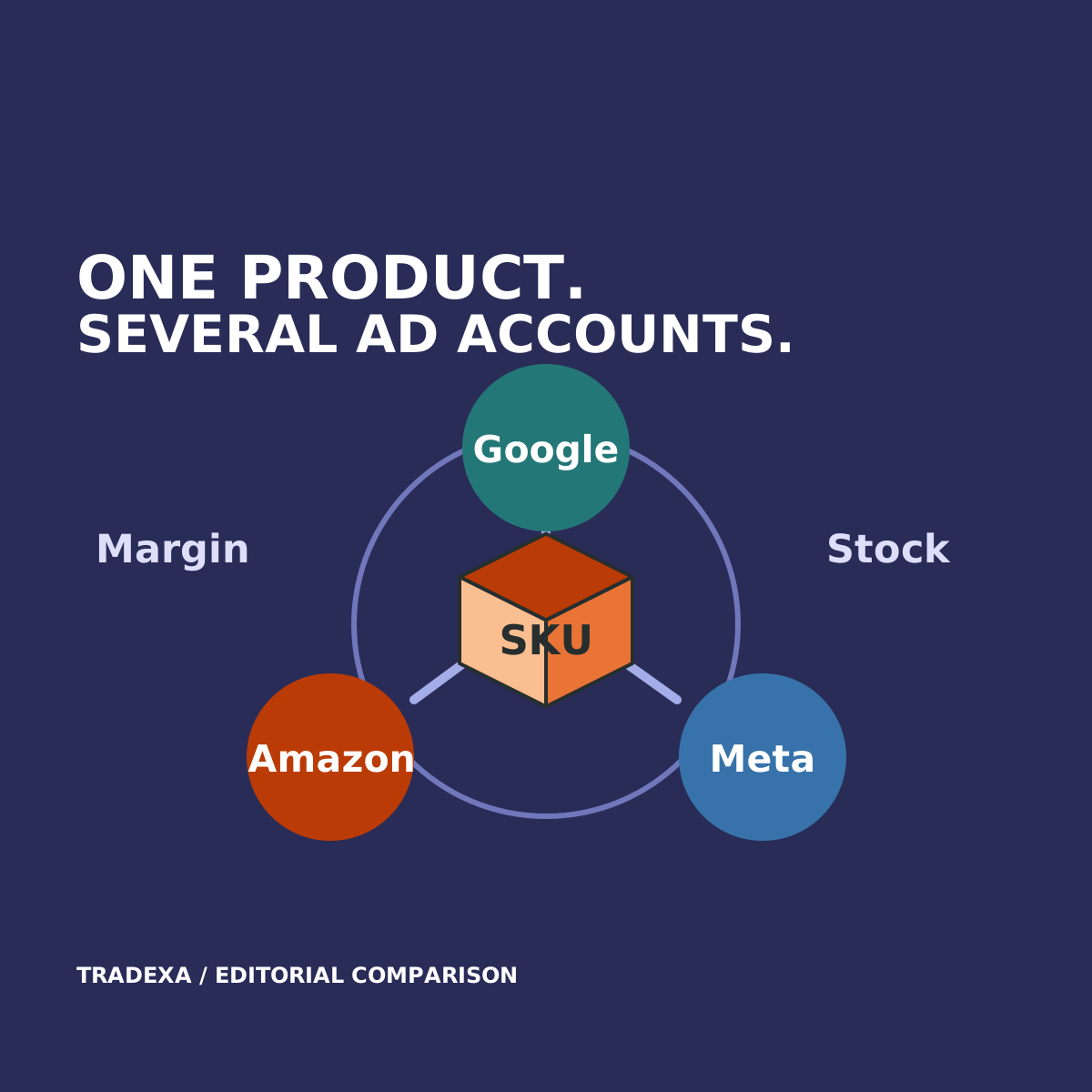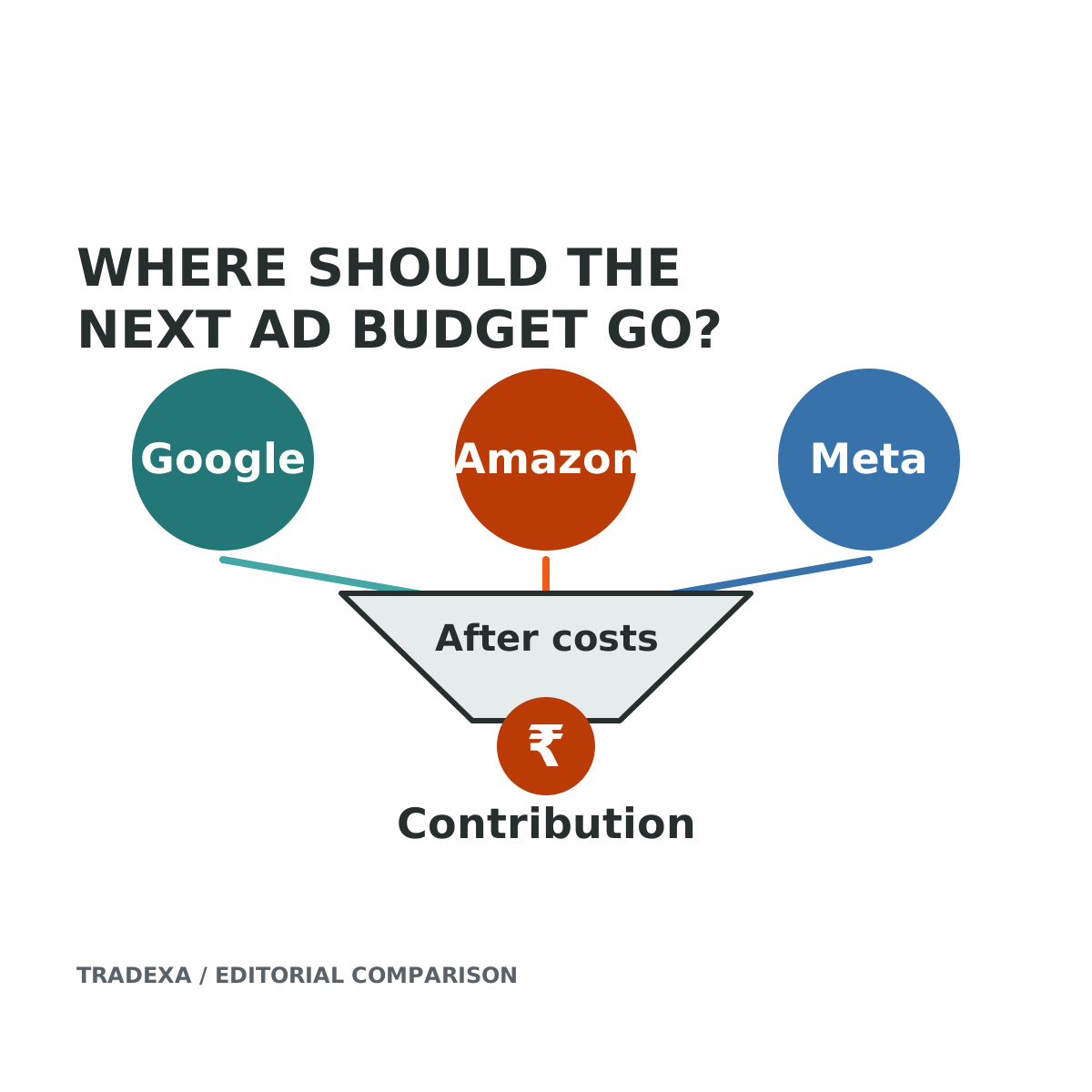
One campaign has the highest ROAS. Another sends orders to your own website. A third sells a product you can actually replenish this week. Which deserves the next ₹10,000?
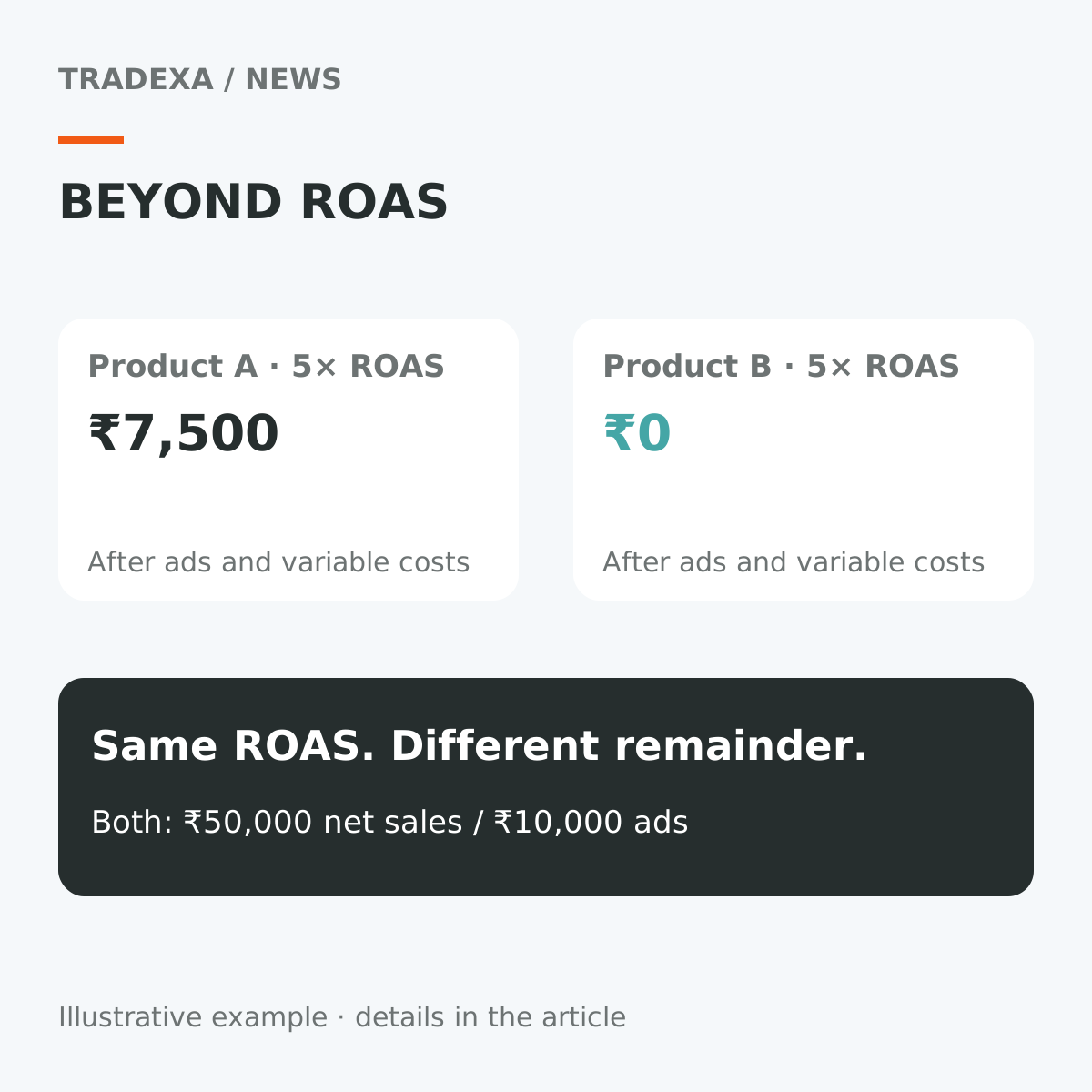
Put the next budget where eligible, available products can produce useful contribution at the sales destination you want to grow. Google Ads, Amazon Ads and Meta Ads can all play a role. Their average ROAS is not enough to decide where another rupee should go.
For a merchant selling through marketplaces, an own website and stores, HyperAds makes this decision more useful by connecting product-level performance with purchase cost, profitability and inventory context. The platform comparison should begin with your products and costs.
Yearly Tradexa subscriptions also include professional onboarding and free team training, with relevant setup described below. Optional ongoing managed services are available separately.
Start with the destination and campaign format
Google Ads: match the format to the job
Google Search can address a customer's expressed search. Shopping uses product-feed information. Performance Max accesses multiple Google advertising surfaces; Google is not just text Search. Local inventory ads are a separate relevant route for eligible store-stock promotion.
Choose the format and destination together. A website campaign needs a working product page, accurate availability and checkout. A local-stock campaign needs the applicable store and feed setup. Verify current eligibility before allocating spend.
Amazon Ads: distinguish product advertising from the whole platform
Amazon Sponsored Products uses CPC advertising for product listings, with automatic or manual targeting. Its product destination and retail readiness matter: availability, offer, listing and the costs of selling that order.
Amazon Ads has other formats, and Sponsored Products can have placements beyond Amazon on selected external sites. Do not reduce the entire advertising platform to one format or assume all placements behave identically.
Meta Ads: discovery can lead to sales
Meta is not only an awareness channel. Its advertising and Advantage automation can support sales-oriented campaigns as well as discovery. The product proposition, creative and purchase destination need to work together.
For an own-website campaign, include checkout performance and completed orders in the review. A persuasive creative cannot repair an unavailable product or a fulfilment problem after payment.
Choose the first test from the buying situation
Test Google Search when the buyer is already asking for the product
If relevant product or category searches are visible in your own search research and your goal is own-website orders, test Search against that expressed demand. Use a matching landing page, available stock and working purchase measurement. Hold the increase if clicks reach the wrong product, checkout fails or you cannot reconcile purchases. This is a conditional fit, not a claim that every importer has enough search demand.
Test Shopping or Performance Max when the product feed is ready
For a retailer with accurate product data and an eligible Merchant Center setup, Shopping or retail Performance Max can promote feed-based products. Google documents product-feed use and conversion goals; confirm approvals, linked accounts and the purchase goal used in your campaign. Hold a sales-budget increase while feed errors, unavailable stock or unreliable conversion values remain. Performance Max also reaches discovery surfaces, so Google versus Meta is not simply search versus discovery.
Test Amazon Sponsored Products when Amazon is the intended destination
If the objective is completed Amazon orders, start with products and offers eligible for Sponsored Products in the marketplace you use. Amazon's guidance includes an appropriate active seller/vendor account, eligible categories and Featured Offer requirements; products also need stock. Hold the increase when the offer is not eligible or the order's contribution is inadequate after marketplace costs. The listing destination is a different economic test from selling through your website.
Test Meta when discovery and the creative can support the purchase
If the product benefits from being shown in use and your objective is own-website sales, a Meta sales-oriented test is relevant when the proposed account setup supports that destination and purchase measurement. Meta's own business guidance describes discovery and Advantage+ sales campaigns; its 2026 update also describes evolving attribution tools. That does not establish availability of every feature in your account.
Have your advertising team confirm the applicable objective, purchase-event setup, reporting definition and product/ad eligibility before budgeting. Hold the increase when the creative has no clear product proposition or completed purchases cannot be checked. Meta's sales-objective help page requires login in this research; no exact UI sequence, default attribution window or account-eligibility promise is inferred from it.
For store sales, use a separate local objective
If your priority is store demand, test the relevant Google local-stock or store-goal setup with accurate location/product information. Google's store-visit reporting has eligibility and privacy/data requirements; having a shop does not guarantee that report. Do not rank a local-awareness or directions campaign against website purchases as though the outcomes were identical.
Compare a product's contribution before comparing ROAS
For this decision, contribution before ads means net order revenue, excluding GST, minus purchase cost and other variable costs attributable to that order. Include applicable marketplace or payment fees, picking, packing, delivery and a reasonable provision for expected returns. Have finance choose a consistent tax and cost treatment.
The same selling price can leave different contribution at different destinations. A marketplace fee and an own-site payment fee are not interchangeable costs. Calculate the margin for each route.
Consider a deliberately small illustrative test, with no GST included in revenue or recoverable-cost inputs:
- Amazon route: net revenue ₹2,000 per completed order, purchase cost ₹1,100, marketplace fees ₹300, fulfilment ₹120 and expected-return provision ₹80. Contribution before ads is ₹400 per order.
- Own-website route: the same ₹2,000 net revenue and ₹1,100 purchase cost, payment fees ₹40, fulfilment ₹160 and expected-return provision ₹100. Contribution before ads is ₹600 per order.
Now suppose separate illustrative ₹10,000 tests produce these completed orders for the same product:
- Amazon: 40 orders, ₹80,000 attributed net revenue, ROAS 8; contribution after ads 40 × ₹400 − ₹10,000 = ₹6,000.
- Google to the website: 30 orders, ₹60,000 attributed net revenue, ROAS 6; contribution after ads 30 × ₹600 − ₹10,000 = ₹8,000.
- Meta to the website: 24 orders, ₹48,000 attributed net revenue, ROAS 4.8; contribution after ads 24 × ₹600 − ₹10,000 = ₹4,400.
In this disclosed case, Google is the candidate for the next bounded website-sales increase if stock and measurement remain sound. Amazon has the highest ROAS but a different order-cost structure. Meta may merit a new creative test rather than an immediate increase on the existing execution. This is a decision from the hypothetical records, not a universal channel ranking or a measured causal experiment.
The next increment needs its own result. If an extra ₹2,000 on Google brings seven additional completed website orders at the same disclosed contribution, that increment leaves 7 × ₹600 − ₹2,000 = ₹2,200 before fixed overhead. Record the observed increment separately; the earlier average does not promise this response.
How to settle Google versus Meta for the next increment
When both routes lead to the same website, choose the first test using the buying situation above, then compare the same product, cost basis and completed-order definition. Let each format use an appropriate execution: a relevant Search ad and a product demonstration in a Meta creative need not look identical.
Record baseline orders, proposed incremental spend, test period, stock and creative changes. Use comparable periods or a properly designed split where feasible; seasonality, overlapping audiences and existing demand can otherwise distort the comparison. If purchase tracking or the creative changes mid-test, record that limitation instead of claiming a clean channel winner.
Increase the route that meets the chosen contribution objective in the observed test and still has stock to fulfil. Hold or retest the other route with a stated change. If samples are small or attribution cannot be reconciled, keep the decision provisional.
Historical averages do not predict the next increment
Before increasing spend, separate a profitable historical average from the question of what additional spend will produce.
Check whether the next audience or keywords are different, whether the product has sufficient stock and whether fulfilment can absorb the orders. Record the test increment and a spend ceiling instead of applying an unsupported fixed split across the three platforms.
Treat platform-reported conversions carefully. Different windows and definitions, overlapping claims, paid and organic interactions, existing demand and small samples can change the interpretation. Do not sum the three dashboards and call that independent sales.
Use your order records to review completed purchases, cancellations and returns. Where possible, identify duplicated conversion claims. Attribution remains a model; these checks do not prove that every reported sale was caused by advertising.
Use this record before increasing spend
Create one record for each product, destination and proposed campaign:
- Objective: the outcome you want—contribution, sales at a chosen destination, or a separately measured discovery test.
- Readiness: product eligibility, sellable stock, replenishment, listing or website, feed and creative requirements.
- Economics: net revenue excluding GST, purchase cost, fees, fulfilment, expected returns and contribution before ads.
- Test: starting baseline, proposed additional spend, spend ceiling, review period and the reason for that period.
- Observed result: actual spend, completed orders, net revenue and contribution after ads using the same cost treatment.
- Measurement limits: platform definitions, overlapping claims and any return or order-completion lag.
- Decision: increase cautiously if the objective and stock conditions hold; hold when evidence is insufficient; retest or reduce when the added spend fails the chosen economics.
- Setup and ongoing ownership: name the team handling migration, agreed integrations, training and acceptance. Record annual inclusions, support scope and any separately subscribed monthly services.
Use comparable records, not an automatic 40/30/30 split. A new product without enough purchase evidence may need a bounded learning test before you can make a scaling decision.
Get the accounts and measurement working before scaling
Choosing the next platform should not leave you with a second project to find people who can set it up. With a yearly Tradexa subscription, a professional team sets up the agreed Meta, Google and Amazon Ads accounts, Google Shopping connection, Meta catalog, Meta pixels, Google conversion tracking, analytics and initial campaigns. The relevant website setup and free training for you and your team are also part of annual onboarding. Use the products and channels included in your agreed proposal.
That helps connect the budget decision with the work needed to run and measure the test. Post-sales support follows your plan and pre-sales agreement. For ongoing advertising management and account reviews, Tradexa offers a separate monthly services subscription, so the owner can choose professional help with recurring campaign work as well.
Keep the software subscription, optional management fee and actual advertising budget separate in your comparison. The illustrative contribution calculations above subtract media spend and the disclosed variable costs; they do not include software or managed-service fees. Add those when assessing the overall operating cost.
Where HyperAds makes the comparison stronger
HyperAds supports product-level views of ROAS, POAS, MER, purchase cost and cross-channel sales, alongside profitability-linked advertising decisions. It recommends products, budgets, keywords, bids and campaign priorities across supported Google, Amazon, Meta and Flipkart workflows.
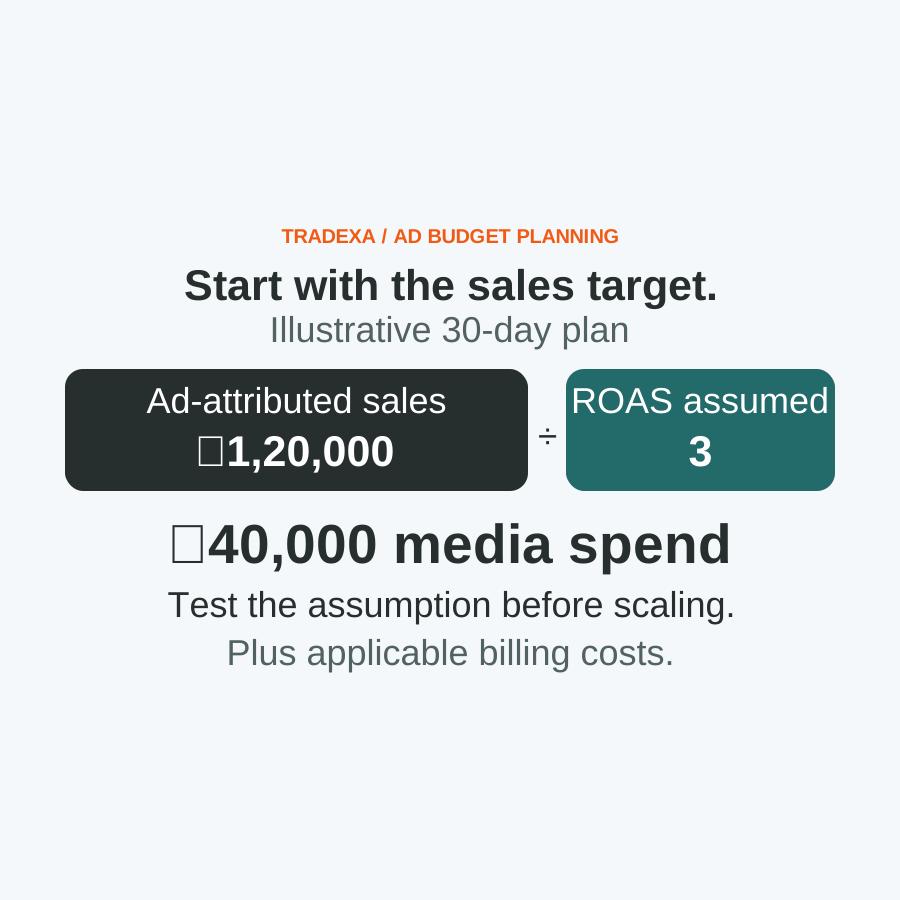
You can enter target sales to receive a recommended starting budget and suggested scale-up amounts. Configured automatic actions include time- and performance-based bid optimisation and rule-based optimisation. Recommendations are planning inputs; a sales target is not a promised result.
HyperAds is available as a standalone product. Branch-stock local-inventory advertising depends on the relevant HyperInventory inventory context and setup. Its measured offline-sales view adds useful context, but should not be described as proof of causal incrementality.
For the next budget decision, that is a strong reason to evaluate HyperAds: it brings the product's economics and availability into the advertising conversation. Read how to choose products to advertise using stock, margin and sales, then use the record above to decide where the next increment belongs.
Sources
Tradexa yearly onboarding, setup, free team training, plan-based post-sales support and optional monthly managed services: owner-confirmed on 14 October 2026.
Official information checked on 14 October 2026: Google Ads campaign types, Shopping and conversion goals, and store-visit eligibility; Amazon Ads Sponsored Products and advertiser eligibility guidance; Meta's India business guidance on discovery/Advantage+ sales campaigns and its 2026 advertising/attribution update. Current account eligibility and supported formats must be checked for the proposed campaign.
Example note: Budgets, order counts and costs are illustrative, not customer results or a forecast. Contribution shown excludes fixed overhead and uses the disclosed tax treatment.